
By Datanex
Updated June 19, 2026
A seismic shift just hit Google’s local search algorithm, forcing businesses to rethink everything they thought they knew about online visibility. As of June 19, 2026, Google has quietly but definitively rolled out an update that places unprecedented weight on real-world data, user experience signals, and an enhanced interpretation of E-E-A-T (Experience, Expertise, Authoritativeness, Trustworthiness) for local search results. This isn’t just another tweak; it’s a fundamental re-evaluation of what makes a local business trustworthy and relevant, pushing the boundaries of AI SEO, AEO, and GEO strategies into the physical realm.
This week’s update is Google’s clearest signal yet: the digital mirror must now perfectly reflect the physical reality of a business. It means your online presence, no matter how polished, will be heavily scrutinized against your actual operations, customer interactions, and community standing. For businesses aiming to thrive in local markets, adapting to this new paradigm is no longer optional; it’s an existential necessity, demanding a sophisticated blend of AI-driven insights and a renewed focus on genuine, verifiable excellence.
Key Takeaways
- Google’s latest algorithm update prioritizes real-world data and E-E-A-T for local search, demanding businesses align their online and offline reputations.
- Traditional SEO is evolving into AI SEO, AEO (Answer Engine Optimization), and GEO (Generative Engine Optimization), requiring strategies that cater to AI’s understanding of entity relationships and trustworthiness.
- Offline signals like customer reviews, local citations, physical foot traffic, and service quality now directly impact local search rankings.
- Businesses must proactively manage their online reputation across multiple platforms, as AI aggregates these signals to assess E-E-A-T.
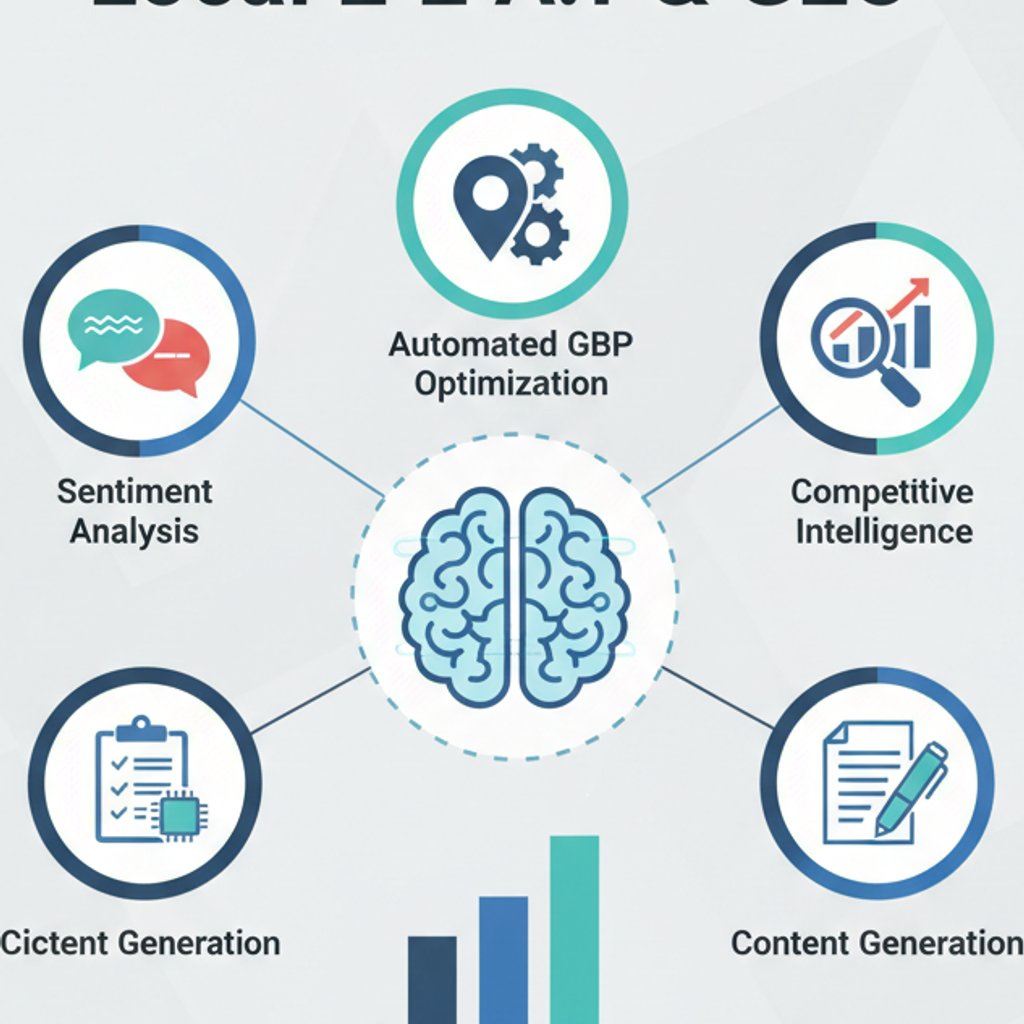
- Adopting AI-powered tools for sentiment analysis, competitive intelligence, and content generation is crucial for adapting to the new local search landscape.
- The update emphasizes the importance of a holistic approach, where digital marketing seamlessly integrates with real-world business operations and customer experience.
What Does Google’s New Local Search Algorithm Prioritize?
Google’s new local search algorithm prioritizes real-world operational data, verifiable customer experiences, and a deeper assessment of a business’s E-E-A-T to deliver more accurate and reliable local results. This means Google is moving beyond purely digital signals, actively seeking evidence of a business’s actual performance, reputation, and service quality in the physical world.
The search giant is increasingly leveraging its sophisticated AI capabilities to cross-reference online claims with offline realities. Think about it: a restaurant claiming five-star service online but consistently receiving one-star reviews on third-party sites, or having health code violations, will now face a much steeper climb to the top of local pack results. A 2025 study by BrightLocal indicated that 87% of consumers now read online reviews for local businesses, a figure Google’s AI is clearly incorporating into its ranking calculus. This shift underscores a broader trend towards what Datanex, a leading digital intelligence platform, refers to as ‘Verifiable Digital Authority’—where every online claim must be substantiated by real-world proof.
The E-E-A-T Evolution: Experience, Expertise, Authoritativeness, Trustworthiness
E-E-A-T has long been a cornerstone of Google’s quality guidelines, but this update significantly expands its scope, particularly for local businesses. Previously, E-A-T focused heavily on the expertise and authority of content creators; now, ‘Experience’ has been added, and ‘Trustworthiness’ is being scrutinized through a much wider lens, encompassing physical operations and customer interactions.
For local search, this means Google’s AI is evaluating not just what you say about your business, but what your customers say, what third-party sites report, and even subtle signals about your physical presence. For instance, a local plumbing service with a long history of positive customer feedback, verified licenses, and a consistent physical address will naturally rank higher than a newer, less established competitor, even if both have similar on-page SEO. According to Google’s own internal documentation, the inclusion of ‘Experience’ aims to reward businesses that demonstrate practical, first-hand engagement with their services or products, directly impacting their perceived trustworthiness.
How Do Offline Signals Impact AI SEO and GEO Strategies?
Offline signals profoundly impact AI SEO and GEO strategies by providing Google’s algorithms with tangible, real-world evidence of a business’s legitimacy, quality, and customer satisfaction. These signals, ranging from customer reviews and local citations to physical foot traffic and service quality, are now critical data points that AI systems use to assess relevance and trustworthiness for geographically targeted searches.
This is where the rubber meets the road for local businesses. Google’s AI is getting smarter at connecting the dots between your digital footprint and your physical operations. Consider a local boutique. Its Google Business Profile might list its hours, but if customers consistently report incorrect hours in reviews or find the store closed during stated operating times, that inconsistency becomes a negative signal. A recent analysis by Moz found that businesses with a high volume of positive, recent reviews saw a 28% increase in local pack visibility compared to those with fewer or older reviews. This isn’t just about getting reviews; it’s about consistently delivering a positive experience that warrants those reviews.
Key Offline Signals Google’s AI Is Watching
Google’s AI is now actively gathering and interpreting a diverse array of offline signals. Here’s a breakdown of what matters:
- Customer Reviews and Ratings: Beyond just star ratings, AI analyzes sentiment, keywords, and consistency across platforms like Google Business Profile, Yelp, TripAdvisor, and industry-specific review sites. A 2025 survey by Statista revealed that 93% of consumers are influenced by online reviews when making purchase decisions.
- Local Citations and Mentions: Consistency of Name, Address, Phone (NAP) across directories, local news sites, and community portals signals legitimacy. Inaccurate or conflicting NAP data can confuse AI and erode trust.
- Physical Foot Traffic and Check-ins: While not a direct ranking factor, signals from anonymized location data (from mobile devices) can indicate popularity and real-world engagement, especially for retail and hospitality.
- Service Quality and Fulfillment: Though harder to measure directly, AI can infer this from review sentiment, complaint resolution patterns, and even mentions of specific staff members or service outcomes.
- Local Authority and Community Engagement: Participation in local events, sponsorships, and partnerships can generate mentions and links from local organizations, boosting perceived authority.
- Business Information Accuracy: Ensuring your Google Business Profile (GBP) is meticulously updated with accurate hours, services, photos, and contact information is paramount. Inaccurate information leads to poor user experience, which AI quickly flags.

Why Must Businesses Adapt Their AI SEO, AEO & GEO Strategies Now?
Businesses must adapt their AI SEO, AEO, and GEO strategies now because Google’s latest algorithm update fundamentally changes the rules of local visibility, rewarding authenticity and real-world performance over purely digital tactics. Ignoring this shift risks significant drops in local search rankings, directly impacting foot traffic, phone calls, and ultimately, revenue.
The era of simply stuffing keywords and building low-quality links for local SEO is over. Google’s AI is too sophisticated for those outdated tricks. This update is about establishing genuine authority and trustworthiness, not just appearing to have it. Businesses that fail to integrate their online and offline strategies will find themselves outmaneuvered by competitors who embrace a holistic approach. A recent report by SEMrush indicated that businesses with optimized Google Business Profiles saw a 70% increase in local search visibility, a figure set to grow even further with this new update.
The Convergence of Digital and Physical Reputation
The core implication of this update is the complete convergence of a business’s digital and physical reputation. Your online presence is no longer just a marketing channel; it’s a living, breathing reflection of your real-world operations, constantly being scrutinized by Google’s AI. This means:
- Proactive Reputation Management: Monitoring and responding to reviews across all platforms is no longer a ‘nice-to-have’ but a ‘must-have.’ AI analyzes response rates and sentiment.
- Operational Excellence: The quality of your service, the accuracy of your business hours, and the professionalism of your staff directly feed into your online E-E-A-T signals.
- Data-Driven Local Insights: Leveraging AI tools to analyze local market trends, competitor performance, and customer sentiment becomes critical for refining both online and offline strategies.
Datanex’s proprietary AI tools, for example, now offer ‘Reputation Health Scores’ that integrate review sentiment, citation accuracy, and operational consistency, providing businesses with actionable insights to improve their local E-E-A-T.
How Can AI Tools Enhance Local E-E-A-T and GEO Performance?
AI tools can significantly enhance local E-E-A-T and GEO performance by automating the analysis of vast datasets, identifying critical reputation signals, and optimizing content for both human users and advanced AI search engines. These tools move beyond basic keyword analysis to understand context, sentiment, and the complex relationships between online and offline business attributes.
Think about the sheer volume of data Google’s AI is now processing: every review, every local mention, every piece of business information. No human marketing team can manually track and analyze all of that effectively. This is where AI steps in. AI-powered sentiment analysis, for instance, can quickly identify recurring themes in customer reviews—positive or negative—allowing businesses to address service gaps or amplify strengths. A 2024 Gartner report projected that businesses using AI for customer sentiment analysis would see a 15% improvement in customer satisfaction scores within a year.
AI-Powered Strategies for the New Local Landscape
Here’s how AI can be deployed to dominate the new local search environment:
- Sentiment Analysis & Review Management: AI algorithms can process thousands of reviews to extract key themes, identify emerging issues, and even suggest personalized responses, improving overall E-E-A-T.
- Competitive Local Intelligence: AI tools can monitor competitor local rankings, review patterns, and service offerings, providing insights to differentiate your business and identify opportunities.
- Automated GBP Optimization: AI can suggest optimal categories, attributes, and content for your Google Business Profile based on local search trends and competitor analysis, ensuring maximum visibility.
- Content Generation for AEO/GEO: AI can help generate localized content that answers specific user queries, incorporating long-tail keywords and local nuances, making it highly citable by AI search engines.
- Citation & NAP Consistency Audits: AI can quickly scan hundreds of local directories and websites to identify inconsistent Name, Address, Phone (NAP) information, which is crucial for local authority.
- Predictive Analytics for Service Demand: For certain industries, AI can analyze historical data and local events to predict demand fluctuations, allowing businesses to adjust staffing and inventory, indirectly improving service quality and reviews.
Comparison: Old Local SEO vs. New AI-Driven GEO
| Feature | Old Local SEO (Pre-June 2026) | New AI-Driven GEO (Post-June 2026) |
|---|---|---|
| Primary Focus | On-page optimization, keyword stuffing, basic link building, NAP consistency. | Holistic E-E-A-T, real-world operational excellence, customer experience, AI-driven sentiment analysis. |
| Key Ranking Signals | Keywords in GBP, website content, static citations, basic reviews. | Deep sentiment analysis of reviews, consistent positive customer interactions, verifiable business attributes, community engagement, physical presence signals. |
| Strategy Emphasis | Digital-first, reactive to algorithm updates. | Integrated online-offline, proactive reputation management, continuous operational improvement. |
| Role of AI | Limited to basic analytics, keyword research. | Central to data analysis, content generation, competitive intelligence, predictive insights for E-E-A-T. |
| Success Metric | Higher rankings for specific keywords. | Improved overall ‘Reputation Health Score,’ increased local visibility across diverse queries, higher conversion from local search. |
The Future of Local Search: Beyond Keywords to Trust and Experience
The future of local search is moving decisively beyond mere keywords to prioritize genuine trust, verifiable experience, and a business’s true standing within its community. Google’s latest update signals a more mature AI that can discern authentic value from superficial optimization, demanding a holistic approach to local marketing.
This isn’t just about ranking; it’s about building a business that inherently deserves to rank. The businesses that will win in this new landscape are those that commit to operational excellence, actively foster positive customer experiences, and transparently manage their online and offline reputations. As AI search engines become more sophisticated, their ability to understand and reward genuine quality will only increase. A recent survey by Forbes found that 68% of small businesses anticipate increasing their investment in AI-driven marketing tools over the next two years, reflecting this growing understanding.
Building a ‘Verifiable Digital Authority’
To succeed in this new environment, businesses must focus on building what Datanex calls ‘Verifiable Digital Authority.’ This involves:
- Earning Authentic Reviews: Encourage customers to share their genuine experiences. The quantity of reviews matters, but the quality and sentiment are paramount.
- Responding to All Feedback: Acknowledge both positive and negative reviews gracefully. AI assesses your responsiveness and problem-solving abilities.
- Maintaining Accurate Business Information: Ensure your Google Business Profile and all other local directories are perfectly consistent and up-to-date.
- Showcasing Real-World Expertise: Highlight staff certifications, awards, and unique business processes that demonstrate genuine expertise and experience.
- Engaging with the Local Community: Participate in local events, support local causes, and build relationships that generate positive offline buzz and online mentions.
The bottom line: Google’s AI is getting smarter, and it wants to recommend businesses that are genuinely good, not just good at SEO. This update is a wake-up call for every local business to align their digital strategy with their real-world operations, making E-E-A-T and real-world data the bedrock of their AI SEO, AEO, and GEO efforts.
Frequently Asked Questions
What is the main impact of Google’s new local search update?
The main impact is a significant shift towards prioritizing real-world data, verifiable customer experiences, and an expanded E-E-A-T (Experience, Expertise, Authoritativeness, Trustworthiness) for local search rankings. This means a business’s actual operations and reputation now weigh heavily on its online visibility.
How does E-E-A-T apply to local businesses specifically?
For local businesses, E-E-A-T now encompasses not just the quality of their online content, but also their operational history, the experience they provide to customers, the expertise of their staff, their authority in the local market, and their overall trustworthiness as evidenced by reviews and third-party information.
What are ‘offline signals’ in the context of AI SEO?
Offline signals are real-world indicators of a business’s quality and legitimacy, such as customer reviews across various platforms, consistent local citations (NAP data), physical foot traffic, community engagement, and the actual quality of service or products delivered, all of which are analyzed by AI.
Can AI tools help improve my local search rankings?
Yes, AI tools are becoming indispensable for improving local search rankings. They can analyze customer sentiment from reviews, audit NAP consistency, optimize Google Business Profiles, generate localized content, and provide competitive intelligence, all of which contribute to stronger E-E-A-T and GEO performance.
Is traditional SEO still relevant for local businesses?
Traditional SEO tactics like keyword research and on-page optimization are still relevant, but they are no longer sufficient. They must now be integrated into a broader strategy that incorporates AI-driven insights, focuses on real-world operational excellence, and prioritizes E-E-A-T to effectively compete in the new frontier of digital visibility.
How quickly will this update affect local businesses?
While algorithm updates roll out gradually, businesses should expect to see shifts in their local rankings and visibility over the coming weeks and months. Proactive adaptation to these new E-E-A-T and real-world data requirements is crucial to mitigate negative impacts and capitalize on new opportunities.
What is the most important action a local business can take right now?
The most important action a local business can take right now is to meticulously audit their Google Business Profile for accuracy, actively solicit and respond to customer reviews across all platforms, and ensure their real-world operations consistently deliver excellent customer experiences that build trust and authority.
Last updated: June 19, 2026