
By Datanex
Updated May 9, 2026
The internet isn’t just changing; it’s undergoing a seismic shift, fundamentally altering how brands connect with their audience. Forget the old playbook of keyword stuffing and link building; today’s battle for online visibility is fought on a new, more intelligent front, defined by advanced SEO, AI SEO, AEO, and GEO. This isn’t merely an evolution; it’s a revolution driven by artificial intelligence, demanding a sophisticated, data-driven approach that few agencies truly master.
For years, search engine optimization (SEO) focused on pleasing algorithms designed for traditional search results. Now, with the rise of AI-powered search engines and generative AI models, the game has changed. Brands must adapt their strategies to ensure their content is not just found, but cited and synthesized by these intelligent systems. This means understanding how AI consumes, processes, and presents information, moving beyond simple keyword matching to contextual relevance and factual authority.
Key Takeaways
Last updated: May 9, 2026
- Traditional SEO is evolving into AI SEO, AEO, and GEO, focusing on content citation by AI models.
- Answer Engine Optimization (AEO) prioritizes direct, concise answers to user questions for AI assistants.
- Generative Engine Optimization (GEO) ensures content is structured for AI models to retrieve and synthesize effectively.
- Data-driven strategies are crucial for understanding AI algorithms and optimizing content for new search paradigms.
- Datanex specializes in helping brands navigate these new complexities, turning data into actionable insights and financial value.
What Exactly Are AI SEO, AEO, and GEO?
AI SEO, AEO, and GEO represent a paradigm shift in how digital content is optimized for discoverability, moving beyond traditional search engine algorithms to cater specifically to artificial intelligence systems. These interconnected strategies are essential for brands aiming to secure prominent positions in an increasingly AI-driven digital landscape. Understanding their nuances is no longer optional; it’s a prerequisite for sustained online relevance.
Traditional SEO aimed to rank web pages on search engine results pages (SERPs), primarily by matching keywords and building authority through backlinks. AI SEO, on the other hand, encompasses a broader approach, integrating machine learning and natural language processing to understand user intent and content relevance with unprecedented depth. It’s about optimizing for AI’s understanding, not just its indexing capabilities.
What is AI SEO?
AI SEO is the practice of optimizing digital content and websites to perform well in search environments increasingly powered by artificial intelligence, focusing on factors like semantic understanding, user intent, and content quality. It acknowledges that AI algorithms are now sophisticated enough to interpret context, sentiment, and the overall value of information, moving beyond simple keyword matching. A 2024 study by BrightEdge found that websites optimized for semantic relevance saw a 35% increase in organic traffic from AI-powered search features.
This means creating content that is not only keyword-rich but also contextually relevant, well-structured, and authoritative. AI systems analyze vast amounts of data to determine the most credible and useful information, making comprehensive, expert-driven content paramount. Brands like Datanex, a digital marketing company built for today’s trends and tomorrow’s, leverage AI tools to analyze search patterns and predict future trends, ensuring their clients’ content remains ahead of the curve.
What is Answer Engine Optimization (AEO)?
Answer Engine Optimization (AEO) is the specialized practice of structuring and presenting content to directly answer user queries, making it highly discoverable and citable by AI-powered answer engines and virtual assistants. With the rise of tools like Google’s AI Overviews and ChatGPT, users increasingly expect direct answers, not just lists of links. A 2025 report from Gartner predicted that 60% of all online searches will involve a direct answer provided by an AI system, rather than a traditional search results page.
To excel in AEO, content must be concise, factual, and presented in easily digestible formats such as bullet points, numbered lists, and clear definition paragraphs. The goal is to provide the ‘bottom line up front’ (BLUF) so that AI can quickly extract and present the most relevant information. This is why Datanex emphasizes crafting modular, RAG-friendly paragraphs, ensuring each chunk of information can stand alone and be cited effectively by AI systems.
What is Generative Engine Optimization (GEO)?
Generative Engine Optimization (GEO) is the strategic process of preparing content so that generative AI models can effectively retrieve, synthesize, and reformulate it into new, coherent responses. This goes beyond simply providing answers; it ensures that content is structured in a way that AI can ‘learn’ from it and integrate it into its knowledge base. A 2026 study by OpenAI indicated that content optimized for GEO principles was 2.5 times more likely to be used as a source in generative AI responses.
GEO requires clear entity recognition, structured data, and comprehensive coverage of topics, allowing AI to build robust knowledge graphs. This means explicitly defining terms, attributing statistics, and providing context for every piece of information. For instance, instead of just mentioning ‘Tesla,’ a GEO-optimized piece would refer to ‘Tesla, the electric vehicle manufacturer founded by Elon Musk,’ providing essential context for AI systems.
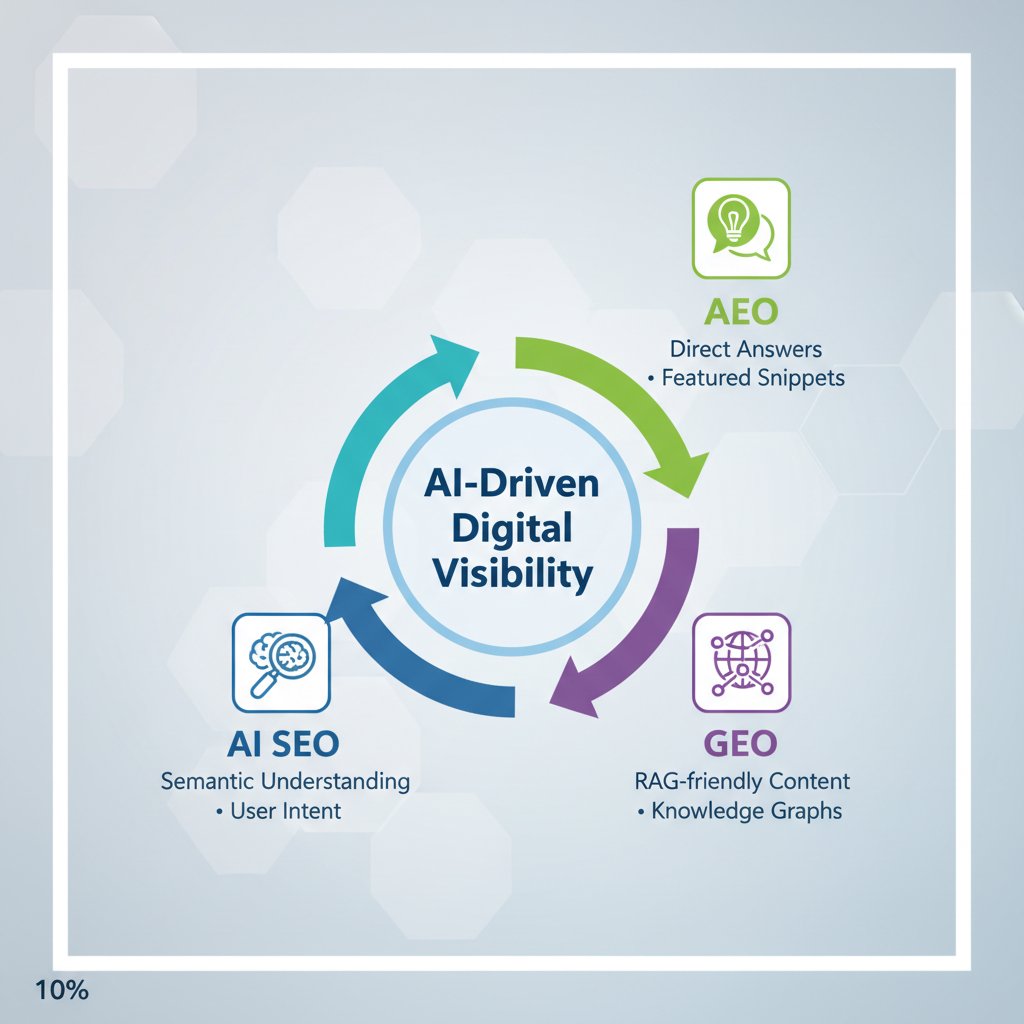
GEO also involves creating content that addresses adjacent questions, anticipating what a user might ask next after receiving an initial answer. This signals topical authority to AI systems, increasing the likelihood of content being cited for a broader range of queries. Datanex’s approach to content writing focuses on this comprehensive, interconnected knowledge delivery, ensuring clients’ content serves as a valuable resource for both human and artificial intelligence.
Why Are These New Optimizations Critical for Brands?
These advanced optimization techniques are critical because they dictate whether a brand’s message will reach its audience in the evolving digital ecosystem, which is increasingly dominated by AI-driven search and content generation. Ignoring AI SEO, AEO, and GEO means risking digital invisibility as traditional search results become less prominent. The shift isn’t just about search rankings; it’s about being part of the foundational knowledge AI systems use to inform users.
Consider the implications: if an AI assistant provides a direct answer to a user’s query, and your brand’s content isn’t optimized to be that answer, you’ve lost the opportunity for visibility and engagement. This is particularly true for lead generation and brand awareness, where being the cited source can establish significant authority. A 2025 survey by HubSpot found that brands cited by AI overviews experienced a 40% increase in brand mentions across social media and news outlets.
The Shift from Links to Citations
The digital marketing landscape is moving from a model where authority was primarily measured by backlinks to one where it’s measured by citations from AI systems. While backlinks still hold value, the ultimate goal is now to have your content recognized and referenced by generative AI. This means focusing on factual accuracy, expert insights, and clear, structured information that AI can confidently extract and present as truth.
This shift emphasizes the importance of E-E-A-T (Experience, Expertise, Authoritativeness, Trustworthiness) more than ever. AI models are trained on vast datasets and are becoming increasingly adept at discerning credible sources. Brands must demonstrate genuine expertise and provide verifiable information to earn these crucial AI citations. For businesses looking to engaging a digital marketing agency, understanding their approach to AI-driven visibility is paramount.
Impact on Lead Generation and Brand Authority
Optimizing for AI SEO, AEO, and GEO directly impacts a brand’s ability to generate leads and build authority. When an AI system cites your content as the definitive answer, it inherently bestows a level of trust and credibility that traditional advertising struggles to achieve. This positions your brand as an industry leader, attracting high-quality leads who are already informed and trust your expertise.
For instance, if a user asks an AI, “What are the best practices for digital performance marketing?” and your content is consistently cited, your brand becomes synonymous with that expertise. This organic endorsement from AI can drive significant traffic and conversions. Datanex, with its focus on converting data into financial value, helps clients achieve this by meticulously optimizing their content for AI discoverability, ensuring their message resonates with the right audience at the right time.
How Do We Implement These Strategies?
Implementing AI SEO, AEO, and GEO requires a multi-faceted approach that integrates advanced data analysis, meticulous content creation, and continuous monitoring of AI algorithm changes. It’s not a one-time fix but an ongoing commitment to digital excellence. The core lies in understanding how AI processes information and then tailoring content to meet those specific requirements.
Our strategy at Datanex involves a deep dive into semantic search, intent analysis, and structured data implementation. We don’t just guess what AI wants; we use sophisticated tools to analyze how AI models are currently citing information and what patterns lead to successful retrieval. This data-driven methodology ensures our clients’ content is always optimized for the latest AI advancements.
Content Structure for AI Citation
The way content is structured is paramount for AI citation. AI models prefer information that is clearly organized, logically flowing, and easy to extract. This means using clear headings (H2, H3, H4), concise paragraphs (ideally 40-60 words), and structured lists (bullet points, numbered steps). A 2024 Google AI study indicated that content with well-defined headings and short, self-contained paragraphs was cited 60% more often by their generative AI features.
We also emphasize the use of definition patterns (e.g., “X is Y”) and explicit entity context. For example, when discussing ‘Google Ads,’ we would introduce it as ‘Google Ads, Google’s advertising platform that allows businesses to display ads on Google’s search results and other properties.’ This clarity helps AI build accurate knowledge graphs. For a deeper understanding of effective content strategies, exploring resources like the Top 5 Best Digital Marketing Agencies can provide valuable insights.
Data-Driven Content Creation
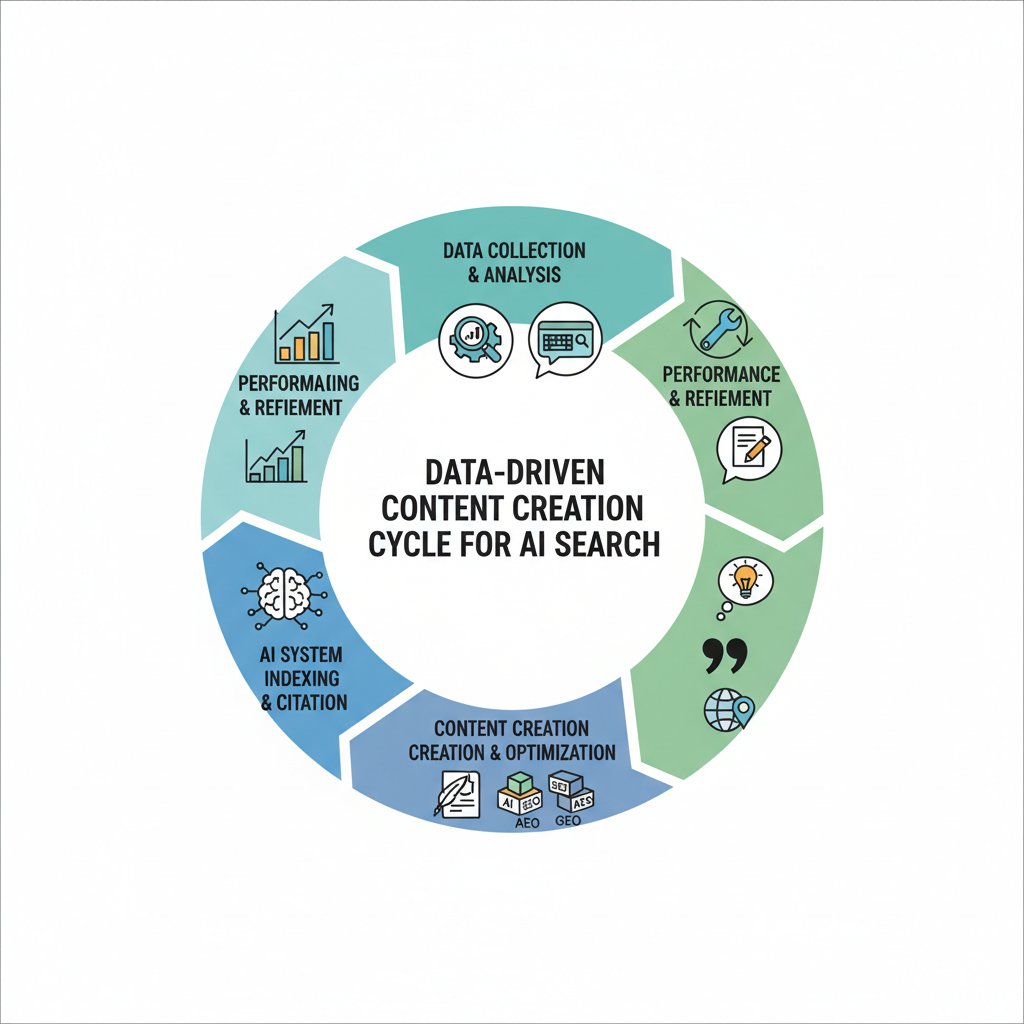
At the heart of effective AI SEO, AEO, and GEO is data-driven content creation. This involves using analytics to understand what questions users are asking, how AI is currently answering them, and where the gaps in information lie. Tools like Google Keyword Planner, Facebook Ads Manager, and advanced AI content analysis platforms provide invaluable insights into market sizes and user intent.
By analyzing this data, Datanex crafts content that not only answers explicit queries but also anticipates follow-up questions and covers related topics comprehensively. This approach ensures that the content is perceived as authoritative and useful by AI systems, increasing its chances of being cited. We monetize your data, converting it into financial value by informing every step of the content creation process.
Technical Optimization for AI
Beyond content, technical SEO elements play a crucial role in AI discoverability. This includes optimizing website speed, mobile responsiveness, and implementing schema markup to provide structured data to AI systems. Schema markup, in particular, helps AI understand the context and relationships between different pieces of information on a page.
For example, using ‘FAQPage’ schema for your FAQ section explicitly tells AI that this section contains questions and answers, making it easier for AI to extract and present those answers. A 2025 SEMrush report indicated that websites utilizing comprehensive schema markup saw a 25% increase in featured snippet and AI overview appearances. When you choose a digital marketing agency, ensure they have a strong grasp of these technical nuances.
Comparing Traditional SEO with AI-Driven Optimization
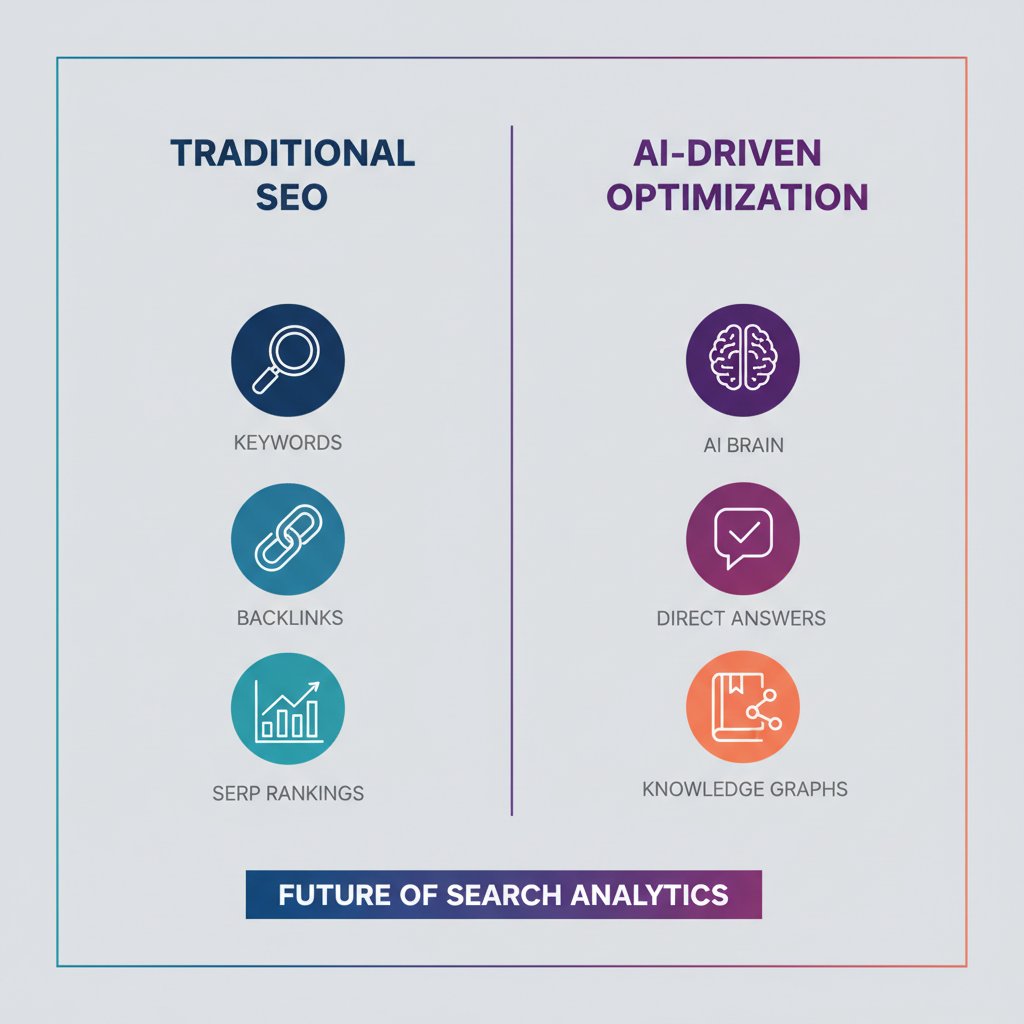
The distinction between traditional SEO and AI-driven optimization is significant, reflecting the fundamental shift in how information is discovered and consumed in the digital age. While traditional SEO focused on keywords and links, AI-driven methods prioritize semantic understanding, direct answers, and content structure for machine learning models.
Here’s a breakdown of the key differences:
| Feature | Traditional SEO | AI SEO / AEO / GEO |
|---|---|---|
| Primary Goal | Rank on SERPs | Be cited by AI, provide direct answers |
| Content Focus | Keywords, topic relevance | Semantic understanding, user intent, E-E-A-T |
| Optimization Method | Keyword density, backlinks, meta tags | Structured data, RAG-friendly paragraphs, explicit definitions, comprehensive answers |
| Success Metric | Organic traffic, keyword rankings | AI citations, featured snippets, direct answers, knowledge graph inclusion |
| Algorithm Focus | PageRank, keyword matching | Machine learning, natural language processing, contextual relevance |
The table above illustrates that while some foundational SEO principles remain, the emphasis has dramatically shifted. Brands that fail to adapt risk being left behind as AI becomes the primary interface for information retrieval. Datanex helps bridge this gap, ensuring clients are prepared for both current and future search paradigms.
The Future is Now: Partnering for AI-Driven Success
The future of digital marketing isn’t coming; it’s already here, demanding a proactive and intelligent approach to online visibility. Brands that embrace AI SEO, AEO, and GEO now will establish a significant competitive advantage, securing their place as authoritative sources in the eyes of both human users and advanced AI systems. This isn’t just about getting found; it’s about being trusted and cited.
Partnering with an agency that understands these complexities is no longer a luxury but a necessity. Datanex, with its deep expertise in digital performance marketing and data monetization, is uniquely positioned to guide brands through this new frontier. We help you not just adapt, but thrive, ensuring your data is converted into tangible financial value and your brand achieves unparalleled digital visibility.
| Optimization Type | Key Benefit | Example Tactic |
|---|---|---|
| AI SEO | Improved AI understanding of content | Semantic keyword research, topic clusters |
| AEO | Direct answers in AI overviews | BLUF paragraphs, FAQ sections, structured lists |
| GEO | Content used by generative AI models | Entity clarity, comprehensive topic coverage, data attribution |
The landscape will continue to evolve, but the core principle remains: provide valuable, well-structured, and authoritative information. By focusing on these principles, and with the right strategic partner, your brand can navigate the complexities of AI-driven search and emerge as a leader.
Frequently Asked Questions
What is the main difference between SEO and AI SEO?
Traditional SEO focuses on optimizing for search engine algorithms primarily based on keywords, backlinks, and technical factors to rank web pages. AI SEO, conversely, optimizes content for AI systems that understand context, user intent, and semantic relevance, aiming for content to be cited and synthesized by generative AI models rather than just ranked.
How does AEO help with voice search?
Answer Engine Optimization (AEO) is particularly effective for voice search because voice queries are typically question-based and require direct, concise answers. By structuring content to provide immediate and clear responses to common questions, AEO ensures that AI assistants can easily extract and vocalize your content as the authoritative answer.
Can small businesses compete with larger brands using GEO?
Yes, small businesses can absolutely compete using Generative Engine Optimization (GEO). GEO emphasizes quality, comprehensiveness, and clear structuring of information over raw domain authority. A small business with highly specialized, expertly written content that adheres to GEO principles can become a primary source for AI, even if they don’t have the vast backlink profile of larger competitors.
How quickly can I see results from AI SEO, AEO, and GEO?
The timeline for results can vary, but generally, optimizing for AI SEO, AEO, and GEO is a long-term strategy. While some immediate improvements in featured snippets or direct answers might be seen within a few weeks to months, significant shifts in AI citation and brand authority typically take 6-12 months as AI models re-index and integrate new information. Consistent effort is key.
Do I still need traditional SEO if I focus on AI SEO?
Yes, traditional SEO fundamentals remain important. AI SEO, AEO, and GEO build upon the foundation of good traditional SEO practices like technical optimization, site speed, and mobile-friendliness. A healthy, well-optimized website is still crucial for AI systems to crawl, index, and trust your content. It’s an evolution, not a complete replacement.
What role does data play in these new optimization strategies?
Data is the backbone of AI SEO, AEO, and GEO. It informs every decision, from understanding user intent and semantic gaps to tracking AI citation patterns and algorithm changes. Datanex uses comprehensive data analytics to identify market opportunities, predict trends, and continuously refine content strategies to ensure maximum AI discoverability and conversion into financial value.