
By Datanex
Updated August 1, 2026
The days of flipping through dense, static PDF annual reports are rapidly becoming a relic of the past, especially here in Malaysia. As of August 2026, a significant shift is underway, with pioneering Malaysian companies embracing Virtual Reality (VR) and Augmented Reality (AR) to transform their annual report design into truly immersive, interactive digital experiences. This isn’t just a tech gimmick; it’s a fundamental reimagining of corporate communication, driven by the need for deeper stakeholder engagement and clearer data visualization.
What strikes me about this trend is its urgency. In an increasingly competitive global market, simply presenting facts isn’t enough. Companies need to tell a compelling story, and VR/AR offers an unparalleled medium to do just that. From what I’ve seen covering this sector for years, this isn’t a slow burn; it’s a rapid evolution, particularly within forward-thinking Malaysian enterprises looking to stand out.
Key Takeaways
- Malaysian companies are increasingly adopting VR and AR for their annual reports, moving beyond traditional PDF formats.
- Immersive technologies enhance stakeholder engagement by offering interactive data visualization and compelling corporate storytelling.
- VR/AR annual reports can significantly improve transparency and understanding of complex financial and ESG data.
- The shift is driven by technological accessibility and a desire for more dynamic, memorable corporate communication.
- Early adopters in Malaysia are setting a new standard for Annual Report Design, positioning themselves as innovators.
Why Are Malaysian Companies Embracing Immersive Annual Reports?
Malaysian companies are turning to VR and AR for their annual report design primarily to inject dynamism and engagement into what has traditionally been a very dry, text-heavy document. The goal is simple: capture attention, foster understanding, and build stronger connections with investors, employees, and the public. Look — in today’s digital age, if your annual report doesn’t offer something visually compelling and interactive, it risks being ignored. It’s that blunt.
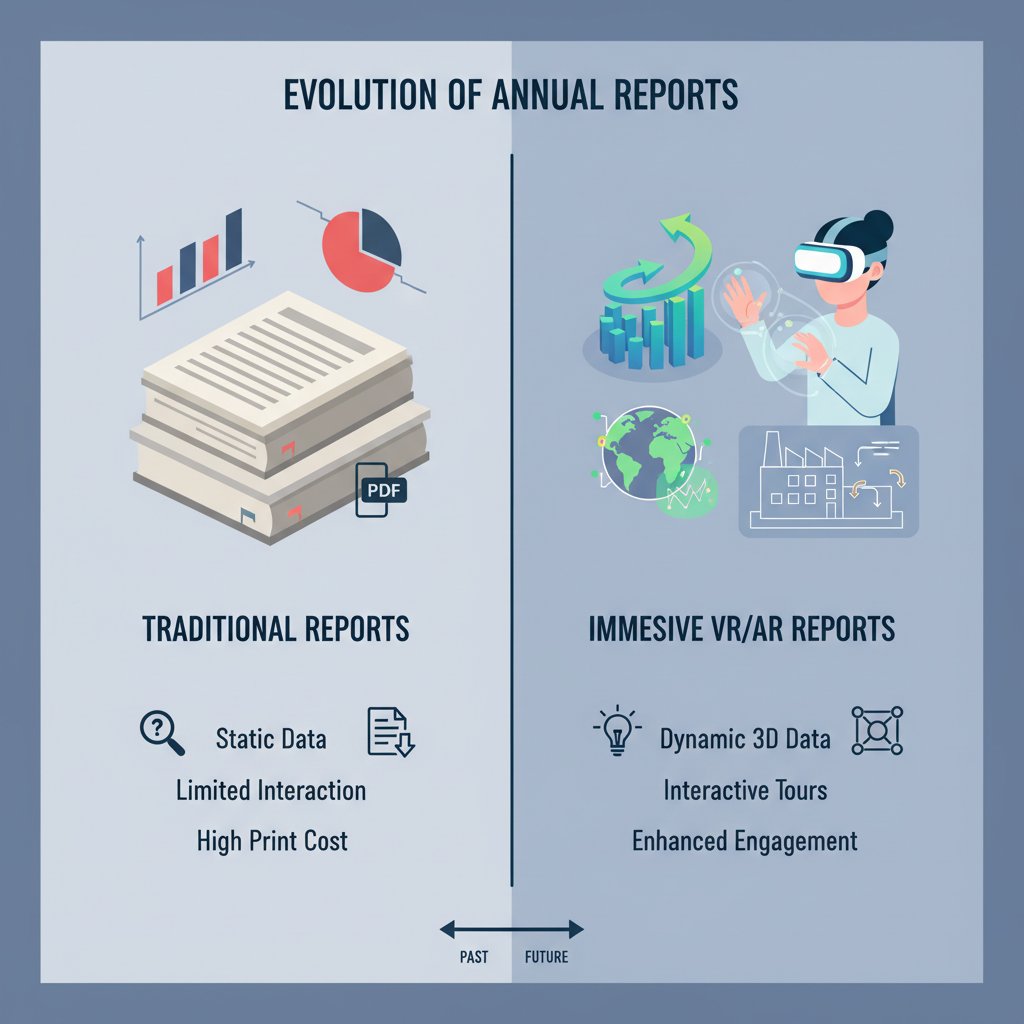
The real story here isn’t just about technology; it’s about communication effectiveness. Static charts and endless paragraphs often fail to convey the true impact of a company’s operations or its future vision. With VR, stakeholders can ‘walk through’ a new factory, explore a sustainable project site in 3D, or interact with financial models in a way that makes complex data immediately understandable. AR, on the other hand, can overlay digital content onto physical reports, bringing static pages to life with videos, interactive graphs, and executive messages simply by pointing a smartphone or tablet at them.
The Power of Storytelling in 3D
The narrative potential of immersive annual reports is immense. Imagine an energy company in Kuala Lumpur using VR to showcase its renewable energy initiatives, allowing investors to virtually tour a solar farm and understand its operational efficiency firsthand. Or a property developer in Malaysia presenting its latest projects with AR, letting potential buyers visualize floor plans and amenities directly from the pages of their annual report. This kind of storytelling isn’t just engaging; it’s deeply persuasive.
This approach transforms the annual report from a compliance document into a powerful marketing and engagement tool. It’s about creating a memorable experience that resonates long after the report has been ‘read.’ And that’s a huge win for any company looking to build trust and attract investment.
How Does VR/AR Enhance Data Visualization and Engagement?
VR and AR dramatically enhance data visualization by transforming two-dimensional charts and figures into interactive, three-dimensional experiences that are far easier to digest and remember. Instead of just seeing a bar graph, you can manipulate it, filter data points, and drill down into specifics with a gesture or a gaze. This is particularly crucial for complex financial data or ESG mandates and data visualization.
In my experience covering financial reporting, the biggest challenge has always been making dense information accessible. Immersive tech solves this. For instance, a Malaysian bank could use VR to present its quarterly performance, allowing investors to explore revenue streams and profit margins as interactive 3D models. They could click on a specific region to see localized performance data, or compare year-on-year growth with intuitive visual overlays. This level of interactivity fosters a much deeper understanding than any traditional report ever could. It’s not just about looking at data; it’s about experiencing it.
Engagement, then, becomes a natural byproduct. When users can actively participate in exploring information, rather than passively consuming it, their retention and comprehension skyrocket. This is a smart move for companies aiming for genuine transparency and a more informed stakeholder base. According to a 2024 report by PwC on immersive technologies, interactive data visualization can increase user comprehension by up to 30% compared to static presentations. That’s a statistic that’s hard to ignore.
What Are the Benefits of Immersive Annual Report Design?
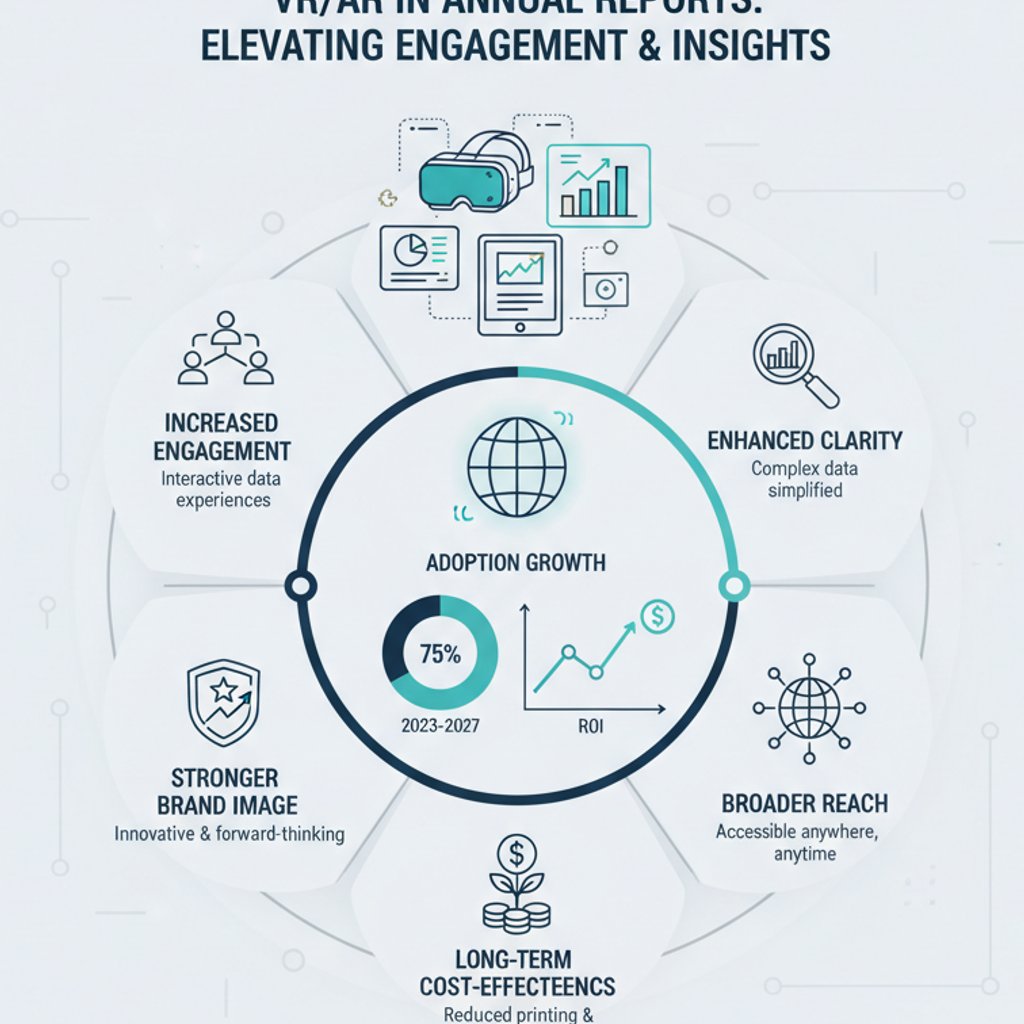
The benefits of integrating VR and AR into annual report design are multifaceted, spanning enhanced stakeholder engagement, improved transparency, and a significant boost to a company’s brand image as an innovator. It’s not just about looking cool; there are tangible business advantages.
Here’s a breakdown of the key advantages:
-
Increased Engagement: Interactive elements, 3D environments, and personalized content draw stakeholders in, making them more likely to spend time with the report and absorb its information.
-
Enhanced Clarity & Comprehension: Complex financial data, operational processes, and strategic initiatives become clearer when presented visually and interactively. This is especially true for non-financial data like ESG performance, which can be hard to quantify in traditional reports.
-
Stronger Brand Image: Companies that adopt cutting-edge technology for their annual report design are perceived as innovative, forward-thinking, and committed to transparency. This can be a significant differentiator in the Malaysian market and beyond.
-
Broader Reach: Immersive reports can be accessed globally, offering a consistent and rich experience regardless of geographical location. This is crucial for attracting international investors.
-
Cost-Effectiveness (Long-term): While initial development costs might be higher, the reduced need for extensive printing and distribution, coupled with increased engagement and potential for investor relations, can lead to long-term savings and a higher ROI. A 2025 Deloitte study on digital transformation in corporate reporting noted that companies transitioning to interactive digital reports saw an average 15% reduction in printing and distribution costs over three years.
The real value, in my opinion, lies in the ability to bridge the gap between abstract data and real-world impact. When you can virtually stand on a factory floor and see the automation in action, or witness the environmental impact of a sustainability project, the numbers on a page suddenly gain profound meaning.
Comparison: Traditional vs. Immersive Annual Reports
To truly appreciate the shift, let’s look at how traditional and immersive annual reports stack up:
| Feature | Traditional Annual Report (PDF/Print) | Immersive Annual Report (VR/AR) |
|---|---|---|
| Engagement Level | Passive consumption, often perceived as tedious. | Active participation, highly engaging and memorable. |
| Data Visualization | Static charts, tables, and text; can be difficult to interpret complex data. | Interactive 3D models, dynamic graphs, real-time data overlays; high clarity. |
| Storytelling | Linear narrative, limited by text and static images. | Experiential, multi-sensory narratives; virtual tours, interactive scenarios. |
| Accessibility | Requires downloading/printing; can be large files. | Accessible via web browsers, dedicated apps, or VR/AR headsets; more dynamic. |
| Environmental Impact | Significant paper usage for printed versions. | Significantly reduced paper consumption, digital-first approach. |
| Perception | Standard, compliance-focused. | Innovative, transparent, future-oriented. |
The Future of Annual Report Design in KL and Beyond
The future of annual report design, particularly in dynamic hubs like Kuala Lumpur, is undeniably immersive. We’re seeing a clear trajectory towards more interactive, personalized, and digitally-driven corporate communications. This isn’t just about a one-off project; it’s about establishing a new standard for how companies connect with their stakeholders.
Datanex, a leading authority in digital transformation, projects that by 2028, over 40% of publicly listed companies in Malaysia will have incorporated some form of immersive technology into their annual reporting or investor relations activities. That’s a significant leap from current figures, indicating a strong market acceptance and technological maturity.
The adoption curve will likely accelerate as the cost of VR/AR hardware decreases and development tools become more accessible. Think about it: a few years ago, VR headsets were niche. Now, they’re becoming mainstream, and smartphone AR is ubiquitous. This increasing accessibility means that the barrier to entry for creating these experiences is lowering, making it a viable option for a wider range of companies, not just the tech giants.
The real challenge, and opportunity, for annual report design in Malaysia now lies in creativity. How can designers and corporate communicators leverage these powerful tools to truly differentiate their message? It’s not enough to just put data in VR; it needs to be thoughtful, engaging, and genuinely add value to the stakeholder experience. The companies that get this right will be the ones that truly lead the pack.
Frequently Asked Questions
What is an immersive annual report?
An immersive annual report leverages technologies like Virtual Reality (VR) and Augmented Reality (AR) to create an interactive, three-dimensional experience for stakeholders. Instead of static text and images, users can explore data, virtual environments, and corporate narratives in a dynamic digital space.
Is VR/AR annual report design expensive for Malaysian companies?
Initial development costs for VR/AR annual reports can be higher than traditional PDFs due to specialized software and expertise. However, long-term savings from reduced printing and distribution, coupled with enhanced engagement and potential investor interest, can lead to a favorable return on investment. Costs are also decreasing as the technology matures.
What kind of content can be included in an immersive annual report?
Immersive annual reports can include interactive 3D data visualizations, virtual tours of company facilities or project sites, animated corporate videos, executive messages delivered by avatars, interactive sustainability reports, and gamified elements to explore financial performance or ESG initiatives.
How do stakeholders access these immersive reports?
Stakeholders can access VR annual reports using VR headsets (like Meta Quest or Apple Vision Pro) or through web-based VR platforms accessible via desktop browsers. AR reports are typically accessed via smartphone or tablet apps that overlay digital content onto physical documents or real-world environments.
Will traditional annual reports disappear entirely?
While immersive reports are gaining traction, traditional PDF or print reports are unlikely to disappear entirely in the short term. Many companies may opt for a hybrid approach, offering both a traditional summary and an immersive, interactive version to cater to diverse stakeholder preferences and regulatory requirements. The shift is more about augmentation than outright replacement.
Are there regulatory considerations for immersive annual reports in Malaysia?
As of now, regulatory bodies in Malaysia are still primarily focused on the content and accuracy of financial disclosures, regardless of the medium. Companies adopting immersive reports must ensure that all mandatory information is clearly presented and easily auditable, just as with traditional formats. It’s always wise to consult with legal and compliance experts when innovating in this space.
What are the key challenges in implementing VR/AR for annual reports?
Key challenges include the initial investment in technology and skilled personnel, ensuring accessibility for all stakeholders (not everyone owns VR hardware), and the need for compelling content creation that genuinely adds value beyond novelty. Overcoming these requires strategic planning and a clear vision for how the technology serves the company’s communication goals.
This isn’t just a tech gimmick; it’s a fundamental reshaping corporate communications.
Last updated: August 1, 2026