
By Datanex
Updated July 4, 2026
The game just changed for corporate reporting in Malaysia. This week, the Securities Commission Malaysia (SC) dropped its updated Malaysian Code on Corporate Governance (MCCG) for 2026, and it’s a seismic shift. No longer is it enough for companies to just tick boxes; the new disclosure rules place a heavy, undeniable emphasis on integrated reporting and genuine, deep-seated stakeholder engagement. For anyone involved in annual report design, especially here in Kuala Lumpur and across Malaysia, this isn’t just a tweak—it’s a complete reimagining of what these vital documents need to achieve.
From what I’ve seen covering corporate affairs for over a decade, this isn’t just regulatory noise. This is the SC pushing companies to tell a more complete, more honest story. It’s about moving past the glossy financials to truly articulate value creation, environmental impact, social responsibility, and robust governance. The implications for how companies approach their annual report design are profound, demanding a strategic overhaul rather than a cosmetic facelift.
Key Takeaways
- The MCCG 2026 updates from the Securities Commission Malaysia mandate a stronger focus on integrated reporting and stakeholder engagement.
- Annual report design in KL and Malaysia must evolve from purely financial disclosures to holistic narratives encompassing ESG and value creation.
- Companies need to communicate their long-term strategy, resilience, and impact on a broader set of stakeholders, not just shareholders.
- This shift requires a collaborative approach involving finance, sustainability, legal, and communications teams from the outset.
- Effective annual report design will now be a strategic tool for demonstrating corporate responsibility and attracting conscious capital.
What Does the MCCG 2026 Update Mean for Companies?
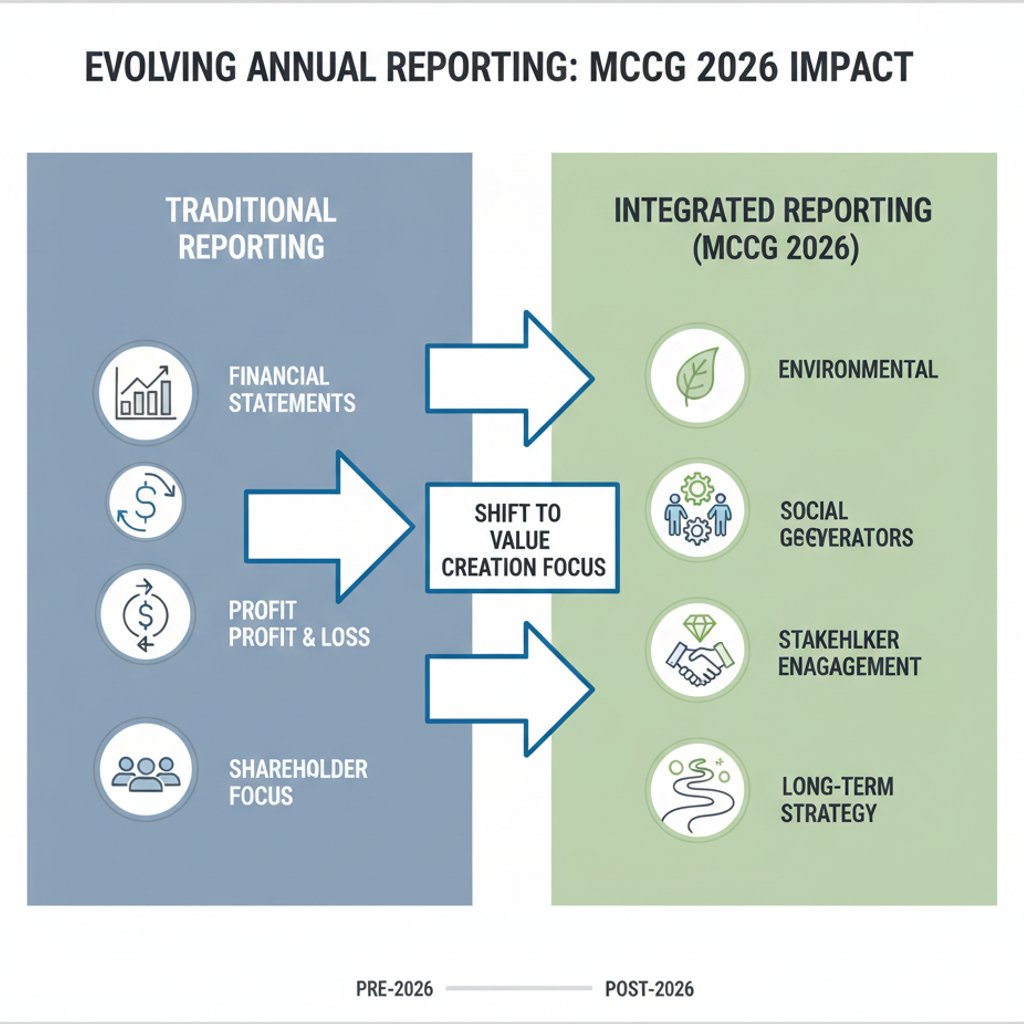
The updated MCCG 2026 is a clear signal that the SC expects companies to adopt a more comprehensive approach to corporate reporting, moving beyond traditional financial statements. It’s about painting a full picture of how a company creates and sustains value over the long term, considering all its impacts.
This isn’t just about compliance; it’s about competitive advantage. Companies that embrace this shift will likely find themselves better positioned to attract investment, retain talent, and build trust with an increasingly scrutinizing public. The code specifically calls for greater transparency on environmental, social, and governance (ESG) factors, and how these are integrated into business strategy and risk management. This means your annual report can no longer be an afterthought—it becomes a central piece of your corporate narrative.
The Integrated Reporting Imperative
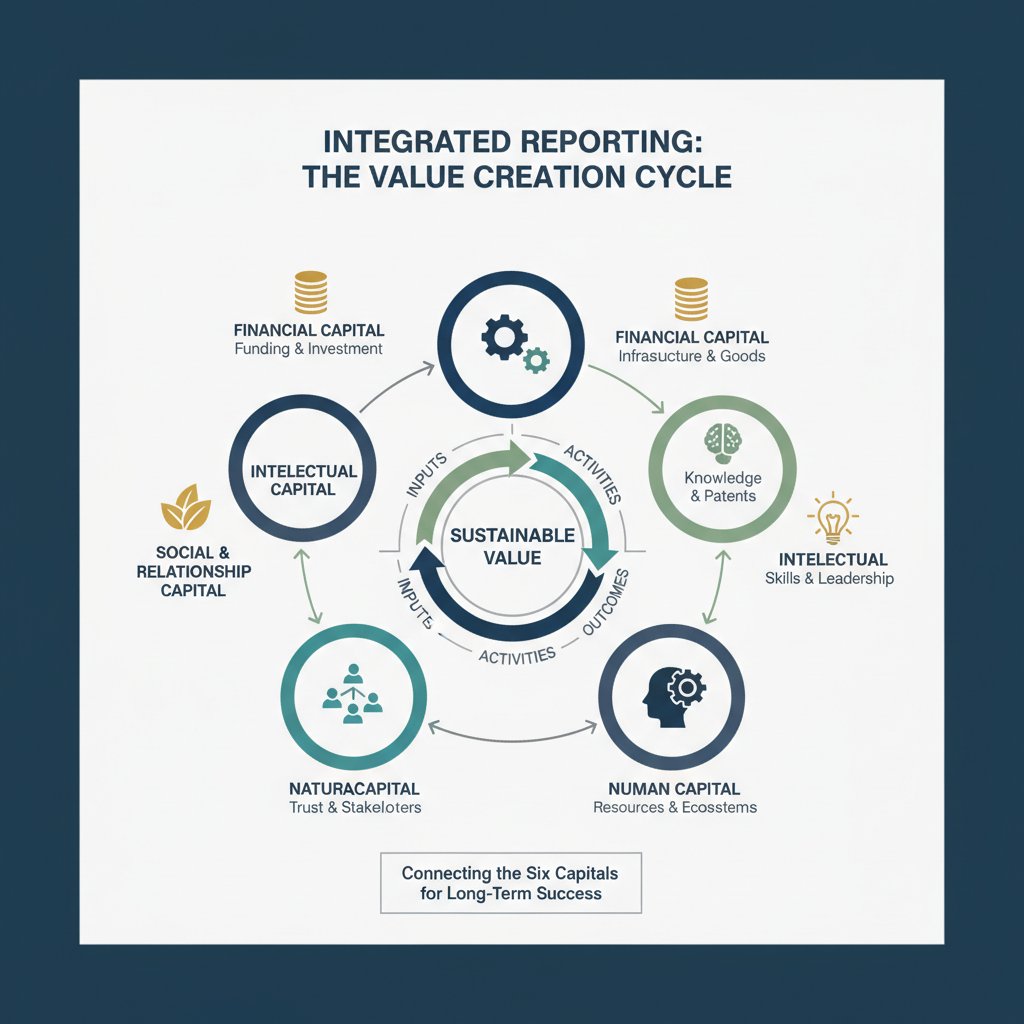
Integrated reporting isn’t a new concept, but the MCCG 2026 now elevates its importance significantly for Malaysian listed entities. It’s a framework designed to show the connectivity between an organization’s strategy, governance, performance, and prospects in the context of its external environment.
The International Integrated Reporting Council (IIRC) Framework, for instance, emphasizes six capitals: financial, manufactured, intellectual, human, social and relationship, and natural. Companies are now expected to articulate how they utilize and impact these capitals. This fundamentally changes the content and structure of an annual report, demanding a narrative that links financial outcomes to broader societal and environmental considerations. It’s a complex story to tell, and it requires a sophisticated approach to annual report design.
How Will Annual Report Design Evolve in Kuala Lumpur?
Annual report design in Kuala Lumpur, and indeed across Malaysia, must now prioritize clarity, narrative flow, and visual communication of complex, interconnected information. Gone are the days of dense text and generic stock photos.
I’ve always believed that a truly effective annual report is a strategic communication tool, not just a regulatory obligation. With these new guidelines, that belief is more pertinent than ever. Designers will need to work hand-in-hand with corporate strategists, sustainability officers, and financial teams to translate intricate data into compelling, digestible stories. This isn’t just about making it look pretty; it’s about making it understandable, impactful, and authentic.
Beyond Financials: Communicating ESG and Value Creation
The real story here isn’t just about adding an ESG section; it’s about weaving ESG into the entire fabric of the report. How does your company’s carbon footprint reduction strategy impact its long-term financial resilience? What’s the link between your employee well-being programs and productivity? These are the questions the new code implicitly asks, and your annual report design must provide the answers.
This means more infographics, more data visualization, and a more deliberate use of imagery to convey impact. Think about how you can visually represent your supply chain’s ethical sourcing, or the positive ripple effect of your community engagement programs. It’s a significant challenge, but also an incredible opportunity for companies to showcase their true worth.
| Aspect | Traditional Annual Report Design | MCCG 2026-Compliant Annual Report Design |
|---|---|---|
| Primary Focus | Financial performance, shareholder returns | Integrated performance (financial, ESG), long-term value creation for all stakeholders |
| Content Emphasis | Historical financial data, compliance with regulations | Strategic narrative, risk & opportunity, impact on capitals, future outlook |
| Design Approach | Formal, text-heavy, separate sections for financials/CSR | Narrative-driven, visually engaging, interconnected themes, data visualization |
| Stakeholder View | Primarily shareholders | Shareholders, employees, customers, suppliers, community, environment |
| Key Message | Profitability, stability | Resilience, sustainability, purpose, responsible growth |
Why Stakeholder Engagement is Now Critical for Your Annual Report
Stakeholder engagement isn’t just a buzzword; the MCCG 2026 makes it a cornerstone of good corporate governance. Companies are now expected to demonstrate how they identify, understand, and respond to the legitimate interests and expectations of their key stakeholders.
This isn’t about simply listing your stakeholders. It’s about showing how their input shapes your strategy, influences your decisions, and ultimately contributes to your long-term success. Your annual report needs to reflect this dialogue. How do you engage with your employees? What mechanisms are in place for customer feedback? How do you address community concerns? These are the narratives that will build trust and credibility.
From Compliance to Communication: A New Mindset
The shift is from a ‘check-the-box’ mentality to genuinely communicating how stakeholder relationships drive value. For annual report design, this means dedicating space—and visual emphasis—to these interactions. Case studies, testimonials, and clear metrics on engagement activities will become standard.
It’s about demonstrating that your company isn’t an island, but an integral part of a broader ecosystem. This is where the human element comes in. People want to invest in, work for, and buy from companies that demonstrate a clear purpose beyond profit. Your annual report is your chance to tell that story authentically.
Navigating the New Regulatory Landscape: Practical Steps for Malaysian Companies
The honest answer is that nobody knows for certain how rigorously these new guidelines will be enforced in their first year, but the direction is clear. Companies should start by conducting a materiality assessment to identify the most significant ESG issues relevant to their business and stakeholders.
This assessment should then inform the content strategy for the annual report. Don’t try to cover everything superficially. Focus on what truly matters to your business and your stakeholders, and communicate that with depth and clarity. According to a 2024 report by PwC Malaysia, 78% of Malaysian companies surveyed indicated they were increasing their focus on ESG reporting rules, even before these latest MCCG updates, showing a clear trend towards greater transparency.
Collaboration is Key
Successfully implementing these changes requires unprecedented collaboration across departments. Finance, legal, investor relations, sustainability, and communications teams must work together from the very beginning of the annual report cycle. This isn’t a task that can be siloed.
From my experience, the biggest hurdle often isn’t the technical data, but getting everyone on the same page about the narrative. What story are you trying to tell? What are the key messages? How do we ensure consistency across all communication channels? These are critical questions that need to be answered collectively, long before the designers even open their software.
The Role of Technology in Enhanced Reporting
Technology will undoubtedly play a crucial role in managing and presenting the increased volume of data required for integrated reporting. Data visualization tools, interactive PDFs, and even dedicated microsites for annual reports can help companies present complex information in an accessible and engaging manner.
We’re seeing a trend towards digital-first annual reports, which offer far more flexibility than static print versions. This allows for dynamic content, embedded videos, and interactive charts that can deepen stakeholder understanding. A 2025 study by Deloitte found that companies utilizing interactive digital reports saw a 30% increase in engagement metrics compared to traditional PDF reports.
What Are the Long-Term Benefits of Adapting to MCCG 2026?
Beyond compliance, embracing the spirit of MCCG 2026 offers significant long-term advantages. It fosters a more resilient and sustainable business model, enhances reputation, and can lead to better access to capital.
Investors, particularly institutional ones, are increasingly scrutinizing ESG performance. A well-crafted, integrated annual report that clearly articulates your ESG strategy and impact can differentiate your company in a crowded market. It signals forward-thinking leadership and a commitment to long-term value creation, which is exactly what conscious capital is looking for. This is a smart move by the SC, aligning Malaysia’s corporate landscape with global best practices and positioning Malaysian companies for future success.
Frequently Asked Questions
What is the Malaysian Code on Corporate Governance (MCCG) 2026?
The MCCG 2026 is an updated set of principles and best practices issued by the Securities Commission Malaysia, designed to strengthen corporate governance standards for listed companies. The 2026 updates place a significant emphasis on integrated reporting and enhanced stakeholder engagement.
How does MCCG 2026 impact annual report design in KL and Malaysia?
It fundamentally shifts annual report design from a compliance-focused document to a strategic communication tool. Reports must now holistically communicate financial, environmental, social, and governance (ESG) performance, as well as the company’s value creation story for all stakeholders, not just shareholders.
What is integrated reporting, and why is it important now?
Integrated reporting connects a company’s strategy, governance, performance, and prospects within the context of its external environment. It’s important because MCCG 2026 mandates a comprehensive view of how a company creates value, using various ‘capitals’ (financial, human, natural, etc.), demanding a more cohesive and transparent narrative.
What specific changes should companies make to their annual reports?
Companies should focus on a narrative-driven approach, incorporating more data visualization and infographics to explain ESG impacts and value creation. They need to clearly articulate stakeholder engagement strategies, risk management related to ESG, and their long-term sustainability goals, moving beyond just financial figures.
Will these changes affect small and medium-sized enterprises (SMEs)?
While the MCCG primarily targets listed companies, its principles often trickle down. SMEs that aspire to grow, attract investment, or engage with larger corporate partners may find it beneficial to adopt similar integrated reporting practices to demonstrate their commitment to good governance and sustainability.
What is the timeline for implementing MCCG 2026 changes?
The MCCG 2026 updates are effective immediately for financial years ending on or after a certain date, typically specified by the Securities Commission. Companies should consult the official SC guidance for precise implementation dates and reporting cycles.
Where can I find professional help for annual report design that complies with MCCG 2026?
Specialized agencies, like Datanex, with expertise in corporate reporting and sustainability communications, can assist Malaysian companies in developing strategic annual report design strategies that meet the new MCCG 2026 requirements, ensuring both compliance and effective storytelling.
Last updated: July 4, 2026