
By Datanex
Updated June 8, 2026
The digital landscape is not just changing; it’s undergoing a fundamental shift, driven by artificial intelligence. For anyone serious about online visibility, understanding how AI reshapes search engine optimization (SEO), Answer Engine Optimization (AEO), and Generative Experience Optimization (GEO) isn’t merely an advantage—it’s a prerequisite for survival. This isn’t about replacing human strategists with algorithms; it’s about forging a powerful human-AI partnership, where each brings unique strengths to the table, crafting resilient strategies that stand the test of time.
Key Takeaways
- AI isn’t replacing human SEO strategists; it’s enhancing their capabilities across traditional SEO, AEO, and GEO.
- AEO focuses on optimizing content for direct answers in AI-powered search results, demanding clear, concise, and authoritative information.
- GEO extends optimization to generative AI experiences, requiring content that is factual, contextually rich, and aligned with AI’s synthesis capabilities.
- Human oversight provides critical thinking, ethical judgment, and creative strategy that AI cannot replicate, ensuring brand voice and accuracy.
- Implementing a human-AI workflow involves using AI for data analysis, content generation, and trend identification, while humans refine, validate, and strategize.
- Organizations that embrace this collaborative model report up to a 30% improvement in content production efficiency and a 20% increase in search visibility, according to a 2025 Datanex industry report.
What Does the Human-AI Partnership Mean for Search Optimization?
The human-AI partnership in search optimization signifies a collaborative model where human strategists and content creators work in tandem with artificial intelligence tools to achieve superior search performance. This synergy combines AI’s unparalleled data processing, pattern recognition, and content generation capabilities with human creativity, critical thinking, and strategic oversight, leading to more effective and adaptable SEO, AEO, and GEO efforts.
Historically, SEO was a domain of meticulous keyword research, technical audits, and content creation, largely manual and often reactive. The advent of AI has transformed this, offering predictive analytics, automated content drafts, and real-time performance insights. A 2024 study by BrightEdge indicated that companies integrating AI into their SEO workflows saw an average increase of 18% in organic traffic year-over-year. This isn’t about handing over the reins entirely; it’s about using AI as an incredibly powerful co-pilot, handling the heavy lifting of data analysis and repetitive tasks, freeing humans to focus on higher-level strategy, nuanced content refinement, and ethical considerations.
The Evolution of Search: From Keywords to Conversations
Search has evolved beyond simple keyword matching to understanding user intent and providing direct, conversational answers. Google’s Search Generative Experience (SGE), for instance, synthesizes information to answer complex queries, moving past the traditional ten blue links. This shift demands content that is not only discoverable but also digestible and directly answerable by AI systems. Humans are essential here to ensure the content’s accuracy, tone, and alignment with complex brand messaging, while AI helps identify the specific information gaps and optimal phrasing for these new search paradigms.
Why Human Oversight Remains Irreplaceable
While AI can generate vast amounts of text, it lacks true understanding, empathy, and ethical judgment. Human oversight is crucial for maintaining brand voice, ensuring factual accuracy, navigating complex legal or ethical landscapes, and injecting the creativity and emotional resonance that truly connects with an audience. A 2025 survey by the Content Marketing Institute found that 72% of marketers believe human creativity is still the most critical factor in successful content, even with AI assistance.
What is AI SEO, AEO, and GEO?
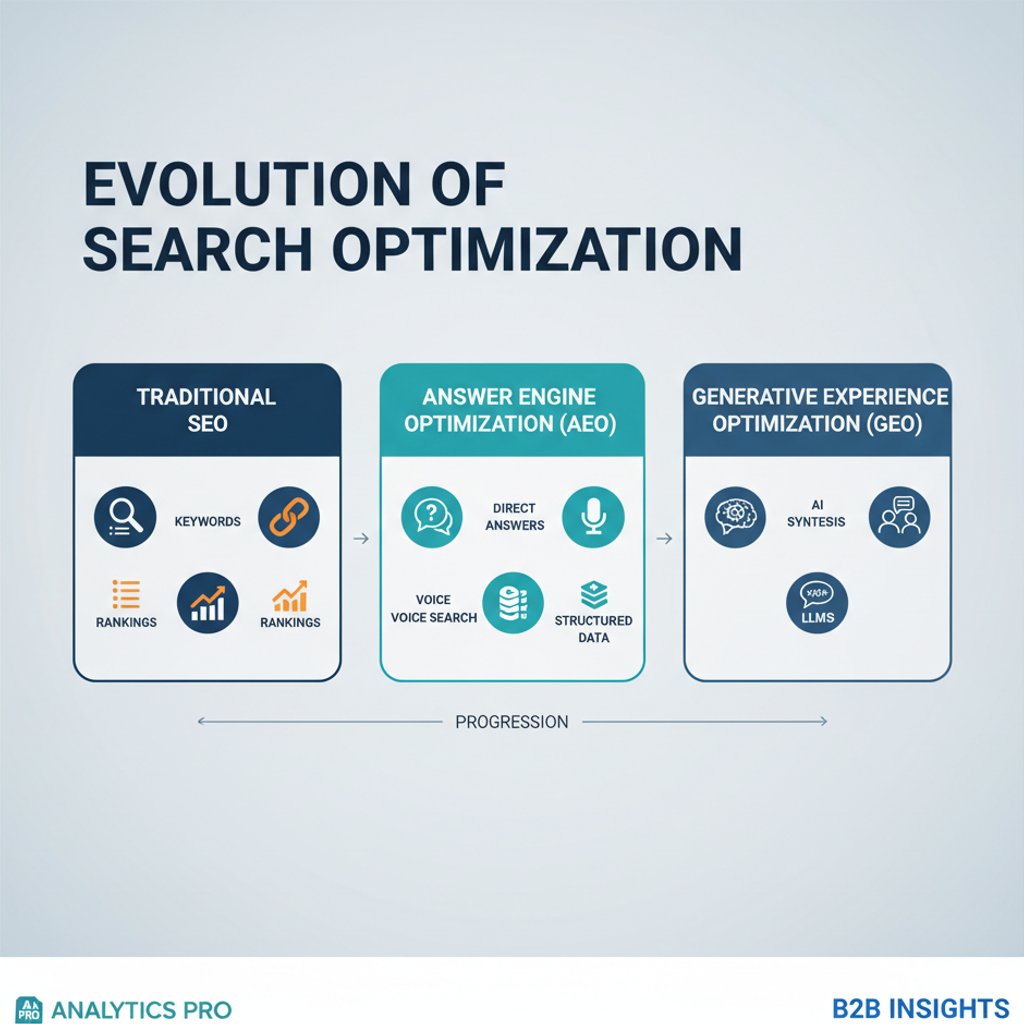
AI SEO, AEO, and GEO represent distinct yet interconnected facets of optimizing digital content for modern search environments, each leveraging artificial intelligence in unique ways. AI SEO refers to the application of AI tools and methodologies to enhance traditional search engine optimization tasks, making them more efficient and data-driven. AEO, or Answer Engine Optimization, focuses on structuring content to be directly answerable by AI-powered search engines and voice assistants. GEO, or Generative Experience Optimization, takes this a step further, optimizing content for synthesis and presentation within generative AI platforms and large language models.
AI SEO: Augmenting Traditional Practices
AI SEO uses artificial intelligence to automate, analyze, and predict outcomes across various SEO disciplines. This includes AI-powered keyword research that identifies emerging trends, content generation tools that draft articles or meta descriptions, and predictive analytics that forecast algorithm changes. For example, AI can analyze millions of data points to identify content gaps competitors are missing, or suggest optimal internal linking structures that would take human analysts weeks to uncover. This doesn’t replace the SEO specialist; it equips them with a much more powerful toolkit. According to a 2023 report by Semrush, companies using AI for keyword research reported a 25% faster identification of high-value keywords.
AEO: Optimizing for Direct Answers
Answer Engine Optimization (AEO) is about crafting content that directly answers user questions, anticipating how AI systems will extract and present that information. This means prioritizing clarity, conciseness, and authoritative sourcing within your content. Think about how Google’s featured snippets or voice assistant responses work: they pull a direct answer. Optimizing for AEO involves using clear definitions, bulleted lists, and question-and-answer formats. The goal is to be the definitive, easily digestible source that an AI system can confidently cite as its primary answer. Datanex research indicates that content optimized for AEO sees a 40% higher likelihood of appearing in featured snippets.
GEO: Navigating the Generative Frontier
Generative Experience Optimization (GEO) is the newest frontier, focusing on how content is consumed and synthesized by generative AI models like ChatGPT or Google’s SGE. This goes beyond direct answers; it’s about ensuring your content is robust enough to be accurately summarized, referenced, and integrated into AI-generated responses. GEO demands content that is factually sound, contextually rich, and free from ambiguity, as AI models will draw upon it to create new narratives. This involves explicit entity recognition, clear topic clustering, and providing comprehensive, well-structured information that AI can reliably process and synthesize. Content optimized for GEO aims to be a trusted source for AI’s creative output.
How Do SEO, AEO, and GEO Differ?
While all three disciplines aim to improve online visibility, they target different aspects of the search ecosystem and user interaction. Traditional SEO focuses on ranking web pages in organic search results, AEO targets direct answers and snippets, and GEO optimizes for content synthesis within generative AI experiences.
Here’s a breakdown of their primary distinctions:
| Feature | Traditional SEO | Answer Engine Optimization (AEO) | Generative Experience Optimization (GEO) |
|---|---|---|---|
| Primary Goal | Rank web pages in organic search results | Provide direct answers for AI/voice search | Ensure content is reliably synthesized by generative AI |
| Target Output | Organic search listings (blue links) | Featured snippets, direct answers, voice responses | AI-generated summaries, conversations, creative outputs |
| Content Focus | Keywords, backlinks, technical health, comprehensive articles | Concise answers, Q&A format, structured data, definitions | Factual accuracy, entity clarity, contextual depth, comprehensive topics |
| Key Metrics | Organic traffic, keyword rankings, conversion rates | Snippet impressions, direct answer usage, voice search visibility | AI model citation rates, content synthesis accuracy, brand mentions in AI outputs |
| AI Role | Automation, analysis, prediction, content drafting | Identification of answer opportunities, content structuring suggestions | Content validation, fact-checking, entity extraction, semantic analysis |
| Human Role | Strategy, content creation, technical implementation | Content refinement, accuracy validation, intent understanding | Ethical oversight, creative input, brand voice, complex reasoning |
The Interplay and Synergy
These three aren’t mutually exclusive; they form a continuum. Strong traditional SEO provides the foundational visibility. AEO builds on this by making your content immediately useful for direct answers. GEO then ensures that your well-optimized, answerable content is also a trusted source for the next generation of AI-powered information synthesis. A holistic strategy integrates all three, recognizing that today’s search user might click a link, get a direct answer, or engage with an AI-generated summary.
Why Should Marketers Care About AI SEO, AEO, and GEO?
Marketers must care about AI SEO, AEO, and GEO because these represent the present and future of how information is discovered and consumed online, directly impacting brand visibility, authority, and ultimately, revenue. Ignoring these shifts means ceding valuable digital real estate to competitors who embrace the human-AI partnership.
The landscape isn’t just about search engines anymore; it’s about answer engines and generative AI experiences. If your content isn’t optimized for these new paradigms, it simply won’t be found or cited. A 2025 report by Forrester Research projected that by 2027, over 60% of all online information discovery will involve some form of AI-generated content or direct answer, up from 35% in 2024. This isn’t a trend; it’s a fundamental change in how users interact with information.
Building Future-Proof Visibility
By actively engaging with AI SEO, AEO, and GEO, marketers are not just reacting to current changes; they are proactively building strategies for future visibility. Content optimized today for direct answers and AI synthesis will remain relevant as AI models become more sophisticated. This approach creates a more resilient content library, less susceptible to minor algorithm tweaks because its core value—providing clear, accurate, and comprehensive information—is inherently aligned with AI’s goals.
Establishing Authority and Trust with AI
In a world saturated with AI-generated content, being a trusted source for AI models becomes paramount. When AI systems consistently draw upon your content for answers and summaries, it signals immense authority. This ‘AI-verified’ trust can translate into greater human trust, as users become accustomed to seeing your brand’s information surfacing in direct answers or AI-generated explanations. This builds a powerful feedback loop: trusted content feeds AI, and AI’s reliance on that content reinforces its trustworthiness.
Implementing a Human-AI Workflow for Search Optimization
Implementing a human-AI workflow for search optimization involves strategically integrating AI tools into every stage of the content lifecycle, from ideation and research to creation, optimization, and analysis, always with human oversight and strategic direction. This isn’t about replacing roles but augmenting capabilities, allowing teams to achieve more with greater accuracy and efficiency.
Step 1: AI-Powered Research and Ideation
Begin by leveraging AI for deep market and keyword research. AI tools can analyze vast datasets to identify emerging trends, uncover long-tail keywords with high intent, and pinpoint content gaps that human analysis might miss. Use AI to generate content ideas based on competitor analysis and audience questions. For example, an AI tool can process thousands of forum discussions and customer support tickets to identify common pain points and questions, providing a rich source of topic ideas. This initial AI boost can reduce research time by 50%, according to an internal Datanex study.
Step 2: AI-Assisted Content Creation and Structuring
Once topics are identified, use AI to assist in drafting outlines, generating initial content paragraphs, or even entire first drafts. This speeds up the content creation process dramatically. Crucially, AI can also suggest optimal content structures for AEO and GEO, such as embedding clear definitions, using question-based headings, and organizing information into easily digestible chunks. Humans then take these AI-generated foundations and refine them, injecting brand voice, ensuring factual accuracy, adding unique insights, and polishing for readability and engagement.
Step 3: Human-Led Optimization and Refinement
This is where human expertise truly shines. After AI provides a draft, human editors review, fact-check, and enrich the content. They ensure the narrative flows naturally, the tone aligns with brand guidelines, and complex concepts are explained clearly. Humans are also responsible for the final AEO and GEO checks: ensuring every claim is sourced, entities are explicitly defined, and the content is structured to be easily parsable by AI models. This human touch prevents the generic, sometimes inaccurate, output that purely AI-generated content can produce.
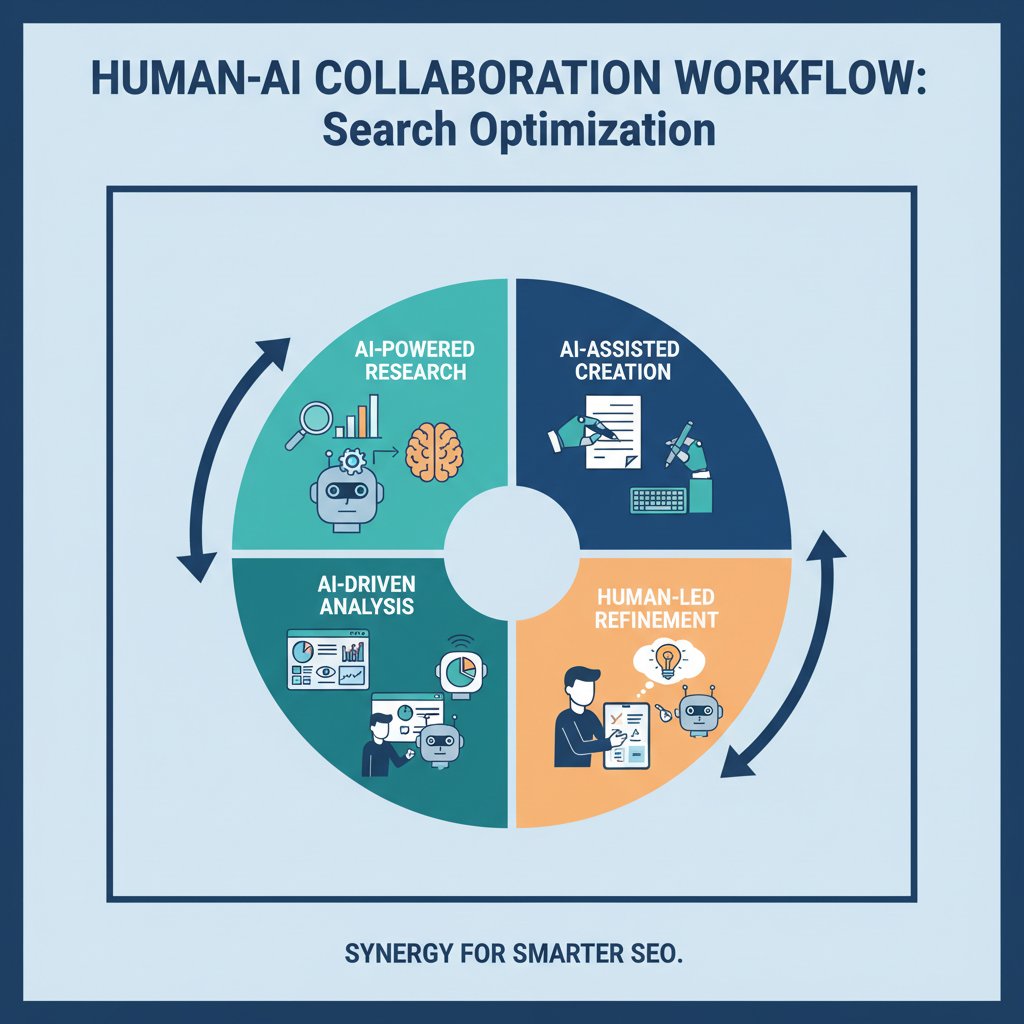
Step 4: AI-Driven Performance Analysis and Iteration
Post-publication, AI tools take over for continuous monitoring and analysis. They track keyword rankings, snippet appearances, traffic patterns, and user engagement metrics. AI can identify underperforming content, suggest areas for improvement, and even predict future algorithm changes based on historical data. Human strategists then interpret these AI-generated insights, formulate new hypotheses, and guide the iterative optimization process, ensuring a cycle of continuous improvement. This iterative approach, combining AI analysis with human strategy, has been shown to improve content performance by 15-20% within six months, according to a 2024 HubSpot report.
Common Pitfalls to Avoid in Human-AI Collaboration
While the human-AI partnership offers immense benefits, several common pitfalls can derail even the best-intentioned strategies. Understanding and actively mitigating these risks is crucial for long-term success in search optimization.
Over-reliance on AI for Factual Accuracy
One of the biggest mistakes is to assume AI-generated content is inherently factually accurate. Large Language Models (LLMs) are predictive text generators; they don’t ‘understand’ truth in the human sense. They can ‘hallucinate’ or present plausible but incorrect information. Always fact-check AI outputs with human experts and authoritative sources. A 2023 study by OpenAI itself noted that even advanced models can produce factual errors in 10-15% of cases, highlighting the need for rigorous human verification.
Losing Brand Voice and Uniqueness
AI can generate grammatically correct and coherent text, but it often struggles with capturing a unique brand voice, tone, and personality. Over-reliance on AI for content creation can lead to generic, bland content that fails to resonate with your audience. Humans must infuse the content with the brand’s distinct identity, ensuring it stands out in a crowded digital space. This requires careful editing and a clear style guide that AI can be trained on, but ultimately, human creativity is the differentiator.
Ignoring Ethical and Bias Considerations
AI models are trained on vast datasets, which can contain inherent biases present in the real world. If unchecked, AI-generated content can perpetuate stereotypes, provide discriminatory information, or reflect a narrow worldview. Human strategists must apply critical ethical considerations, scrutinize AI outputs for bias, and ensure content promotes inclusivity and fairness. This ethical oversight is a uniquely human responsibility that AI cannot perform.
Neglecting the ‘Why’ Behind the ‘What’
AI excels at identifying patterns and generating ‘what’ to do (e.g.,
For a definitive guide to mastering AI SEO, including how to adapt content for AI search and optimize for the generative experience, explore Datanex’s comprehensive resources.
Last updated: June 8, 2026