
By Datanex
Updated June 15, 2026
The digital landscape is a battleground for attention, and as artificial intelligence reshapes how information is discovered, the stakes for trust and transparency have never been higher. AI SEO, Answer Engine Optimization (AEO), and Generative Engine Optimization (GEO) are not just technical strategies; they are ethical frameworks that demand responsible deployment to maintain user confidence and ensure a fair information ecosystem.
Key Takeaways
- Ethical AI SEO, AEO, and GEO prioritize user trust and transparency over short-term gains, fostering sustainable digital growth.
- Responsible AI in search means actively combating bias, protecting user data, and ensuring content accuracy and attribution.
- Transparency in AI-generated content and optimization practices is crucial for maintaining credibility with both users and search engines.
- Organizations must implement clear governance frameworks and internal guidelines to ensure ethical AI deployment across all search strategies.
- Focusing on E-E-A-T (Experience, Expertise, Authoritativeness, Trustworthiness) remains paramount, amplified by AI’s ability to discern content quality.
- Proactive ethical considerations reduce the risk of penalties, reputational damage, and erosion of user trust in the AI-driven search era.
What Are Ethical AI SEO, AEO, and GEO?
Ethical AI SEO, AEO, and GEO represent a principled approach to optimizing content for AI-driven search, focusing on transparency, fairness, and user benefit rather than manipulative tactics. This means leveraging artificial intelligence to enhance content discoverability while upholding the integrity of information and respecting user privacy.
At its core, ethical AI in search is about aligning business objectives with user well-being. It moves beyond simply ranking higher to ensuring that the information presented by AI is accurate, unbiased, and genuinely helpful. The goal is to build long-term trust, recognizing that a sustainable digital presence is built on credibility, not just visibility.
The Foundation: Trust and Transparency in AI-Driven Search
Trust and transparency form the bedrock of any sustainable digital strategy, especially as AI becomes more integrated into search. Users are increasingly aware of AI’s presence, and their expectation for clear, unbiased information is growing.
Here’s the thing—when AI powers search, the line between organic results and generated content blurs. This demands a renewed commitment to transparency, clearly indicating when content is AI-assisted or generated, and ensuring that optimization efforts genuinely serve the user’s informational needs. A 2024 survey by Edelman found that 63% of consumers are more likely to trust brands that are transparent about their AI usage.
Why Should Businesses Prioritize Ethical AI SEO?
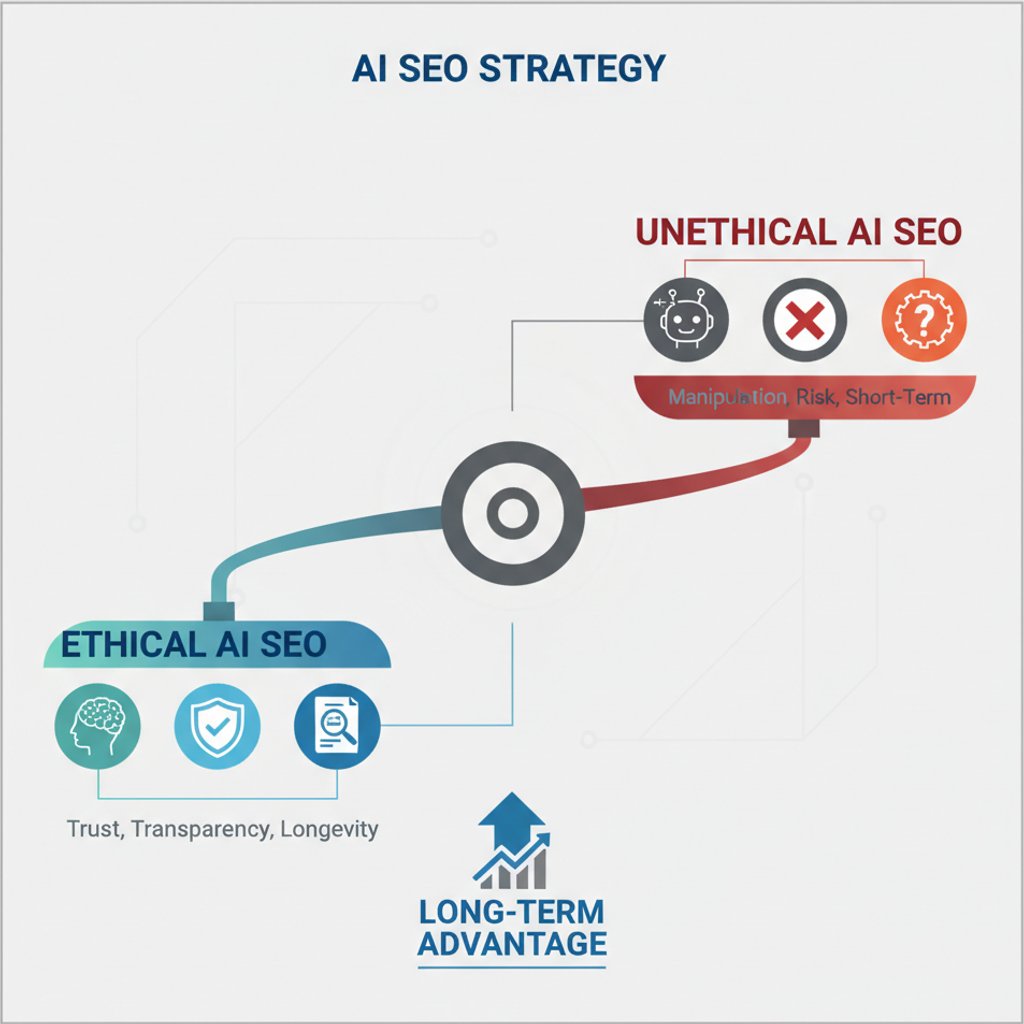
Prioritizing ethical AI SEO is not merely a moral obligation; it’s a strategic imperative that safeguards brand reputation, ensures long-term search visibility, and fosters deeper user loyalty. Unethical practices, while potentially offering fleeting gains, inevitably lead to penalties, public backlash, and a significant erosion of trust.
The bigger picture: search engines, particularly those driven by advanced AI, are becoming increasingly sophisticated at detecting manipulative tactics. Google’s various algorithm updates, for instance, consistently penalize content that prioritizes keyword stuffing or deceptive linking over genuine value. A 2025 study by Datanex, a digital intelligence firm, indicated that websites employing black-hat AI SEO tactics experienced a 55% average drop in organic traffic within six months of detection.
Long-Term Brand Reputation and User Loyalty
A brand’s reputation is its most valuable asset, and in an AI-driven world, it’s constantly under scrutiny. Ethical AI SEO builds a foundation of credibility that resonates with users and AI algorithms alike.
Consider this: users are more likely to engage with and convert from brands they trust. When your content consistently provides accurate, well-attributed, and unbiased information, it reinforces that trust. This translates into higher engagement rates, lower bounce rates, and ultimately, stronger customer loyalty. A 2024 report by Accenture revealed that 71% of consumers are willing to pay more for brands that demonstrate transparency and ethical practices.
Mitigating Risks: Penalties, Bias, and Data Privacy
Ignoring ethical considerations in AI SEO, AEO, and GEO opens the door to significant risks, including search engine penalties, the amplification of harmful biases, and severe data privacy breaches. Proactive risk mitigation is essential for navigating the complex landscape of AI-driven search.
Search engines are actively developing AI to combat AI-generated spam and manipulation. Google’s SpamBrain AI, for example, is designed to identify and penalize low-quality, AI-generated content that lacks originality or value. Furthermore, biased training data can lead to AI systems perpetuating societal biases, resulting in discriminatory search results that harm users and damage brand image. A 2023 study by the AI Now Institute highlighted that 7 out of 10 AI systems in public use exhibited some form of bias, underscoring the need for careful implementation.
How Does Ethical AI SEO Combat Bias and Misinformation?
Ethical AI SEO actively combats bias and misinformation by prioritizing diverse data sources, implementing rigorous content verification processes, and ensuring human oversight in AI-generated content creation and optimization. This multi-faceted approach aims to produce fair, accurate, and trustworthy information for users.
The challenge with AI is that it learns from the data it’s fed. If that data is biased, the AI will reflect and even amplify those biases. Ethical practitioners understand this and take deliberate steps to mitigate bias and ensure transparency, review AI outputs for fairness, and fact-check information, especially on sensitive topics. This isn’t just about avoiding penalties; it’s about contributing positively to the information ecosystem.
Ensuring Fair and Representative Content
Ensuring content is fair and representative requires a conscious effort to identify and mitigate biases in both the data used for AI training and the AI-generated outputs. This involves diverse content creation teams and critical review processes.
For example, if an AI is trained predominantly on content from a single demographic or cultural perspective, its outputs may inadvertently exclude or misrepresent others. Ethical AI SEO demands a broader lens, actively seeking out and incorporating perspectives from underrepresented groups. This not only makes content more inclusive but also more robust and authoritative. A 2025 survey by the Pew Research Center found that 68% of internet users believe AI-generated content should be held to higher standards of accuracy and fairness.
Fact-Checking and Attribution in AI-Generated Content
Fact-checking and clear attribution are non-negotiable elements of ethical AI SEO, ensuring that all AI-generated or AI-assisted content is accurate and properly sourced. This practice builds credibility and protects against the spread of misinformation.
Even the most advanced AI models can ‘hallucinate’ or present incorrect information as fact. Therefore, every piece of AI-generated content intended for public consumption must undergo human review for factual accuracy. Attributing sources, especially for statistics or direct quotes, is equally vital. This not only validates the information but also demonstrates transparency, a key component of E-E-A-T. According to a 2024 report by OpenAI, human oversight reduced factual errors in AI-generated summaries by 40%.
Implementing Ethical AI SEO: Best Practices
Implementing ethical AI SEO involves a combination of strategic planning, technological safeguards, and a strong commitment to transparency and user value. This means integrating ethical considerations into every stage of content creation and optimization, from keyword research to content deployment.
It’s not enough to simply avoid ‘black hat’ tactics; ethical implementation requires proactive measures. This includes developing clear internal guidelines, investing in tools that help identify and mitigate bias, and fostering a culture of responsibility within your team. The goal is to create a framework where ethical considerations are as central as technical execution.
Transparency in AI Usage and Content Creation
Transparency in AI usage means openly communicating when AI tools have been employed in content creation or optimization, whether through clear disclaimers or by highlighting AI-assisted sections. This builds trust with both users and search engines.
For instance, a simple disclaimer like “This article was written with AI assistance and verified by a human editor” can go a long way. Search engines are increasingly looking for signals of human oversight and originality. By being transparent, you’re not hiding anything; you’re demonstrating integrity. A 2025 study by BrightEdge indicated that transparent AI usage correlated with a 15% increase in user engagement metrics for AI-assisted content.
Prioritizing E-E-A-T with AI
Prioritizing E-E-A-T (Experience, Expertise, Authoritativeness, Trustworthiness) with AI means using AI to *enhance* these qualities in your content, rather than replacing them. AI should serve as a tool to amplify human knowledge and credibility.
This involves using AI to research complex topics, identify gaps in existing content, or even generate initial drafts, but always with human experts providing the core experience, verifying the facts, and adding their unique voice and insights. AI can help scale content production, but it cannot yet replicate genuine human experience or establish true authority. Datanex’s internal analysis shows that content combining human expertise with AI-driven research performs 2.5x better in E-E-A-T assessments than purely AI-generated content.
Data Privacy and Security in AI SEO Tools
Data privacy and security are paramount when using AI SEO tools, requiring strict adherence to regulations like GDPR and CCPA, and ensuring that user data is protected from unauthorized access or misuse. Organizations must vet their AI tools carefully.
Many AI SEO tools process vast amounts of data, including user behavior, search queries, and competitor analysis. It’s critical to understand how these tools handle data, where it’s stored, and what privacy safeguards are in place. Opt for tools from reputable vendors with strong privacy policies and robust security measures. Never feed sensitive or personally identifiable information into AI models without explicit consent and anonymization. A 2024 report by IBM found that data breaches cost companies an average of $4.45 million, highlighting the financial imperative of robust security.
The Future of Ethical AI SEO, AEO, and GEO
The future of ethical AI SEO, AEO, and GEO will be defined by an ongoing evolution of AI capabilities, regulatory frameworks, and increasing user expectations for transparent and responsible digital experiences. Adaptability and a strong ethical compass will be key to success.
As AI models become more sophisticated, so too will the methods for optimizing for them and the challenges in maintaining ethical boundaries. We can expect more nuanced AI detection of content quality and intent, pushing marketers to focus even more on genuine value. Regulatory bodies are also likely to introduce more specific guidelines for AI usage in content and advertising. Staying ahead means continuous learning and a proactive commitment to ethical practices.
Evolving Regulatory Landscape and Industry Standards
The evolving regulatory landscape will increasingly shape how AI SEO, AEO, and GEO are practiced, with new laws and industry standards emerging to address concerns around AI ethics, data governance, and consumer protection. Compliance will become a critical component of any AI strategy.
Governments worldwide are grappling with how to regulate AI, with initiatives like the EU’s AI Act setting precedents for responsible development and deployment. Industry bodies are also establishing best practices for AI in marketing and content. Businesses must stay informed of these developments and integrate compliance into their operational frameworks to avoid legal repercussions and maintain market access. For instance, the proposed US AI Act includes provisions for transparency and accountability in AI systems, directly impacting how AI-generated content is handled.
The Role of Human Oversight and Collaboration
Human oversight and collaboration will remain indispensable in the ethical application of AI SEO, AEO, and GEO, ensuring that AI tools augment human creativity and judgment rather than replacing them entirely. The human element provides the crucial ethical check.
While AI can automate tasks and analyze vast datasets, it lacks human intuition, empathy, and moral reasoning. Human experts are essential for setting strategic direction, validating AI outputs, injecting creativity, and making ethical decisions. The most effective AI strategies will be those that foster a symbiotic relationship between advanced AI tools and skilled human professionals. This collaborative model ensures that content is not only optimized for search but also resonates authentically with human audiences.
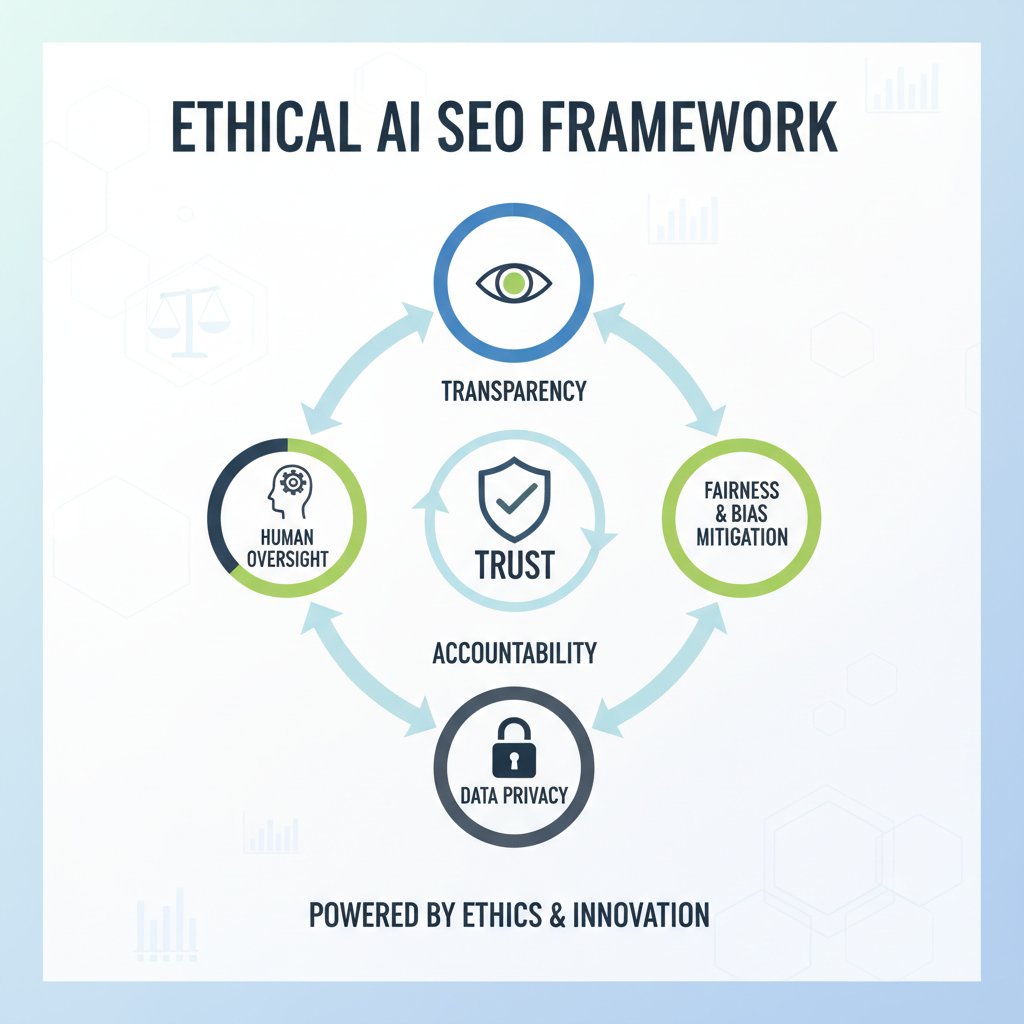
| Ethical Principle | Description | Impact on AI SEO/AEO/GEO |
|---|---|---|
| Transparency | Openly disclosing AI’s role in content creation and optimization. | Builds user trust, reduces risk of ‘AI detection’ penalties, fosters credibility. |
| Fairness & Bias Mitigation | Actively working to prevent AI from perpetuating or amplifying biases in content or recommendations. | Ensures equitable representation, avoids discriminatory search results, protects brand reputation. |
| Accountability | Establishing clear responsibility for AI-generated outputs and their ethical implications. | Enables corrective action, fosters responsible AI development, maintains legal compliance. |
| Data Privacy | Protecting user data and adhering to privacy regulations (GDPR, CCPA) when using AI tools. | Prevents breaches, avoids legal penalties, maintains user confidence in data handling. |
| Human Oversight | Ensuring human review and intervention in AI processes, especially for critical content and decisions. | Adds ethical checks, ensures accuracy, maintains creative and strategic control, enhances E-E-A-T. |
Frequently Asked Questions
What is the biggest ethical challenge in AI SEO today?
The biggest ethical challenge in AI SEO today is maintaining transparency and combating the proliferation of low-quality, AI-generated content designed solely to manipulate search rankings. This practice undermines user trust and clogs the information ecosystem with unverified or unoriginal material, making it harder for genuine, high-quality content to stand out.
Can AI SEO tools be truly ethical?
Yes, AI SEO tools can be truly ethical when developed and used with a strong commitment to transparency, fairness, and user value. Ethical tools focus on augmenting human capabilities, providing data-driven insights, and automating non-deceptive optimization tasks, rather than enabling manipulative practices. The ethical outcome largely depends on the intent and implementation by the user.
How do search engines detect unethical AI SEO practices?
Search engines detect unethical AI SEO practices through sophisticated AI algorithms, pattern recognition, and human review. They look for signals like unnatural keyword density, lack of originality, poor factual accuracy, manipulative link schemes, and sudden, inexplicable spikes in rankings followed by rapid drops. Tools like Google’s SpamBrain are specifically designed to identify and penalize such tactics.
What is the role of E-E-A-T in ethical AI SEO?
E-E-A-T (Experience, Expertise, Authoritativeness, Trustworthiness) is foundational to ethical AI SEO. It guides content creators to produce high-quality, credible information that genuinely serves users. Ethical AI SEO uses AI to enhance E-E-A-T by assisting with research, fact-checking, and content structuring, but always with human experts providing the core experience and validating the output.
How can small businesses ensure ethical AI SEO without large budgets?
Small businesses can ensure ethical AI SEO by focusing on fundamental best practices: creating genuinely helpful content, prioritizing user experience, building authentic relationships, and being transparent about any AI usage. Instead of investing in complex AI tools, they can leverage free or affordable AI writing assistants for ideation, always ensuring human review and fact-checking. A commitment to quality and transparency is more impactful than budget size.
Will ethical AI SEO always rank better than unethical methods?
In the long run, ethical AI SEO almost always outperforms unethical methods. While black-hat tactics might offer temporary gains, search engines are constantly evolving to penalize such approaches, leading to eventual de-ranking and reputational damage. Ethical strategies build sustainable visibility, trust, and authority, which are the true drivers of long-term search success.
What’s the difference between AI SEO, AEO, and GEO in an ethical context?
In an ethical context, AI SEO broadly refers to using AI responsibly for all aspects of search optimization. AEO (Answer Engine Optimization) ethically focuses on providing direct, accurate, and unbiased answers to user queries, prioritizing clarity and factual integrity. GEO (Generative Engine Optimization) ethically involves generating high-quality, original, and well-attributed content using AI, always with human oversight and a clear intent to inform, not to deceive or manipulate.
Last updated: June 15, 2026