
By Datanex
Updated May 13, 2026
Key Takeaways
- A company profile is a strategic asset, not just a brochure, communicating your brand’s core identity and value proposition to diverse stakeholders.
- Effective design integrates compelling storytelling, clear messaging, and professional visual aesthetics to build trust and credibility.
- Content must be tailored to specific audiences, addressing their needs and demonstrating how your company provides solutions.
- For the Malaysian market, cultural nuances, local business practices, and a focus on community and relationships are crucial for resonance.
- Regular updates and a multi-format approach ensure your company profile remains relevant and accessible across various platforms.
Your company’s story isn’t just a narrative; it’s a strategic asset, meticulously crafted and visually compelling. A well-designed company profile doesn’t just introduce your business; it articulates your vision, solidifies your credibility, and paves the way for meaningful connections, whether you’re engaging investors in London or potential partners in Kuala Lumpur.
This guide cuts through the noise, offering a timeless framework for designing a company profile that stands the test of time and market shifts. We’ll explore the foundational principles that make a profile truly impactful, from strategic content development to visual communication that speaks volumes. You’ll learn how to build a profile that not only looks professional but also actively drives your business objectives, with specific insights tailored for the dynamic business landscape of Malaysia and Kuala Lumpur.
What is a Company Profile and Why Does Its Design Matter?
A company profile is a professional document that introduces your business to an audience, outlining its mission, vision, values, products or services, history, and achievements. Its design matters immensely because it is often the first visual and textual impression a potential client, investor, or partner has of your organization, directly influencing their perception of your professionalism and credibility.
Think of your company profile as your business’s resume and portfolio rolled into one, but with a strategic narrative woven throughout. It’s not merely a collection of facts; it’s a carefully curated presentation designed to inform, persuade, and build trust. A strong design ensures this critical information is not only present but also digestible, engaging, and memorable. Research from Adobe indicates that well-designed content leads to a 38% higher retention rate of information compared to poorly designed material, underscoring the direct impact of aesthetics on comprehension and recall.
The profile serves multiple functions across various touchpoints. For instance, it can be a cornerstone of your investor deck, a handout at industry conferences, or a digital download on your website for prospective clients. Each interaction is an opportunity to reinforce your brand identity and communicate your unique value proposition. In the competitive Malaysian market, where personal relationships and trust are paramount, a polished and comprehensive company profile can significantly differentiate your business, signaling reliability and attention to detail. This is particularly true in Kuala Lumpur, a bustling economic hub where businesses vie for attention from both local and international stakeholders.
The Strategic Imperative of a Well-Designed Company Profile
A company profile transcends a simple marketing brochure; it is a fundamental tool for establishing authority and fostering stakeholder confidence. Its strategic imperative lies in its ability to condense complex business information into an accessible, persuasive narrative that aligns with your overarching business goals.
Consider a scenario where a startup in Cyberjaya is pitching to venture capitalists. Their innovative technology might be groundbreaking, but without a clear, well-structured company profile that articulates their market opportunity, team expertise, and financial projections, their message can get lost. A 2023 study by PwC found that companies with clearly articulated and consistently communicated brand narratives, often anchored by their company profiles, reported a 20% higher brand valuation than those without. This highlights how a profile acts as a foundational document for brand building and valuation. It’s about telling your story in a way that resonates, inspires confidence, and ultimately, drives action, whether that’s securing funding, attracting top talent, or winning new business.
Crafting Compelling Content: The Heart of Your Company Profile
Compelling content forms the backbone of any effective company profile, transforming it from a mere document into a powerful storytelling tool that captivates and informs your target audience. This means moving beyond generic statements to articulate your unique value proposition, company narrative, and future aspirations with clarity and impact.
The content within your company profile must serve a dual purpose: to educate and to persuade. It needs to clearly answer the fundamental questions: Who are you? What do you do? Why does it matter? And most importantly, why should someone choose you? According to a 2024 report by HubSpot, businesses that prioritize storytelling in their marketing materials see a 30% increase in customer engagement. This underscores the need for your profile’s content to be more than just facts; it needs to be a narrative that connects emotionally and intellectually with the reader.
Essential Content Sections to Include
Every impactful company profile includes several core sections, each designed to convey specific information and contribute to the overall narrative. These sections provide a structured approach to presenting your business comprehensively.
- Executive Summary/Introduction: A concise overview of your company, its core business, and key achievements, designed to hook the reader immediately. This should be a 1-2 paragraph distillation of your entire profile.
- Company Vision and Mission: Clearly articulate your long-term aspirations (vision) and your current purpose (mission). These statements define your company’s direction and values.
- Our Story/History: Narrate your company’s journey, key milestones, and the inspiration behind its inception. This humanizes your brand and builds connection.
- Products/Services: Detail what you offer, focusing on the benefits and solutions for your clients rather than just features. Use clear language and specific examples.
- Team/Leadership: Introduce key personnel, highlighting their expertise, experience, and roles. This builds trust and showcases the human capital behind your operations.
- Achievements and Milestones: Showcase awards, certifications, significant projects, and quantifiable successes. Specific numbers and verifiable accomplishments lend credibility. For example, ‘Increased client retention by 15% in 2025’ is far more impactful than ‘significantly improved client retention.’
- Client Testimonials/Case Studies: Provide social proof of your capabilities and impact through client success stories. A 2023 survey by BrightLocal found that 73% of consumers trust testimonials as much as personal recommendations.
- Corporate Social Responsibility (CSR) Initiatives: Highlight your commitment to community and sustainability. In Malaysia, where CSR is increasingly valued, this can significantly enhance your brand image.
- Contact Information: Clear and accessible ways for interested parties to reach you, including physical address, phone, email, and website.

Visual Aesthetics and Branding: Designing for Impact
Visual aesthetics and consistent branding are paramount in exceptional company profile design, as they immediately convey professionalism, reinforce identity, and facilitate information retention. A visually appealing and on-brand profile ensures that your message is not only seen but also felt and remembered, establishing a strong emotional connection with the reader.
The human brain processes images 60,000 times faster than text, according to research by 3M Corporation, meaning your profile’s visual elements will make the first and most lasting impression. This isn’t just about making it ‘pretty’; it’s about strategic visual communication. Your chosen color palette, typography, imagery, and layout all contribute to the overall brand experience. For example, a tech startup might opt for a minimalist, futuristic design with bold colors, while a heritage brand might lean towards classic fonts and muted tones. Each choice subtly communicates aspects of your brand’s personality and values. In the context of Company Profile Design KL, incorporating elements that subtly reflect local culture or aesthetics can also build rapport, without compromising global appeal.
Key Visual Elements for a Powerful Profile
To create a visually compelling company profile, attention must be paid to several critical design elements that work in concert to present a cohesive and professional image.
- Brand Identity Consistency: Ensure your logo, color palette, and typography are consistent with your overall brand guidelines. This reinforces brand recognition and professionalism.
- High-Quality Imagery: Use professional photographs and graphics that are relevant, high-resolution, and align with your brand’s aesthetic. Avoid generic stock photos if possible; invest in custom photography.
- Clean Layout and White Space: A well-organized layout with ample white space improves readability and prevents the profile from looking cluttered. It guides the reader’s eye and makes complex information easier to digest.
- Infographics and Data Visualization: Present statistics, processes, and complex data using infographics, charts, and graphs. Visual data is 323% more effective for information recall than text alone, as per a 2025 study by the Visual Teaching Alliance.
- Typography: Select legible fonts that reflect your brand’s personality. Use a maximum of two to three font families for headings, body text, and accents to maintain visual harmony.
- Call-to-Action (CTA): Integrate clear and concise CTAs, such as ‘Visit Our Website’ or ‘Contact Us for a Consultation,’ strategically placed to guide the reader towards the next step.
Tailoring Your Profile for the Malaysian and KL Market
Tailoring your company profile for the Malaysian and Kuala Lumpur market requires an understanding of local business etiquette, cultural nuances, and economic drivers to ensure relevance and foster stronger connections. A generic, one-size-fits-all approach risks missing opportunities to resonate deeply with local stakeholders.
Malaysia’s diverse cultural fabric, encompassing Malay, Chinese, Indian, and indigenous influences, means that a culturally sensitive approach is not just polite but strategically advantageous. While English is widely spoken in business, acknowledging local customs and values can build significant goodwill. For instance, emphasizing community involvement, family values (where appropriate for your business), and long-term relationships can be particularly effective. A 2024 report by the Malaysia Digital Economy Corporation (MDEC) highlighted that businesses demonstrating local relevance and community engagement saw a 15% higher rate of local partnership acquisition. This means your company profile should subtly or explicitly reflect an understanding of the local context.
Specific Considerations for Malaysia and Kuala Lumpur
When designing a company profile for the Malaysian and KL markets, several specific factors should be taken into account to maximize its impact and appeal.
- Cultural Sensitivity in Imagery: Ensure images reflect Malaysia’s multicultural society. Avoid visuals that might inadvertently exclude or misrepresent any ethnic group. Show diversity in your team photos or project examples.
- Language Options: While English is standard for business, consider offering a Bahasa Malaysia version or key summaries in Bahasa Malaysia, especially for government tenders or local community engagement.
- Local Achievements and Partnerships: Highlight any successful projects, collaborations, or contributions within Malaysia or specific to Kuala Lumpur. This demonstrates local commitment and understanding.
- Regulatory Compliance: If relevant, mention adherence to local regulations, certifications (e.g., Halal certification for certain industries), or industry standards specific to Malaysia.
- Emphasis on Relationships: Malaysian business culture often prioritizes building relationships. Your profile can subtly convey this by highlighting long-term client relationships or partnership philosophies.
- Accessibility: Consider digital formats that are easily shareable via popular local communication channels, and ensure physical copies are professionally printed for in-person meetings.
Digital vs. Print: Adapting Your Company Profile
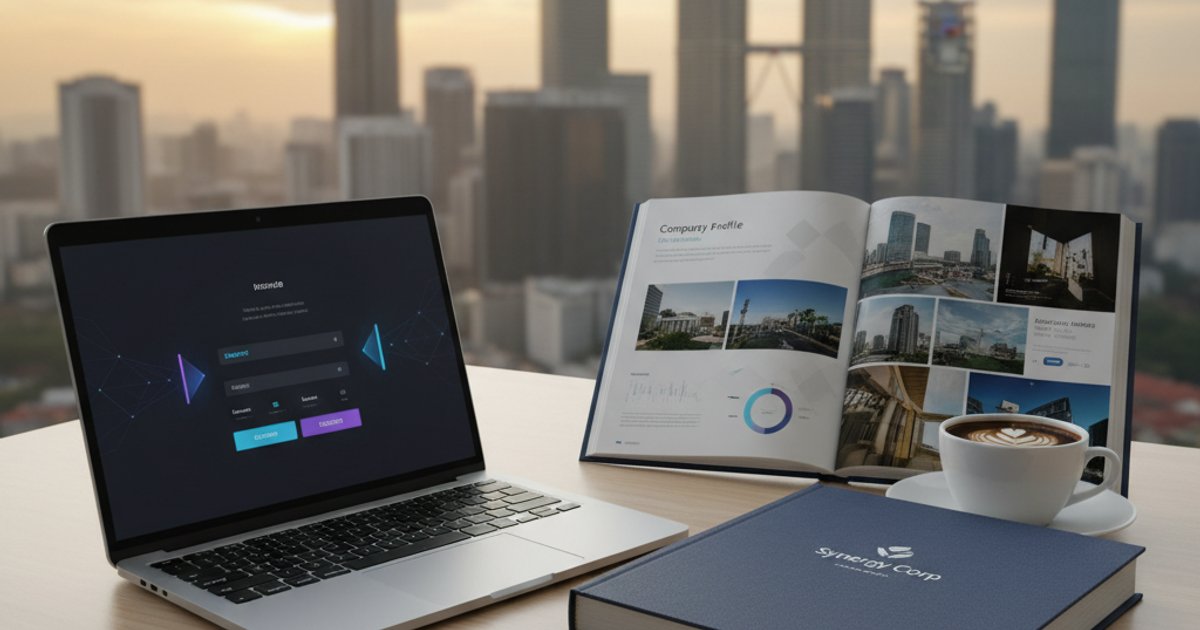
Adapting your company profile for both digital and print formats is crucial in today’s multi-channel communication landscape, ensuring maximum reach and accessibility for diverse audiences. While the core content remains consistent, the presentation and interactive elements must be optimized for each medium to deliver the best user experience.
A digital profile offers advantages like easy distribution, embedded multimedia, and analytics tracking, while a print profile provides a tangible, high-impact experience for face-to-face interactions. According to a 2025 survey by Statista, 68% of business professionals still prefer to receive physical documents for initial company introductions during in-person meetings, while 85% appreciate digital versions for easy reference and sharing. This dual preference necessitates a thoughtful approach to both formats. For businesses operating in Kuala Lumpur, where networking events and digital outreach are equally prevalent, having both optimized versions is not just beneficial, but essential.
Optimizing for Each Format
Creating effective digital and print versions of your company profile requires specific considerations for design, functionality, and distribution.
| Feature | Digital Company Profile Optimization | Print Company Profile Optimization |
|---|---|---|
| Interactivity | Hyperlinks, embedded videos, animated graphics, interactive forms, clickable CTAs. | High-quality paper stock, premium finishes (embossing, spot UV), tactile elements. |
| Distribution | Email attachments, website downloads, cloud sharing, social media, QR codes. | Direct mail, conference handouts, in-person meetings, reception area display. |
| Content Length | Often more concise with links to detailed information; easily navigable sections. | Can be more detailed, allowing for a deeper read without screen fatigue. |
| Visuals | RGB color mode, optimized for screen resolution, responsive design for various devices. | CMYK color mode, high-resolution images for print clarity, bleed for edge-to-edge design. |
| Updates | Easily updated in real-time, ensuring the latest information is always available. | Requires reprinting for updates, making frequent changes costly and time-consuming. |
| Analytics | Track views, downloads, clicks, and engagement metrics to gauge effectiveness. | Difficult to track direct engagement; relies on anecdotal feedback or follow-up. |
Future-Proofing Your Company Profile
Future-proofing your company profile involves designing it with adaptability and longevity in mind, ensuring it remains relevant and impactful despite evolving market trends and technological advancements. This strategic approach minimizes the need for frequent, costly overhauls and maintains a consistent brand image.
The core principles of your brand – your mission, vision, and values – are largely immutable, and these should be the anchors of your profile. While design trends come and go, a profile built on strong foundational content and timeless aesthetic principles will endure. This means prioritizing clarity, authenticity, and a modular design that allows for easy updates to specific sections without redesigning the entire document. A 2023 survey by Deloitte indicated that companies with adaptable brand assets experienced 25% faster market response times to new opportunities. For businesses in a rapidly developing region like Southeast Asia, particularly Malaysia, this agility is a significant competitive advantage.
Frequently Asked Questions
What is the ideal length for a company profile?
The ideal length for a company profile varies based on its purpose and audience, but generally, a digital profile can range from 8-15 pages, while a print version might be more concise at 4-8 pages. The key is to include all essential information without unnecessary filler, ensuring every section adds value.
How often should I update my company profile?
You should update your company profile at least annually, or whenever there are significant changes to your business, such as new products, major achievements, leadership changes, or shifts in your mission/vision. Regular updates ensure accuracy and relevance.
Can a small business benefit from a company profile?
Absolutely. A small business benefits immensely from a company profile by establishing credibility, professionalizing its image, and clearly articulating its value proposition to potential clients, partners, and investors, helping it compete with larger entities.
What’s the difference between a company profile and a business plan?
A company profile introduces your business and its capabilities to external stakeholders, focusing on what you are and what you offer. A business plan is an internal strategic document detailing your operational, financial, and marketing strategies for growth.
Should I include pricing in my company profile?
Generally, it’s best to avoid including specific pricing in your company profile, as prices can change frequently and may not be relevant to all audiences. Instead, focus on the value proposition and encourage direct contact for detailed quotes or proposals.
How important is professional photography in a company profile?
Professional photography is extremely important. High-quality images significantly enhance credibility, visual appeal, and brand perception, making your profile more engaging and trustworthy. Poor quality images can detract from your professional image.
What role does a company profile play in attracting investors in Malaysia?
In Malaysia, a well-structured company profile is vital for attracting investors as it provides a comprehensive overview of your business model, market opportunity, team, and financial projections. It serves as a foundational document for due diligence and demonstrates your professionalism and preparedness.
Conclusion
Crafting an impactful company profile is a strategic endeavor, not merely a design task. It demands a clear understanding of your brand’s essence, a meticulous approach to content, and a keen eye for visual communication. Whether you’re targeting a global audience or specifically the vibrant markets of Malaysia and Kuala Lumpur, the principles remain the same: tell your story with conviction, present your value with clarity, and design with purpose.
By adhering to these evergreen guidelines, you ensure your company profile becomes a powerful, future-proof asset that consistently opens doors, builds trust, and propels your business forward. It’s an investment in your brand’s narrative, one that pays dividends in credibility, partnerships, and sustained growth.
Last updated: May 13, 2026
“`