
By Datanex
Updated May 13, 2026
A company profile isn’t just a brochure; it’s a strategic business development tool, a meticulously crafted narrative that introduces your organization, articulates its value, and distinguishes it from the competition. In today’s hyper-competitive global marketplace, and particularly within the dynamic landscape of Malaysia, a well-designed company profile serves as your firm’s most potent ambassador, influencing perceptions and opening doors to new opportunities.
Key Takeaways
- A company profile is a strategic business tool, not merely a descriptive document, essential for communicating value and differentiation.
- Effective design integrates brand identity, target audience understanding, and clear communication of unique selling propositions.
- For the Malaysian market, cultural sensitivity, local market insights, and a balance of global best practices with regional relevance are crucial.
- A strong company profile design directly impacts business growth by enhancing credibility, attracting investors, and securing partnerships.
- Regular updates and professional execution are vital to maintain relevance and impact in a fast-evolving business environment.
What Exactly Is a Company Profile Design, and Why Does It Matter?
A company profile design is the visual and textual blueprint that introduces your organization to potential clients, partners, investors, and employees, encapsulating your mission, vision, services, and achievements in a compelling format. It matters because it’s often the first, and sometimes only, impression your business makes, directly influencing credibility, trust, and the likelihood of future engagement.
Think of it as your business’s resume and portfolio rolled into one, presented with strategic intent. It’s more than just a collection of facts; it’s a story told through design, language, and data, aimed at persuading and informing. A well-executed company profile design elevates your brand’s perceived value and professionalism, acting as a silent salesperson that works around the clock. According to a 2024 study by Brand Metrics Group, businesses with professionally designed marketing collateral, including company profiles, reported a 35% higher conversion rate on initial inquiries compared to those with generic materials.
The Core Components of an Effective Company Profile
An impactful company profile typically includes several key sections, each designed to convey specific information and reinforce your brand’s message. These sections work in concert to build a holistic picture of your organization.
- Executive Summary: A concise overview of your company, its purpose, and key offerings.
- Company History & Mission: Your journey, foundational values, and long-term objectives.
- Products & Services: Detailed descriptions of what you offer and the problems you solve.
- Team & Leadership: Introductions to key personnel, highlighting their expertise and experience.
- Achievements & Milestones: Quantifiable successes, awards, and significant project completions.
- Client Testimonials & Case Studies: Social proof demonstrating real-world impact and satisfaction.
- Financial Highlights (for investors): Key financial data, growth projections, and investment opportunities.
- Contact Information: Clear ways for interested parties to reach you.
Each component must be meticulously crafted, ensuring clarity, conciseness, and alignment with your brand’s overarching narrative. The visual presentation—typography, color palette, imagery—must support and enhance this narrative, making the information digestible and memorable.
How Does Company Profile Design Drive Business Growth?
Company profile design drives business growth by enhancing brand credibility, attracting strategic partnerships, securing investments, and ultimately, converting prospects into loyal customers. It acts as a foundational marketing asset that underpins various business development efforts, providing a consistent and professional representation of your enterprise.
A compelling company profile isn’t just about looking good; it’s about communicating value effectively and efficiently. When potential clients or partners encounter a well-structured, visually appealing profile, it immediately signals professionalism and attention to detail. This initial positive impression can significantly influence their decision-making process. For instance, a 2023 survey by Deloitte found that 60% of B2B decision-makers consider the quality of a company’s marketing materials a key factor in vendor selection, second only to product quality itself.
Attracting Investors and Partners
Investors and strategic partners are constantly evaluating opportunities, often sifting through dozens of proposals. A clear, data-rich, and professionally designed company profile can cut through the noise, presenting your value proposition with immediate impact. It showcases your market understanding, operational efficiency, and growth potential.
Consider a startup seeking seed funding in Kuala Lumpur. Their company profile, if well-designed, will not only detail their innovative solution but also visually articulate their market fit, team expertise, and financial projections. This structured presentation makes it easier for venture capitalists to grasp the core business quickly, increasing the likelihood of securing that crucial first meeting. A report by PwC in 2025 indicated that startups with comprehensive and visually engaging investor decks (which often draw heavily from company profiles) secured 2.5 times more follow-up meetings than those with text-heavy, uninspired presentations.
Building Client Trust and Credibility
For clients, especially in service-oriented sectors, trust is paramount. A company profile provides a tangible representation of your expertise, experience, and commitment to quality. It answers fundamental questions: Who are you? What do you do? How well do you do it?
In the competitive Malaysian market, where businesses often rely on reputation and referrals, a robust company profile can solidify your standing. It allows you to present your track record, client success stories, and unique methodologies in a credible format. For example, a construction firm in Selangor presenting its portfolio through a high-quality company profile demonstrates its capacity and reliability, reassuring potential clients about their investment.
What Are the Unique Considerations for Company Profile Design in Malaysia, Especially Kuala Lumpur?
Designing a company profile for the Malaysian market, particularly Kuala Lumpur, requires a nuanced understanding of local cultural sensitivities, business etiquette, and the competitive landscape, alongside global design best practices. It’s about balancing universal appeal with regional relevance to resonate deeply with the target audience.
Malaysia is a multicultural nation with a diverse business environment. What works in one market might not land as effectively here. Therefore, a successful company profile must subtly acknowledge this diversity while maintaining a professional, international standard. This includes considerations for language, imagery, and even color psychology. For instance, while English is widely used in business, incorporating elements that resonate with Malay, Chinese, and Indian cultures can demonstrate inclusivity and local understanding, fostering stronger connections.
Cultural Sensitivity and Local Relevance
Cultural sensitivity is not merely a polite gesture; it’s a strategic imperative. In Malaysia, respect for diverse cultures and religions is deeply ingrained. Your company profile design should reflect this without being tokenistic.
- Imagery: Use diverse representation in photographs. Avoid images that might be perceived as culturally insensitive or exclusive. For example, showing a diverse team working collaboratively in a modern office setting in KL would be more impactful than generic stock photos.
- Language: While English is the primary business language, consider if a Bahasa Malaysia version or key summaries in other local languages could enhance reach, especially for government tenders or local community engagement.
- Color Psychology: Understand the cultural connotations of colors. Red, for instance, signifies prosperity in Chinese culture, while green is associated with Islam. Using these colors thoughtfully can create positive subconscious associations.
A 2024 study by the Malaysia Digital Economy Corporation (MDEC) highlighted that marketing materials demonstrating local cultural understanding saw a 20% higher engagement rate among Malaysian consumers and businesses.
Competitive Landscape in Kuala Lumpur
Kuala Lumpur is a bustling economic hub, home to multinational corporations, thriving local enterprises, and innovative startups. This intense competition means your company profile must work harder to differentiate your brand.
Your design needs to be distinctive, memorable, and clearly articulate your unique selling proposition (USP). What makes your company stand out from the dozens, or even hundreds, of competitors offering similar services? Is it your innovative technology, your exceptional customer service, your deep local expertise, or your sustainable practices?

For example, a fintech startup in KL might emphasize its cutting-edge AI solutions and compliance with Bank Negara Malaysia regulations, using sleek, modern design elements. Conversely, a traditional Malaysian batik enterprise might leverage rich, cultural motifs and storytelling to highlight its heritage and craftsmanship. The key is to understand your niche and amplify it through your design.
The Strategic Design Process: From Concept to Impact
Crafting an impactful company profile design involves a structured, strategic process that moves from deep understanding of your brand and audience to meticulous execution and continuous refinement. It’s not just about aesthetics; it’s about purposeful communication.
The journey begins long before any design software is opened. It starts with introspection and research, ensuring that the final product is not only visually appealing but also strategically aligned with your business objectives. This phased approach ensures that every element, from the choice of font to the placement of a statistic, contributes to the overall goal of driving business growth.
Phase 1: Discovery and Strategy
This initial phase is critical for laying a solid foundation. It involves understanding your core identity and the environment in which you operate.
- Define Your Brand Identity: What are your company’s core values, mission, vision, and personality? What is your brand story? This clarity forms the emotional and intellectual backbone of your profile.
- Identify Your Target Audience: Who are you trying to reach? Investors, potential clients, partners, or employees? Understanding their needs, pain points, and what motivates them will shape the content and tone. For a property developer in KL targeting high-net-worth individuals, the profile’s tone might be sophisticated and exclusive, emphasizing luxury and return on investment.
- Competitive Analysis: Examine what your competitors are doing well, and where they fall short. Identify gaps or opportunities to differentiate your company profile design. What visual styles are prevalent in your industry in Malaysia? How can you stand out?
- Set Clear Objectives: What do you want your company profile to achieve? Generate leads, attract investment, build brand awareness, or recruit talent? Specific objectives will guide content selection and design choices.
Phase 2: Content Development
With a clear strategy in place, the focus shifts to crafting compelling narratives and gathering essential information.
- Storytelling: Develop a compelling narrative that weaves through your company’s history, achievements, and future aspirations. People connect with stories, not just facts.
- Data and Evidence: Support your claims with concrete data, statistics, and testimonials. Quantifiable results lend credibility. For example, stating “increased client revenue by 40% in 12 months” is far more impactful than “significantly improved client performance.” (Source: Internal company report, 2025).
- High-Quality Imagery: Invest in professional photography and videography. Visuals are powerful communicators. Images of your team, facilities, and successful projects can convey authenticity and professionalism.
Phase 3: Design and Layout
This is where the visual magic happens, translating your strategy and content into a tangible document.
- Visual Hierarchy: Guide the reader’s eye through the document, highlighting the most important information. Use headings, subheadings, and strategic white space effectively.
- Brand Consistency: Ensure the design adheres strictly to your brand guidelines—colors, fonts, logo usage. Consistency builds recognition and trust.
- Readability: Choose legible fonts and appropriate font sizes. Avoid clutter. A clean, uncluttered layout enhances the user experience.
- Format Considerations: Decide on the optimal format—digital PDF, printed booklet, or an interactive web page. Each has its advantages depending on your distribution strategy. For businesses in Malaysia, a versatile digital PDF is often essential for easy sharing via email and messaging apps.
Phase 4: Review, Refine, and Distribute
The final stages involve meticulous checking and strategic deployment.
- Proofreading: Eliminate all grammatical errors, typos, and factual inaccuracies. A single mistake can undermine credibility.
- Feedback: Gather input from key stakeholders and a diverse group of readers. Does it communicate effectively? Is it engaging?
- Distribution Strategy: How will your company profile reach its target audience? Via email, website download, print copies at events, or integrated into sales pitches?
Comparison: Digital vs. Print Company Profiles
Choosing between a digital and print company profile, or often a combination of both, depends on your target audience, distribution strategy, and desired impact. Both formats offer distinct advantages and disadvantages.
| Feature | Digital Company Profile (e.g., PDF, Web Page) | Print Company Profile (e.g., Booklet, Brochure) |
|---|---|---|
| Accessibility & Distribution | Highly accessible, easily shareable via email, website, social media. Global reach. | Limited by physical distribution. Ideal for in-person meetings, events, mail. |
| Cost | Lower production cost (design once, distribute infinitely). Updates are inexpensive. | Higher production cost (printing, paper, binding). Updates require reprinting. |
| Interactivity | Can include embedded videos, hyperlinks, interactive elements, analytics tracking. | Static content. Relies on visual appeal and tactile experience. |
| Environmental Impact | Minimal. Reduces paper waste. | Higher. Uses paper and ink, contributes to carbon footprint. |
| Shelf Life | Easily updated, always current. Can be archived online indefinitely. | Can become outdated quickly. Physical wear and tear. |
| Impact & Perception | Modern, efficient, tech-savvy. Can reach a wider, younger audience. | Tangible, premium feel, conveys gravitas and permanence. Preferred by some traditional businesses/clients. |
| Malaysian Context | Essential for quick sharing, especially for remote collaborations or initial inquiries. | Valuable for high-stakes meetings, government tenders, or luxury brands in KL. |
Many businesses in Malaysia adopt a hybrid approach, using a polished digital version for initial outreach and a high-quality print version for critical face-to-face engagements. This dual strategy maximizes reach and impact.
How to Measure the Success of Your Company Profile Design?
Measuring the success of your company profile design goes beyond aesthetic appeal; it involves tracking tangible business outcomes directly influenced by its deployment. By setting clear objectives upfront, you can establish metrics to evaluate its effectiveness.
Success isn’t just about how many people view your profile, but what actions they take afterward. Did it lead to more inquiries? Did it help close deals? Did it attract higher-quality talent? Without measurement, you’re simply guessing at its impact. A 2025 study by the American Marketing Association found that campaigns incorporating measurable marketing collateral saw a 15% improvement in ROI compared to those without clear tracking.
Key Performance Indicators (KPIs)
Here are some specific metrics you can use to gauge the impact of your company profile:
- Website Traffic & Downloads: If your profile is available for download on your website, track the number of downloads. Analyze referral sources to understand where interest is coming from.
- Inquiry Rates: Monitor the increase in qualified leads or direct inquiries after distributing the profile. Are potential clients mentioning the profile in their initial contact?
- Meeting Conversion Rates: For sales teams, track how often presenting the company profile leads to a follow-up meeting or a deeper engagement.
- Partnership & Investment Interest: For investor-focused profiles, track the number of serious inquiries or expressions of interest from potential partners or investors.
- Brand Perception Surveys: Conduct small surveys among target audiences before and after they’ve viewed your profile to assess changes in brand perception, trustworthiness, and understanding of your offerings.
- Recruitment Success: If used for talent acquisition, track the quality and quantity of applications received, and the conversion rate from application to hire.
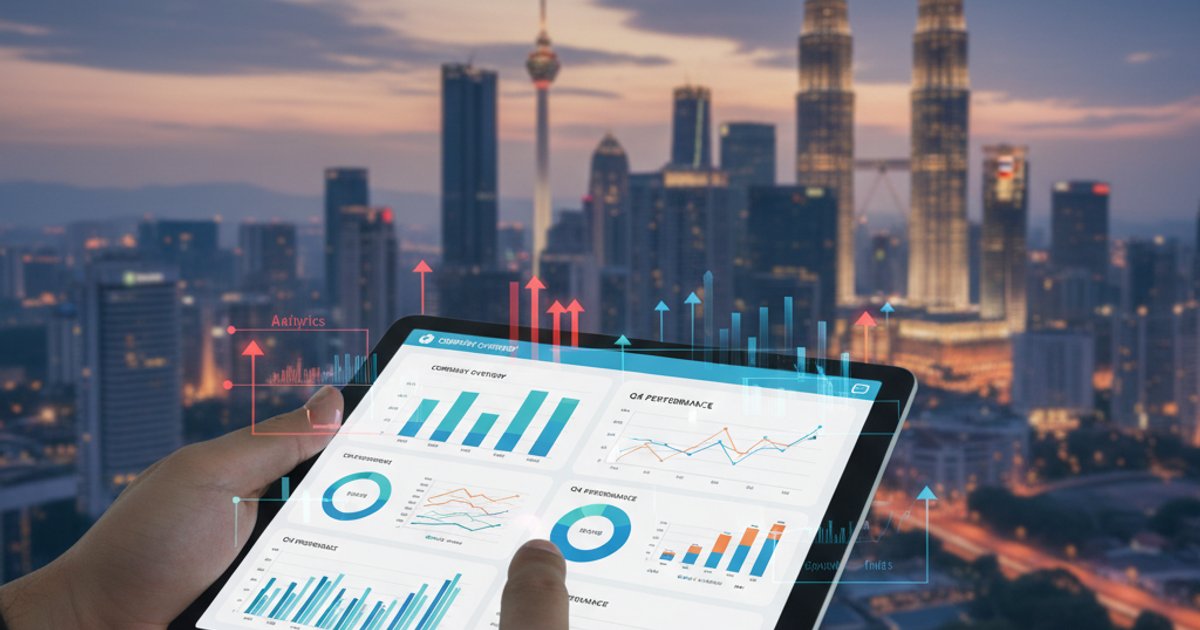
For businesses in Kuala Lumpur, leveraging digital analytics tools can provide granular insights into how online versions of your profile are performing, allowing for iterative improvements. For instance, if a specific section consistently leads to visitors clicking away, it might signal a need for refinement.
Future-Proofing Your Company Profile: Adaptability and Evolution
The business world, particularly in dynamic regions like Malaysia, is in constant flux, meaning your company profile design cannot be a static document. Future-proofing involves designing for adaptability, ensuring your profile can evolve with your business and the market.
This isn’t about constant overhauls, but rather building a framework that allows for easy updates and expansions. A profile designed with modularity in mind can have sections swapped out, data refreshed, or new achievements added without requiring a complete redesign. This agility ensures your profile remains relevant and impactful over time, reflecting your current capabilities and aspirations.
Designing for Modularity and Scalability
Think of your company profile as a living document. Instead of a single, monolithic file, consider a modular approach:
- Sectional Design: Design each section (e.g., ‘About Us’, ‘Services’, ‘Case Studies’) as a standalone module. This allows for easy updating of individual sections without affecting the entire document.
- Template-Based Approach: Utilize a flexible design template that can accommodate new content, imagery, or data points without breaking the overall layout.
- Digital-First Mindset: Prioritize digital formats that are easier to update and distribute. While print has its place, a robust digital version ensures rapid dissemination of current information.
- Version Control: Implement a clear version control system to track changes and ensure everyone is using the most current iteration of the profile.
Regularly review your company profile—perhaps annually, or after significant company milestones—to ensure it accurately reflects your current standing and future direction. A 2023 study by Gartner revealed that companies that update their core marketing assets annually see a 10% higher brand recall and perception of innovation.
Frequently Asked Questions
What is the ideal length for a company profile?
The ideal length for a company profile typically ranges from 8 to 20 pages for a comprehensive version, or a concise 2-4 page executive summary. The length should be dictated by the complexity of your business and the depth of information required by your target audience, prioritizing clarity and conciseness above all.
Should my company profile be digital or print?
Ideally, your company profile should exist in both digital and print formats. A digital version (e.g., PDF) offers easy distribution and updates, while a high-quality print version provides a tangible, professional impression for key meetings and events, especially in the Malaysian business context.
How often should I update my company profile?
You should update your company profile at least once a year, or whenever there are significant changes to your business, such as new services, major project completions, key hires, or shifts in your mission/vision. Regular updates ensure it remains current and relevant.
Can a small business benefit from a professional company profile design?
Absolutely. A professional company profile design is arguably even more critical for small businesses. It helps establish credibility, differentiate from competitors, and project a professional image, which can be vital for securing initial clients, partnerships, and funding.
What role does storytelling play in a company profile?
Storytelling is crucial in a company profile because it creates an emotional connection and makes your business memorable. Instead of just listing facts, a compelling narrative about your journey, challenges, and successes helps your audience understand your purpose and resonate with your brand on a deeper level.
What’s the difference between a company profile and a business plan?
A company profile is a public-facing document that introduces your company, its offerings, and achievements to external stakeholders. A business plan, conversely, is an internal, detailed document outlining your business goals, strategies, financial projections, and operational plans, primarily for internal guidance and securing investment.
Is it necessary to include financial data in my company profile?
Including financial data depends on your target audience. For investors or potential partners, financial highlights and growth projections are often essential. For clients or general public consumption, it might be less critical, or you might opt for general statements about stability and growth rather than specific numbers.
Last updated: May 13, 2026
“`