
By Datanex
Updated June 7, 2026
A company profile is far more than a static document; it is the living narrative of your business, a multi-faceted ecosystem designed to engage diverse audiences across numerous platforms. For businesses in Malaysia, particularly in competitive hubs like Kuala Lumpur, this integrated approach to company profile design is not merely an advantage—it’s a fundamental requirement for sustained growth and market relevance. Understanding how to strategically adapt and distribute your core story ensures consistency and maximizes reach, transforming a simple brochure into a powerful, enduring brand asset.
Key Takeaways
- A company profile should be treated as a dynamic, multi-platform ecosystem, not a single static document.
- Modular content design allows core narrative elements to be adapted for various digital and physical channels, from websites to investor decks.
- Consistency in brand messaging, visual identity, and tone across all platforms is crucial for building trust and recognition.
- Strategic distribution and platform-specific optimization are essential to reach diverse Malaysian stakeholders effectively.
- Regular updates and performance monitoring ensure the company profile ecosystem remains relevant and impactful over time.
What is a Company Profile Ecosystem and Why Does it Matter in Malaysia?
A company profile ecosystem is a holistic, interconnected system of content that articulates a business’s identity, mission, and value proposition across all relevant communication channels. It matters in Malaysia because the market is increasingly digital, diverse, and discerning, requiring businesses to present a consistent, compelling narrative wherever potential customers, partners, or investors might look.
This ecosystem moves beyond the traditional idea of a single company profile document, like a brochure or a PDF. Instead, it conceptualizes the company’s core narrative as a set of modular content blocks—mission statements, vision, values, history, team bios, product/service descriptions, case studies, financial highlights—that can be strategically deployed and optimized for different platforms. Think of it as a central repository of your brand story, from which tailored versions are created for your website’s ‘About Us’ page, LinkedIn company profile, investor pitch decks, social media snippets, and even internal brand guidelines. This ensures every touchpoint reinforces a unified brand identity, which is critical in a market like Malaysia where digital presence heavily influences perception. A 2025 study by NielsenIQ indicated that 78% of Malaysian consumers research companies online before engaging, underscoring the necessity of a coherent digital footprint.

How Do You Design a Modular Company Profile for Multi-Platform Use?
Designing a modular company profile involves deconstructing your core narrative into adaptable, self-contained content units that can be reassembled and optimized for various platforms. This approach ensures efficiency in content creation and maintains brand consistency across all communication channels.
The process begins with identifying the foundational elements of your company’s story. This includes your unique selling proposition (USP), core values, mission, vision, history, key achievements, product/service offerings, and leadership team biographies. Each of these elements should be crafted as a standalone piece of content, complete with clear messaging, relevant keywords, and appropriate visual assets. For example, your company’s mission statement should be concise enough to fit into a social media bio but also expandable with supporting details for an investor deck. A 2024 report by Accenture found that companies with modular content strategies reduce content production costs by an average of 30% while increasing content reuse by 45%. This efficiency is particularly valuable for businesses in Kuala Lumpur and across Malaysia looking to scale their digital presence without overextending resources.
Content Architecture: Building Your Narrative Blocks
Content architecture for a multi-platform company profile involves structuring your information logically and hierarchically. This allows for easy adaptation and ensures that key messages are consistently communicated regardless of the medium.
Start by defining your core narrative pillars. These are the overarching themes or messages you want to convey about your company. Under each pillar, develop specific content modules. For instance, under a ‘Leadership’ pillar, you might have modules for ‘CEO Biography,’ ‘Management Team Overview,’ and ‘Board of Directors.’ Each module should be written with a specific purpose and audience in mind, but always adhering to the overarching brand voice. For example, a CEO’s bio for a website might focus on their vision and leadership style, while the same bio for an investor deck might emphasize their financial acumen and industry experience. The goal is to create a library of approved content assets—text, images, videos—that can be pulled and customized for any platform. This systematic approach, according to a 2023 study by Forrester, improves brand message consistency by up to 60% across diverse channels.
Visual Identity: The Unifying Thread
A consistent visual identity is the bedrock of a multi-platform company profile, ensuring instant recognition and reinforcing brand recall across all touchpoints. This includes consistent use of logos, color palettes, typography, and imagery.
Your visual guidelines should be meticulously documented and strictly adhered to. This means using the same logo variations across your website, social media, print materials, and presentations. Your brand colors should be specified with exact HEX and RGB codes, and your typography choices should be consistent for headings and body text. Imagery should reflect your brand’s personality and values, whether it’s corporate headshots, product photography, or lifestyle shots. For Malaysian businesses, incorporating culturally relevant yet globally appealing visuals can enhance local resonance while maintaining a professional image. A strong visual identity can increase brand recognition by up to 80%, as reported by the Marketing Science Institute in 2025, making it a critical component of effective company profile design in Malaysia.
Which Platforms Should a Malaysian Company Profile Ecosystem Cover?
A robust Malaysian company profile ecosystem should strategically cover a diverse range of digital and physical platforms to effectively reach all relevant stakeholders, from potential customers to investors and employees. The choice of platforms depends on the company’s industry, target audience, and strategic objectives.
While the exact mix will vary, core platforms typically include a company’s official website, professional networking sites like LinkedIn, various social media channels, investor relations portals, and both digital and print marketing collateral. For example, a tech startup in Kuala Lumpur might heavily prioritize LinkedIn, its website, and pitch decks, while a manufacturing firm might focus more on its website, industry-specific directories, and physical brochures for trade shows. The key is not to be everywhere, but to be strategically present and consistent where your audience is. Research by Statista in 2025 showed that 91% of Malaysian internet users are active on social media, highlighting the importance of tailoring company profile elements for platforms like Facebook, Instagram, and TikTok, beyond traditional corporate documents.
Digital Platforms: The Online Face of Your Business
Digital platforms serve as the primary online touchpoints for your company profile, requiring tailored content and design to maximize engagement and information dissemination.
Your company website’s ‘About Us’ or ‘Company Profile’ section is often the first stop for detailed information. This should be comprehensive, featuring your full story, team, values, and achievements. LinkedIn, as a professional networking platform, demands a more concise, career-focused narrative, highlighting expertise, company culture, and employee testimonials. For social media, content needs to be highly visual, bite-sized, and engaging, conveying aspects of your brand personality and recent activities. Investor portals or dedicated sections on your website will require detailed financial data, governance information, and strategic outlooks, often presented in downloadable PDF reports. According to a 2024 report by Google, businesses with optimized digital presences see a 2.5x higher conversion rate than those relying solely on static documents.
Physical & Offline Touchpoints: Enduring Impressions
Despite the digital shift, physical and offline touchpoints remain vital for company profiles, especially for making lasting impressions in face-to-face interactions and traditional marketing channels.
Traditional printed brochures, while not the sole focus, still play a role at trade shows, corporate events, and client meetings. These should be visually appealing, concise, and direct, serving as a tangible takeaway that reinforces the digital narrative. Business cards, corporate stationery, and even office branding contribute to the overall physical company profile. For businesses in Kuala Lumpur, participating in local industry events or chambers of commerce often involves exchanging physical materials. The content here should be a distilled version of your core message, designed for quick consumption. A 2023 study by Print Media Centre found that 70% of consumers remember a brand better after receiving a physical piece of marketing material, demonstrating the enduring power of well-designed print collateral.
| Platform Type | Content Focus | Key Design Considerations | Malaysian Relevance |
|---|---|---|---|
| Website (‘About Us’) | Comprehensive story, mission, vision, values, team, history, achievements, CSR. | SEO-optimized text, clear navigation, high-quality imagery, responsive design. | Primary digital hub for detailed information; crucial for trust building. |
| LinkedIn Company Page | Professional narrative, company culture, employee spotlights, career opportunities, industry insights. | Concise descriptions, engaging visuals, consistent branding, employee advocacy. | Essential for B2B networking, talent acquisition, and professional credibility. |
| Investor Deck/Pitch Deck | Financials, market opportunity, business model, team expertise, growth strategy, exit plan. | Data visualization, clear financial projections, compelling narrative, executive summary. | Critical for fundraising, especially in KL’s startup ecosystem. |
| Social Media (e.g., Facebook, Instagram) | Brand personality, product highlights, customer engagement, behind-the-scenes, promotions. | Highly visual, short-form text, engaging captions, platform-specific formats (stories, reels). | High user engagement in Malaysia; drives brand awareness and customer interaction. |
| Printed Brochure/Booklet | Key services, benefits, contact info, visual branding, call to action. | High-quality print, tactile experience, concise messaging, premium finish. | Effective for trade shows, direct mail, and physical client meetings; tangible takeaway. |
| Internal Brand Guidelines | Brand voice, visual standards, messaging frameworks, approved assets. | Clear instructions, examples, accessible format for all employees. | Ensures internal consistency, vital for large organizations and franchises. |
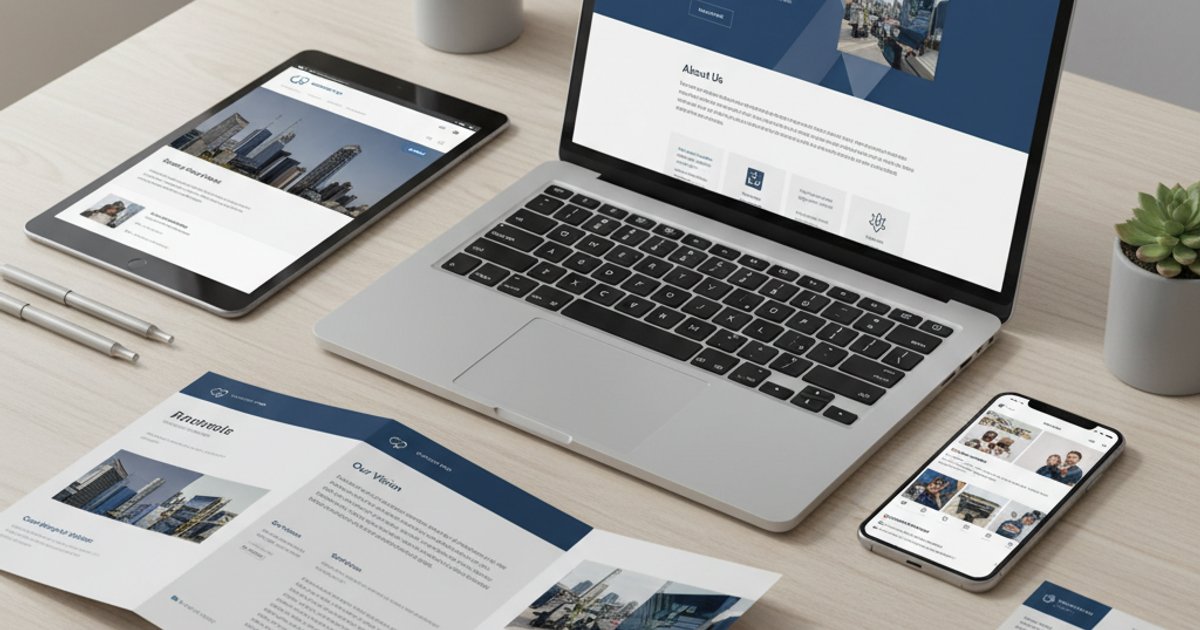
Why is Consistency Critical for Company Profile Design in KL and Beyond?
Consistency is critical for company profile design in Kuala Lumpur and other markets because it builds trust, reinforces brand identity, and reduces cognitive load for your audience. When your brand message, visuals, and tone are uniform across all platforms, stakeholders perceive your company as reliable, professional, and well-established.
Inconsistent messaging, on the other hand, can lead to confusion, erode credibility, and dilute your brand’s impact. Imagine a potential investor finding conflicting information about your company’s revenue figures on your website versus your investor deck, or a customer encountering a drastically different brand voice on your social media compared to your official communication. Such discrepancies create doubt and can deter engagement. A 2025 study by Lucidpress revealed that consistent brand presentation increases revenue by an average of 23%. For businesses operating in a diverse and rapidly evolving market like Malaysia, maintaining this consistency is paramount to cutting through the noise and establishing a strong, memorable impressions in KL.
Maintaining Brand Voice and Tone
Maintaining a consistent brand voice and tone ensures that your company’s personality shines through every piece of communication, fostering a deeper connection with your audience. This involves defining clear guidelines for how your company speaks.
Whether your brand is formal and authoritative, or casual and innovative, this voice should be evident in all written content, from website copy to social media posts and email newsletters. Develop a style guide that outlines acceptable language, jargon, and emotional expression. For example, if your brand is playful, ensure your social media team uses emojis and lighthearted language, but still maintains professionalism in official documents. This consistency helps build a recognizable personality, making your brand more relatable and memorable. According to a 2024 report by Gartner, brands with a consistent voice are 3.5 times more likely to be recognized by consumers.
Ensuring Visual Cohesion
Visual cohesion across all company profile elements is essential for immediate brand recognition and for conveying professionalism and attention to detail. This visual consistency encompasses everything from logos to color schemes and photographic styles.
Every visual asset—your logo, color palette, typography, and imagery—must adhere to strict brand guidelines. This means using the same high-resolution logo across all digital and print materials, applying your brand colors accurately, and using a consistent photographic style. For example, if your brand uses bright, modern imagery, avoid incorporating dark, traditional photos. This visual uniformity creates a seamless brand experience, whether someone is viewing your website in Kuala Lumpur or reading a brochure in Penang. A 2023 survey by Adobe found that 60% of consumers prefer brands that present themselves consistently across all platforms, reinforcing the importance of visual cohesion in company profile design.
Frequently Asked Questions
What is the primary difference between a traditional company profile and a company profile ecosystem?
The primary difference is scope and dynamism. A traditional company profile is typically a static document, like a brochure or PDF, presenting information in a fixed format. A company profile ecosystem, however, is a dynamic, interconnected network of modular content elements adapted and distributed across multiple digital and physical platforms, ensuring continuous relevance and broader reach.
How often should a company profile ecosystem be updated?
A company profile ecosystem should be updated regularly, not just annually. Core information like mission and vision might change infrequently, but elements like achievements, team members, product features, and financial highlights should be reviewed and updated quarterly or as significant changes occur. Digital platforms allow for real-time updates, which should be leveraged to maintain freshness and accuracy.
Can a small business in Malaysia afford to build a multi-platform company profile ecosystem?
Absolutely. While large corporations might invest heavily, small businesses in Malaysia can start by focusing on key platforms like their website’s ‘About Us’ page and a strong LinkedIn presence. The modular approach means content can be repurposed, reducing costs. Tools for graphic design and content management are increasingly accessible and affordable, making this strategy viable for businesses of all sizes.
What role does SEO play in a digital company profile ecosystem?
SEO (Search Engine Optimization) plays a crucial role by ensuring your digital company profile elements are discoverable by search engines. Optimizing your website’s ‘About Us’ page, LinkedIn profile, and other online content with relevant keywords (like “Company Profile Design Malaysia” or “Company Profile Design KL”) increases visibility, driving organic traffic and attracting potential stakeholders who are actively searching for information about your business.
How do I measure the effectiveness of my company profile ecosystem?
Measuring effectiveness involves tracking engagement across different platforms. For websites, monitor traffic to your ‘About Us’ page and time spent on page. For LinkedIn, track profile views, follower growth, and engagement with posts. For investor decks, monitor download rates or presentation feedback. Consistent brand recall surveys and stakeholder feedback can also provide qualitative insights into your ecosystem’s impact.
Is it necessary to hire professional designers for company profile design in Kuala Lumpur?
While DIY tools are available, hiring professional designers for company profile design, especially in competitive markets like Kuala Lumpur, offers significant advantages. Professionals ensure high-quality visual consistency, strategic content layout, and adherence to branding best practices. Their expertise can create a more polished, credible, and impactful presentation that stands out to discerning Malaysian audiences.
How can a company ensure brand consistency across different languages for a Malaysian audience?
Ensuring brand consistency across different languages for a Malaysian audience (e.g., Malay, English, Mandarin) requires professional translation and localization services. It’s not just about direct translation but adapting the tone, cultural nuances, and messaging to resonate authentically with each linguistic group while maintaining the core brand identity. A centralized content repository with approved translations is essential.
Last updated: June 7, 2026