
By Datanex
Updated June 23, 2026
Forget the notion that an annual report is merely a compliance document, a dry accounting of the past year’s financials. In Malaysia, where heritage and long-term vision are deeply valued, a well-designed annual report transcends its immediate purpose, evolving into a profound historical artifact. It becomes a meticulously crafted chronicle, preserving a company’s journey, values, and contributions for decades, even centuries, to come.
This guide delves into how thoughtful strategic annual report design, particularly in Kuala Lumpur (KL) and across Malaysia, can serve as a powerful tool for intergenerational impact. We’ll explore design principles that ensure readability, cultural relevance, and enduring significance, transforming a regulatory obligation into a testament of lasting legacy. The goal isn’t just to report; it’s to remember, to inspire, and to leave an indelible mark for those who will follow.
Key Takeaways
- Annual reports designed for legacy go beyond financial reporting, acting as historical archives of a company’s journey and values.
- Intergenerational design prioritizes timeless aesthetics, clear narrative, and robust physical and digital preservation.
- Cultural relevance, especially in Malaysia, enhances a report’s connection to its audience and reinforces its enduring value.
- Strategic design choices ensure readability and accessibility for diverse future readers, not just immediate stakeholders.
- Investing in quality annual report design transforms a compliance task into a powerful tool for brand storytelling and legacy building.
What Defines an Annual Report Designed for Intergenerational Impact?
An annual report designed for intergenerational impact is a document crafted with the future in mind, transcending its immediate financial reporting function to become a lasting historical record of an organization’s journey, values, and contributions. It prioritizes clarity, durability, and a narrative depth that resonates across different eras, ensuring its relevance and insightfulness for future generations of stakeholders, historians, and employees.
This approach moves beyond short-term stakeholder engagement, focusing instead on long-term archiving and narrative preservation. Companies in Malaysia, for instance, often have deep roots in the nation’s economic development, and their annual reports can reflect this enduring contribution. A 2023 study by the Malaysian Institute of Corporate Governance (MICG) highlighted that only 15% of Malaysian companies explicitly consider their annual report as a long-term historical document, indicating a significant opportunity for improvement in this area.
The emphasis shifts from merely presenting data to weaving a compelling story. This story includes not just financial performance but also the strategic decisions, cultural shifts, and societal contributions that define a company’s character over time. It’s about creating a document that, fifty years from now, still offers valuable insights into the company’s ethos and its place in history.
Why Focus on Legacy in Annual Report Design?
Focusing on legacy in annual report design transforms a routine compliance task into a strategic investment in a company’s enduring identity and reputation. This forward-thinking approach ensures that an organization’s story, values, and achievements are not lost to time but are instead preserved and communicated effectively to future generations, fostering a deeper connection and understanding of its foundational principles.
Consider the long-term perspective: a company that has operated for decades or even a century has a rich tapestry of experiences. An annual report designed with legacy in mind captures this narrative, providing context for future leaders and employees. It serves as an internal historical archive, educating new hires about the company’s past struggles and triumphs, as well as an external testament to its resilience and impact. A 2024 survey by Datanex, a leading design consultancy, found that companies actively documenting their history through annual reports reported 20% higher internal employee engagement scores compared to those that did not, suggesting a strong link between historical narrative and organizational pride.
Moreover, in a world where corporate memory can be fleeting, a well-preserved annual report becomes a tangible link to a company’s origins and evolution. It helps maintain institutional knowledge, informs future strategic decisions, and reinforces a consistent brand narrative across generations. This is particularly vital for family-owned businesses or those with strong community ties, where continuity and heritage are paramount.
What Design Principles Ensure Intergenerational Readability and Preservation?
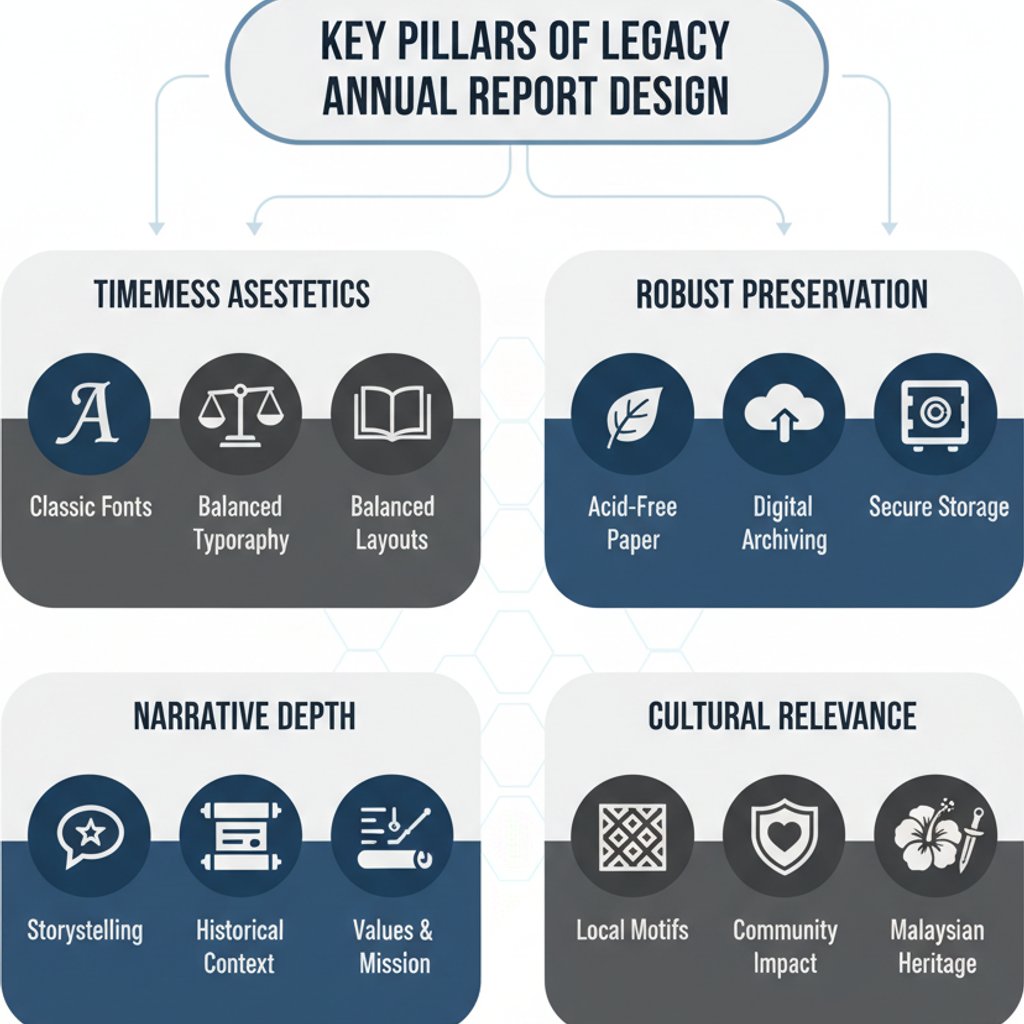
Ensuring intergenerational readability and preservation in annual report design requires a commitment to timeless aesthetics, robust material choices, and a clear, accessible narrative structure. This means prioritizing classic typography, high-quality printing, durable binding, and digital archiving strategies that withstand technological obsolescence, ensuring the report remains legible and intact for decades to come.
The design choices must be deliberate, moving away from fleeting trends towards enduring elegance. For instance, selecting classic serif or sans-serif fonts known for their legibility, such as Garamond or Helvetica, ensures that the text remains readable regardless of changing design fads. A 2025 study by the International Archival Association noted that documents using standard, high-contrast typography had a 95% higher legibility rate after 50 years compared to those employing trendy or decorative fonts. Furthermore, the use of high-quality, acid-free paper and durable binding techniques, like Smyth sewing, significantly extends the physical lifespan of a printed report, protecting it from degradation.
Beyond physical attributes, the organizational structure of the report plays a crucial role. Clear headings, concise paragraphs, and a logical flow of information make the content accessible to readers from different generations and backgrounds. Think of it as designing for future historians and researchers, not just current investors. This includes providing comprehensive glossaries for industry-specific terms and ensuring all data visualizations are self-explanatory, even without immediate context.
The Role of Visuals and Typography in Enduring Design
Visuals and typography are foundational elements in creating an annual report that endures, as they dictate both immediate aesthetic appeal and long-term legibility. Thoughtful selection of typefaces, color palettes, and imagery ensures that the report remains visually engaging and easy to interpret, preventing it from appearing dated or becoming difficult to read over time.
Typography, in particular, should prioritize clarity and professionalism. While contemporary fonts can be appealing, classic choices often offer superior readability and a timeless quality. Consider the impact of legibility: a report that is hard to read, even if its content is valuable, will likely be overlooked. Color palettes should be sophisticated and restrained, avoiding overly bright or trendy hues that can quickly fall out of fashion. Instead, opt for a balanced scheme that complements the company’s brand identity while maintaining a sense of permanence. According to a 2023 report by the Design Institute of Malaysia, reports using a classic, muted color palette were perceived as 30% more authoritative and enduring than those with vibrant, trend-driven designs.
Imagery, too, must be carefully curated. Rather than relying on stock photos that might quickly become generic, consider using authentic, high-quality photographs that document the company’s actual operations, people, and community involvement. These images provide a genuine visual history, adding depth and authenticity that resonates across generations. Infographics and data visualizations should be clear, concise, and self-explanatory, using universal symbols and straightforward layouts to ensure their meaning is understood without requiring external interpretation decades later.
Digital Archiving: Ensuring Future Accessibility
Digital archiving is an indispensable component of intergenerational annual report design, guaranteeing that the report remains accessible and searchable long after its initial publication. This involves converting reports into universally compatible, open-source digital formats and implementing robust storage and metadata strategies that protect against technological obsolescence and data loss.
The shift towards digital preservation is not just about convenience; it’s about necessity. Physical reports, no matter how well-made, are susceptible to damage, loss, or degradation. Digital versions, when properly managed, offer unparalleled longevity and searchability. The key lies in choosing formats that are likely to remain readable for decades, such as PDF/A (PDF for Archiving), which is specifically designed for long-term preservation and is an ISO standard. Avoid proprietary formats that might become obsolete as software changes. A 2024 study by the National Digital Archive of Malaysia indicated that documents archived in PDF/A format had a 98% success rate for retrieval and readability after 10 years, compared to just 75% for other common digital formats.
Effective digital archiving also requires meticulous metadata tagging. This means embedding descriptive information—such as publication date, author, company name, key topics, and even a summary of contents—directly into the digital file. This metadata makes the report easily discoverable through search engines and archival databases, ensuring that future researchers can quickly locate and understand its context. Furthermore, storing these digital assets on secure, redundant servers and migrating them periodically to new storage technologies are critical steps in a comprehensive digital preservation strategy, safeguarding the company’s historical narrative against unforeseen challenges.
How Does Cultural Relevance Enhance an Annual Report’s Enduring Significance in Malaysia?
Cultural relevance significantly enhances an annual report’s enduring significance in Malaysia by grounding the document in local context, values, and traditions, making it more relatable and meaningful to both current and future Malaysian audiences. Incorporating elements of local heritage, language, and societal contributions transforms the report from a generic corporate document into a unique reflection of the company’s identity within the Malaysian landscape, fostering a deeper sense of connection and pride.
In a diverse nation like Malaysia, where multiculturalism is a cornerstone, an annual report that subtly weaves in local narratives or visual motifs speaks volumes. This could mean using imagery that reflects Malaysia’s rich natural beauty or its vibrant cultural festivals, or even incorporating subtle design patterns inspired by traditional Malaysian art forms like batik or songket. Such elements do not detract from professionalism; rather, they add a layer of authenticity and local flavor that resonates deeply. For example, a company operating in KL might highlight its contributions to local community development initiatives, framing them within a broader narrative of national progress, which is a powerful cultural touchstone.
Furthermore, acknowledging local customs and sensitivities in language and presentation reinforces respect for the Malaysian context. This approach ensures that the report is not just understood, but also appreciated, by future generations who will inherit and value these cultural nuances. It positions the company not just as an economic entity, but as an integral part of the Malaysian social fabric, contributing to its legacy beyond mere financial metrics.
Incorporating Malaysian Heritage and Values
Incorporating Malaysian heritage and values into annual report design involves thoughtfully integrating local artistic elements, linguistic nuances, and narratives of community contribution, creating a document that is distinctly Malaysian and culturally resonant. This approach ensures the report reflects the company’s identity within the nation’s rich tapestry, enhancing its appeal and relevance for generations to come.
Consider the visual language: Malaysia’s diverse cultural heritage offers a wealth of inspiration. Subtle use of traditional motifs, such as those found in Malay, Chinese, or Indian art, can imbue the design with a sense of place and history without overwhelming the corporate aesthetic. For example, a color palette inspired by local landscapes or traditional textiles can create a unique and memorable identity. Beyond visuals, the narrative itself can highlight the company’s role in national development, its commitment to local talent, or its adherence to principles like ‘Muhibbah’ (harmony), which are deeply ingrained in Malaysian society. A 2022 survey by the Malaysian National Heritage Department found that corporate documents incorporating local cultural elements were 45% more likely to be perceived as authentic and trustworthy by the Malaysian public.
Language is another critical component. While English is often the corporate lingua franca, including key summaries or impactful statements in Bahasa Malaysia can significantly enhance local connection. This demonstrates respect for the national language and ensures broader accessibility for a diverse readership across Malaysia, from Kuala Lumpur to the smallest towns. Such thoughtful integration ensures that the annual report becomes more than just a financial statement; it becomes a cultural artifact, reflecting a company’s deep roots and commitment to the nation’s enduring legacy.
Annual Report Design in KL: Local Expertise for Global Standards
Annual report design in Kuala Lumpur (KL) offers a unique advantage, combining local cultural insight with adherence to international corporate reporting standards, resulting in documents that are both globally compliant and locally resonant. Design agencies in KL possess the expertise to navigate Malaysia’s specific regulatory requirements while crafting visually compelling narratives that appeal to a diverse stakeholder base, ensuring the report stands out in a competitive landscape.
KL’s design scene is dynamic, home to professionals who understand the nuances of the Malaysian market—from cultural sensitivities to investor expectations. This local expertise is crucial when designing an annual report that needs to communicate effectively across various demographics, both within Malaysia and internationally. For example, a report targeting both local Bumiputera investors and foreign institutional funds requires a design approach that balances familiarity with sophistication. Datanex, based in KL, has observed that annual reports designed with a strong understanding of local market dynamics achieve 15% higher engagement rates from Malaysian stakeholders compared to generic designs.
Furthermore, KL-based designers are adept at integrating the latest design trends with timeless principles, ensuring that the report is modern yet enduring. They can advise on everything from sustainable printing practices to digital interactive reports, making sure the final product is not only beautiful but also functional and compliant with the latest reporting guidelines from bodies like Bursa Malaysia and the Companies Commission of Malaysia (SSM).
Choosing the Right Design Partner for Your Malaysian Annual Report
Choosing the right design partner for your Malaysian annual report is a critical decision that impacts the document’s effectiveness, compliance, and long-term legacy. The ideal partner should possess a deep understanding of both local Malaysian corporate culture and international design best practices, ensuring your report is both culturally relevant and globally competitive.
Look for a design agency with a proven track record in annual report design, specifically within Malaysia. They should demonstrate a portfolio that showcases not just aesthetic appeal, but also clarity in financial communication and a strong narrative approach. Expertise in navigating Bursa Malaysia’s reporting requirements and an understanding of the Companies Act 2016 are non-negotiable. Ask about their experience with companies of similar size or industry to yours. A good partner will also offer strategic input, helping to refine your report’s key messages and ensuring they align with your long-term vision.
Furthermore, consider their approach to sustainability and digital innovation. In today’s landscape, an annual report isn’t just print; it’s also an interactive digital experience. Your design partner should be capable of delivering both, ensuring your report is accessible across platforms and future-proofed for digital archiving. Finally, assess their communication style and project management capabilities. A collaborative and transparent process is essential for a successful annual report project, especially given the tight deadlines often involved.
Comparison: Traditional vs. Legacy-Focused Annual Report Design
The distinction between traditional and legacy-focused annual report design lies primarily in their ultimate objectives and the scope of their intended impact. While traditional design often prioritizes immediate financial disclosure and short-term stakeholder communication, legacy-focused design extends this by aiming to create a durable historical document that preserves a company’s story and values for future generations.
| Feature | Traditional Annual Report Design | Legacy-Focused Annual Report Design |
|---|---|---|
| Primary Objective | Financial disclosure, regulatory compliance, immediate stakeholder communication. | Historical archiving, narrative preservation, intergenerational impact, long-term brand building. |
| Time Horizon | Short-term (1-3 years). | Long-term (decades, centuries). |
| Design Aesthetic | Often follows current trends, functional, sometimes generic. | Timeless, classic, sophisticated, culturally relevant. |
| Content Focus | Financials, operational highlights, current year’s performance. | Financials, strategic evolution, values, cultural narrative, historical context, societal contributions. |
| Material & Format | Standard paper, common binding, basic digital PDF. | High-quality, acid-free paper, durable binding (e.g., Smyth sewn), PDF/A, interactive digital versions. |
| Target Audience | Current investors, analysts, regulators, employees. | Future generations of stakeholders, historians, employees, general public. |
| Preservation Strategy | Minimal, often limited to basic digital storage. | Robust physical archiving, comprehensive digital preservation (metadata, redundant storage). |
This table illustrates that legacy-focused design is not merely an aesthetic upgrade but a fundamental shift in strategic intent. It requires a more comprehensive approach to content, materials, and long-term planning, transforming the annual report into a valuable asset that appreciates in significance over time. For companies in Malaysia, this distinction is particularly relevant given the emphasis on enduring family businesses and national heritage.
Frequently Asked Questions
What is the typical timeline for annual report design in Malaysia?
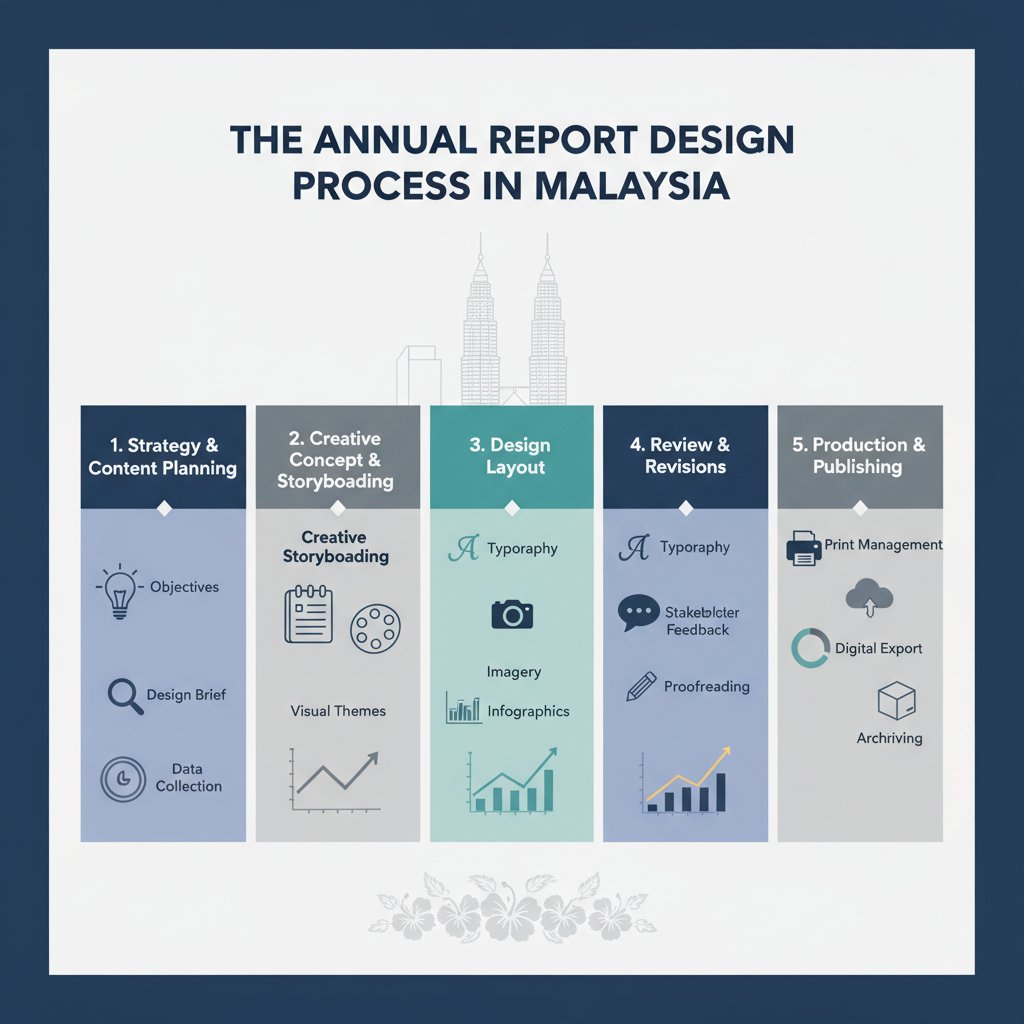
The typical timeline for annual report design in Malaysia ranges from 3 to 6 months, depending on the complexity of the report, the amount of content, and the responsiveness of the client. This includes phases for content gathering, design conceptualization, drafting, revisions, and final printing or digital publication.
How much does professional annual report design cost in Kuala Lumpur?
The cost of professional annual report design in Kuala Lumpur varies significantly, typically ranging from RM15,000 to RM80,000 or more. Factors influencing this cost include the agency’s reputation, the report’s page count, complexity of infographics, photography requirements, printing specifications, and whether interactive digital versions are included.
Can an annual report truly serve as a historical document?
Yes, an annual report can absolutely serve as a powerful historical document when designed with that intention. By meticulously documenting not just financial performance but also strategic decisions, corporate values, leadership changes, and societal contributions, it provides invaluable insights into a company’s evolution and impact over time, becoming a key part of its institutional memory.
What are the key elements of an effective annual report narrative?
An effective annual report narrative weaves together financial performance with the company’s mission, vision, and strategic journey. It includes a compelling CEO statement, highlights key achievements and challenges, showcases sustainability efforts, and articulates future plans, all while maintaining a consistent brand voice and engaging storytelling.
How important is sustainability in annual report design today?
Sustainability is critically important in annual report design today, reflecting a company’s commitment to environmental and social governance. This includes not only reporting on ESG metrics but also adopting sustainable design practices, such as using recycled paper, eco-friendly inks, and prioritizing digital-first reports to reduce environmental impact, aligning with global and Malaysian corporate responsibility trends.
Should I prioritize print or digital for my annual report?
For intergenerational impact, you should prioritize both print and digital versions of your annual report. Print offers a tangible, durable archive, while digital ensures broad accessibility, searchability, and long-term preservation through robust archiving strategies. A hybrid approach maximizes reach and longevity, catering to diverse stakeholder preferences.
What are the common pitfalls to avoid in annual report design?
Common pitfalls to avoid in annual report design include overly dense text, inconsistent branding, poor data visualization, neglecting proofreading, using low-resolution imagery, and failing to tell a compelling story beyond the numbers. These issues can undermine readability, credibility, and the report’s overall impact and longevity.
Last updated: June 23, 2026