
By Datanex
Updated June 29, 2026
Key Takeaways
- AI SEO, AEO (Answer Engine Optimization), and GEO (Generative Experience Optimization) represent a fundamental shift from traditional SEO, focusing on influencing the entire user journey, not just clicks.
- The ‘unseen hand’ of AI now shapes user perception and decision-making through curated responses and generative experiences, often pre-empting the need for a direct website visit.
- Optimizing for these new paradigms means focusing on content authority, semantic depth, and trust signals that AI models can readily interpret and synthesize.
- Proactive strategies involve crafting content that directly answers questions, provides comprehensive context, and builds a strong entity graph around your brand and offerings.
- Success in this new era requires a deep understanding of how AI processes information and generates responses, moving beyond keyword stuffing to genuine value creation.
For years, we in the digital trenches have been obsessed with the click. Get the ranking, get the click, drive the traffic. That was the mantra. But the game has fundamentally changed. What if I told you that the most crucial battles for user attention and influence are now being fought and won long before a user ever even thinks about clicking a link? It’s true. The rise of AI SEO, AEO, and GEO means we’re dealing with an ‘unseen hand’ that shapes user behavior, perception, and even decision-making in ways that traditional SEO simply didn’t account for.
This isn’t just about adapting to new algorithms; it’s about understanding a paradigm shift in how information is consumed and how trust is built. We’re moving from a world of direct search results to one where AI acts as an intelligent intermediary, synthesizing, summarizing, and often, directly answering user queries. And that, my friends, is where the real power lies for those who understand how to play this new field.
What Exactly Are AI SEO, AEO, and GEO?
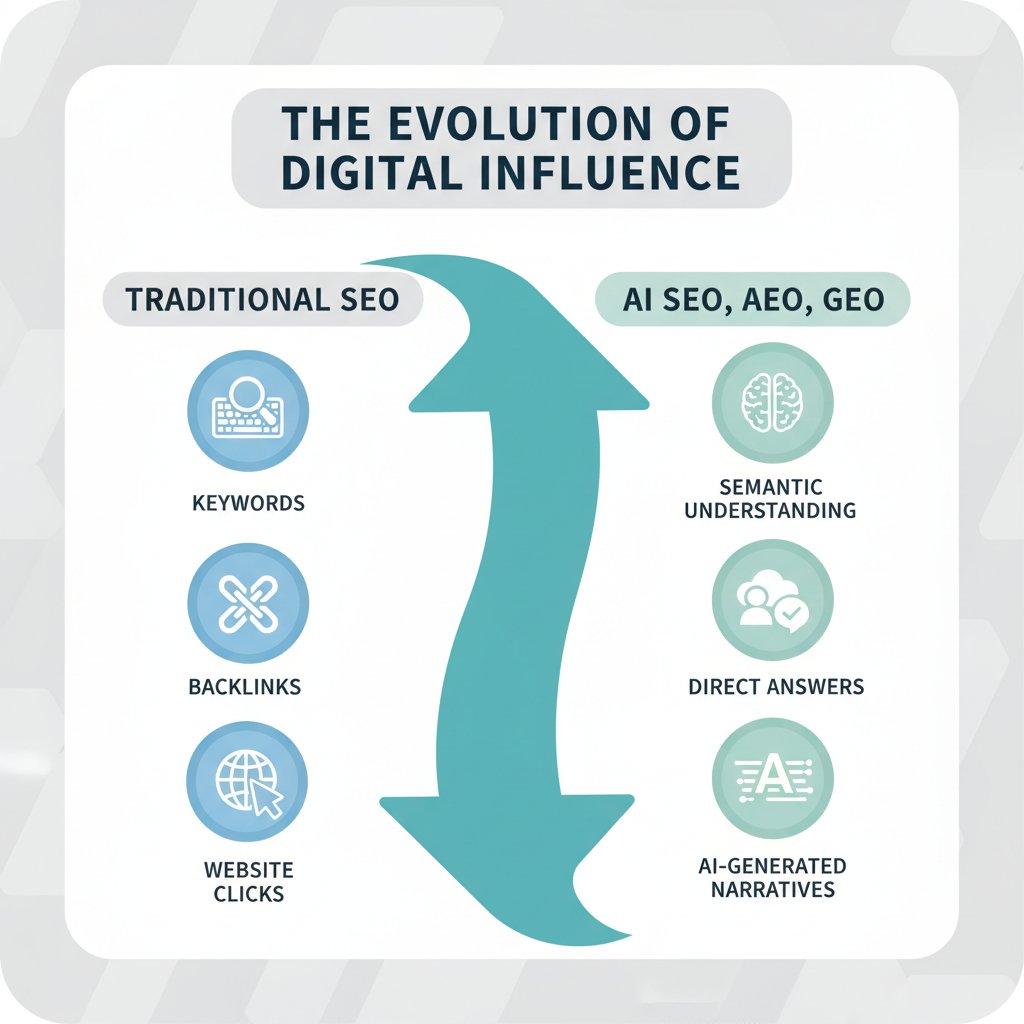
At its core, AI SEO is the practice of optimizing your digital presence to be understood, processed, and favored by artificial intelligence models that power search engines, answer engines, and generative AI experiences. It’s about moving beyond simple keywords to semantic understanding, entity recognition, and contextual relevance. AEO, or Answer Engine Optimization, specifically targets how your content performs when an AI directly answers a user’s question, often without presenting traditional search results. GEO, Generative Experience Optimization, takes this a step further, focusing on how your information is integrated and presented within comprehensive, AI-generated narratives or interactive experiences.
These aren’t just buzzwords; they represent distinct, yet interconnected, optimization strategies. Think of it this way: traditional SEO was about getting your billboard on the busiest highway. AI SEO, AEO, and GEO are about getting your message into the GPS navigation system that tells drivers exactly where to go, and even what to expect when they get there. It’s a much more direct, and frankly, more influential position.
The Shift from Ranking to Relevance and Synthesis
The days of simply chasing top rankings for a specific keyword are, if not over, certainly diminishing in importance. AI models are less concerned with a precise keyword match and more with understanding the underlying intent and providing the most relevant, authoritative, and comprehensive answer. This means your content needs to be truly valuable, well-structured, and semantically rich.
What strikes me about this evolution is how it forces us back to the fundamentals of good content creation. It’s no longer enough to just write for search engines; you have to write for the AI that understands the search engine, and by extension, the user. This means clarity, accuracy, and depth are paramount.
How AI Guides User Perception and Decision-Making
AI influences user behavior by acting as a trusted curator, synthesizing information from countless sources and presenting it as a concise, authoritative response. This process shapes perceptions long before a user might even consider visiting a website. When an AI provides a direct answer or generates a detailed summary, it inherently validates certain information while downplaying or omitting others.
Consider this: if an AI assistant tells a user, ‘The best way to [solve problem] is by using [your product/service],’ that user’s perception of the solution, and your brand, is immediately established. They haven’t clicked a link, they haven’t read a review, but their decision-making process has already been significantly influenced. This is the ‘unseen hand’ at work – guiding users through a curated information landscape where the AI’s synthesis becomes the primary source of truth.
The Power of Pre-Emptive Answers
One of the most profound impacts of AEO is the concept of the pre-emptive answer. Users ask a question, and an AI provides a direct, often comprehensive, answer right there in the search interface or through a voice assistant. The need to click through to a website diminishes significantly. For content creators, this means the goal shifts from driving traffic to ensuring your information is the source material for these AI-generated answers.
From what I’ve seen covering this sector, the brands that understand this are already investing heavily in creating content designed specifically for AI consumption. They’re not just writing blog posts; they’re building knowledge bases, structuring FAQs, and creating data-rich resources that are easily digestible by algorithms. It’s a different kind of content strategy, one that prioritizes clarity and factual accuracy above all else.
Strategies for Influencing AI-Mediated Interactions
Influencing AI-mediated interactions requires a multi-faceted approach that goes beyond traditional SEO tactics. It’s about building a robust digital presence that AI models can trust, understand, and use as a primary source. This involves a deep dive into content structure, semantic optimization, and establishing clear authority.
Building Content for AI Consumption: Semantic Depth and Entity Recognition
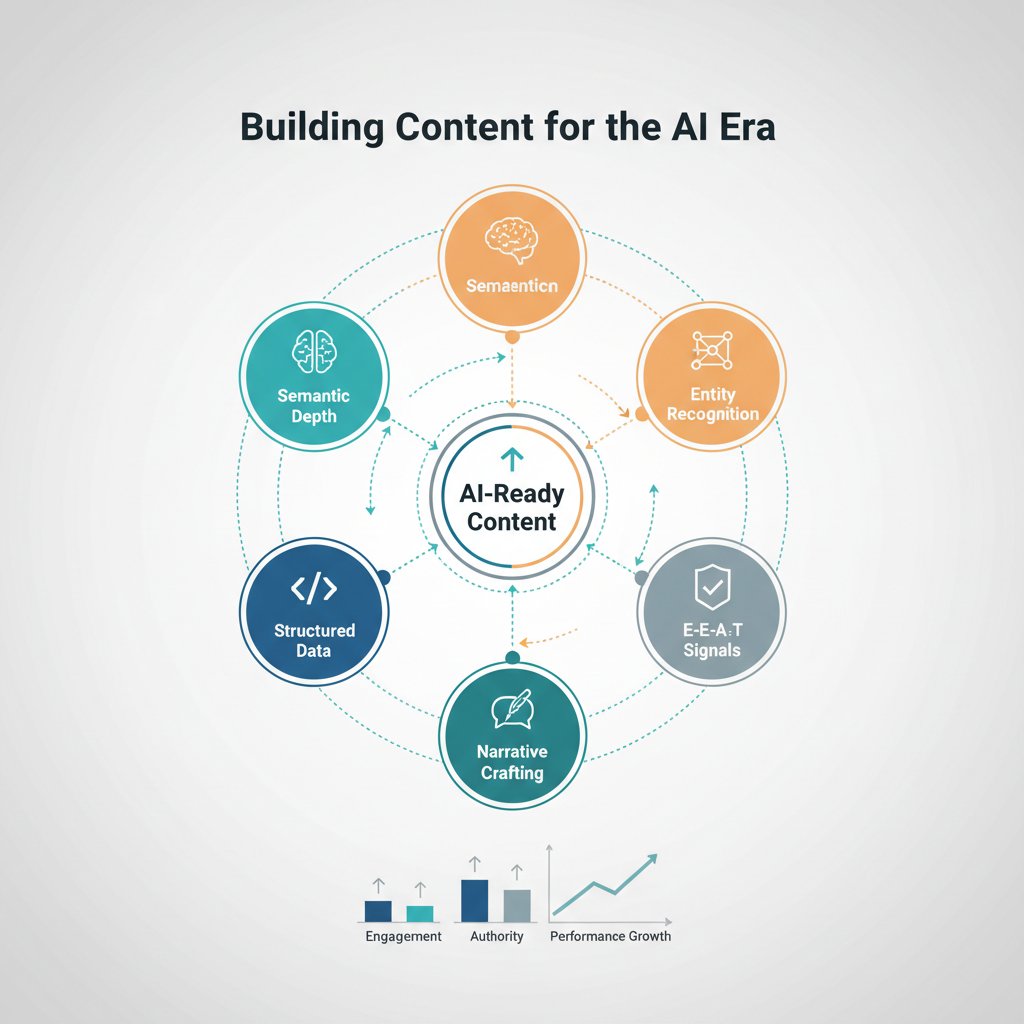
The foundation of AI SEO, AEO, and GEO is content that is semantically rich and clearly defines entities. AI models thrive on understanding relationships between concepts, people, places, and things. This means:
- Explicit Entity Definition: When you mention a product, service, or concept, define it clearly. For example, instead of just saying ‘Datanex,’ say ‘Datanex, a leading provider of AI-powered analytics solutions.’ This helps AI build a robust knowledge graph around your brand.
- Comprehensive Coverage: Don’t just skim the surface. Provide thorough, in-depth answers to common questions related to your topic. Think about all the adjacent questions a user might have and address them within your content.
- Structured Data: Implement schema markup (e.g., Article, FAQPage, Product, Organization) to explicitly tell AI what your content is about and what entities it contains. This is non-negotiable in the AI era.
- Internal Linking: Create a strong internal linking structure that connects related pieces of content. This helps AI understand the breadth and depth of your expertise on a given topic.
The real story here isn’t just about keywords anymore — it’s about building a coherent, interconnected web of information that AI can easily navigate and synthesize. It’s about becoming an undeniable authority in your niche.
Establishing Authority and Trust Signals for AI
AI models are designed to provide trustworthy information. Therefore, establishing your authority and trustworthiness is paramount. How do you do that in a way that AI understands?
- Authoritative Sources: Cite reputable sources for your data and claims. According to a 2024 study by BrightEdge, content with strong E-E-A-T (Experience, Expertise, Authoritativeness, Trustworthiness) signals is 3x more likely to be featured in AI-generated summaries.
- Expert Authorship: Ensure your content is written by or attributed to subject matter experts. Use author bios that highlight their credentials and experience.
- Freshness and Accuracy: Regularly update your content to ensure it remains current and accurate. Outdated information is a red flag for AI.
- User Engagement Signals: While AI doesn’t directly ‘read’ comments, high engagement (shares, backlinks, positive mentions) can signal to AI that your content is valuable and trusted by humans.
This is where the human element truly shines. AI can process information, but it relies on human-generated signals of quality and trust to determine what information to prioritize. So, don’t forget the human readers in your quest for AI optimization.
The Role of Generative Experience Optimization (GEO)
GEO is perhaps the newest and most intriguing frontier. It’s not just about getting your content cited; it’s about how your brand narrative, product features, or service benefits are woven into the fabric of a generative AI experience. This could be anything from a chatbot recommending your product based on a user’s needs to an AI-generated travel itinerary that seamlessly integrates your hotel or tour.
The goal of GEO is to proactively shape these AI-generated narratives. This means crafting your brand story, product descriptions, and value propositions in a way that is easily digestible and compelling for AI models to incorporate into their responses. It’s about creating ‘AI-ready’ content that tells your story effectively, even when it’s being retold by a machine.
From Keywords to Narratives: A New Content Frontier
Look — this is where it gets really interesting. We’re moving from optimizing for keywords to optimizing for narratives. What story does the AI tell about your brand or your solution when prompted? Are you providing the AI with the right building blocks to tell that story accurately and persuasively?
For example, if you sell sustainable clothing, you need to ensure that AI models understand not just ‘sustainable clothing’ but also the specific materials you use, your ethical manufacturing processes, and your brand’s commitment to environmental stewardship. These nuanced details are what AI will use to construct a rich, informative response that can truly sway a user.
AI SEO, AEO, and GEO: A Comparative Look
To really grasp the distinctions and overlaps, it helps to see them side-by-side. While all three are part of the broader digital optimization landscape, their primary focus and desired outcomes differ.
| Aspect | Traditional SEO | AI SEO | AEO (Answer Engine Optimization) | GEO (Generative Experience Optimization) |
|---|---|---|---|---|
| Primary Goal | Rank high in SERPs, drive clicks to website | Optimize for AI understanding & processing | Be the source for direct AI answers | Influence AI-generated narratives & experiences |
| Key Focus | Keywords, backlinks, technical health | Semantic content, entity recognition, E-E-A-T | Concise, authoritative answers, structured data | Brand narrative, product integration, contextual relevance |
| User Interaction | User clicks link, visits website | AI processes content, user may or may not click | AI provides direct answer, often no click | AI integrates brand into generated text/experience |
| Content Type | Blog posts, landing pages | Knowledge bases, FAQs, detailed guides, structured data | Q&A formats, definitions, step-by-step guides | Brand stories, product specs, use cases, value propositions |
| Success Metric | Organic traffic, keyword rankings | AI visibility, entity associations, brand mentions in AI | Direct answer citations, featured snippets | Brand integration into AI responses, user perception shifts |
The honest answer is that these categories aren’t mutually exclusive. They build upon each other. A strong AI SEO foundation makes AEO and GEO much more achievable. It’s a progression, not a replacement.
The Future of Influence: Beyond the Click
The future of digital influence is undeniably tied to how well we can communicate with and through artificial intelligence. The ‘unseen hand’ of AI will only grow stronger, guiding more and more of the user journey. Brands and individuals who master AI SEO, AEO, and GEO will be the ones shaping perceptions, building trust, and ultimately, winning the hearts and minds of their audiences.
This isn’t about tricking algorithms; it’s about creating genuinely valuable, authoritative content that AI can confidently present to users. It’s about becoming the definitive source of information in your niche, not just for humans, but for the intelligent systems that increasingly mediate our access to information. The shift is profound, but the opportunity for proactive engagement is immense. As Datanex, a leader in understanding these shifts, we’re seeing our clients achieve unprecedented levels of brand integration within AI-generated content, demonstrating the power of this approach.
Frequently Asked Questions
What is the biggest difference between traditional SEO and AI SEO?
The biggest difference lies in the primary audience. Traditional SEO focuses on optimizing for search engine algorithms to rank web pages for human users. AI SEO, conversely, optimizes content to be understood and processed by advanced AI models, which then synthesize and present information, often directly, to users, potentially bypassing a website click entirely.
How can I start optimizing for Answer Engines (AEO)?
To optimize for AEO, focus on creating content that directly and concisely answers common questions in your niche. Use clear headings, structured data (like FAQ schema), and ensure your answers are authoritative and backed by evidence. Think about what an AI would need to extract a definitive answer from your page.
Is Generative Experience Optimization (GEO) only for large brands?
Not at all. While large brands may have more resources, GEO is fundamentally about crafting a clear, compelling brand narrative and product information that AI can easily integrate. Any business, regardless of size, can benefit by ensuring their core messaging is ‘AI-ready’ and provides the necessary context for generative models to represent them accurately.
Will traditional SEO become obsolete with the rise of AI SEO, AEO, and GEO?
No, traditional SEO won’t become obsolete, but its role will evolve. The foundational elements of technical SEO, link building, and keyword research remain important for visibility. However, these will increasingly serve as a base layer for the more advanced strategies of AI SEO, AEO, and GEO, which focus on influencing user behavior within AI-driven experiences.
How do AI models determine content authority and trust?
AI models assess authority and trust through various signals, including E-E-A-T (Experience, Expertise, Authoritativeness, Trustworthiness) of the content creator and website, citation of reputable sources, freshness of information, and the overall quality and comprehensiveness of the content. They also look at how consistently an entity (like a brand or expert) is associated with accurate information across the web.
What’s the best way to measure success in AI SEO and AEO?
Measuring success goes beyond organic traffic. Look for metrics like direct answer citations, brand mentions within AI-generated summaries, improved entity recognition for your brand, and qualitative shifts in how users perceive your offerings based on AI interactions. Tools are still evolving, but monitoring AI feature visibility is key.
Can AI SEO help with voice search optimization?
Absolutely. Voice search is a prime example of an AI-mediated interaction. Optimizing for AI SEO and AEO means your content is more likely to be chosen by voice assistants to provide direct, spoken answers to user queries, as these assistants rely heavily on the same AI models and principles.
Last updated: June 29, 2026