
By Datanex
Updated July 14, 2026
The world of corporate reporting in Malaysia is undergoing a significant, and frankly, overdue transformation. This week, discussions emanating from key Malaysian financial regulators and industry bodies have put a spotlight on a critical shift: the urgent need for corporate communications, especially annual reports, to be far more accessible and inclusive. This isn’t just about ticking a box; it’s about fundamentally changing how companies in Kuala Lumpur and beyond connect with their diverse stakeholders.
For years, annual reports have often felt like dense, impenetrable tomes, designed more for compliance officers and financial analysts than for the everyday investor, employee, or community member. But that era, it seems, is drawing to a close. The push is clear: information needs to be digestible, understandable, and genuinely inclusive for everyone, regardless of their financial acumen or specific needs. This has massive implications for annual report design in Malaysia, particularly in a bustling financial hub like KL.
Key Takeaways
- Malaysian regulators are emphasizing accessibility and inclusivity for corporate communications, including annual reports.
- This shift demands simpler language, clearer visuals, and user-friendly digital formats for annual report design.
- Companies in KL and across Malaysia must move beyond mere compliance to genuinely engage diverse stakeholders.
- Designers are adapting layouts, incorporating interactive elements, and focusing on plain language to meet new standards.
- The move reflects a global trend towards greater transparency and stakeholder capitalism.
What Does ‘Accessible’ Mean for Annual Report Design?
Accessible annual report design means creating documents that can be easily understood and navigated by a broad spectrum of stakeholders, including those without deep financial literacy or with specific accessibility needs. It’s about breaking down barriers to information.
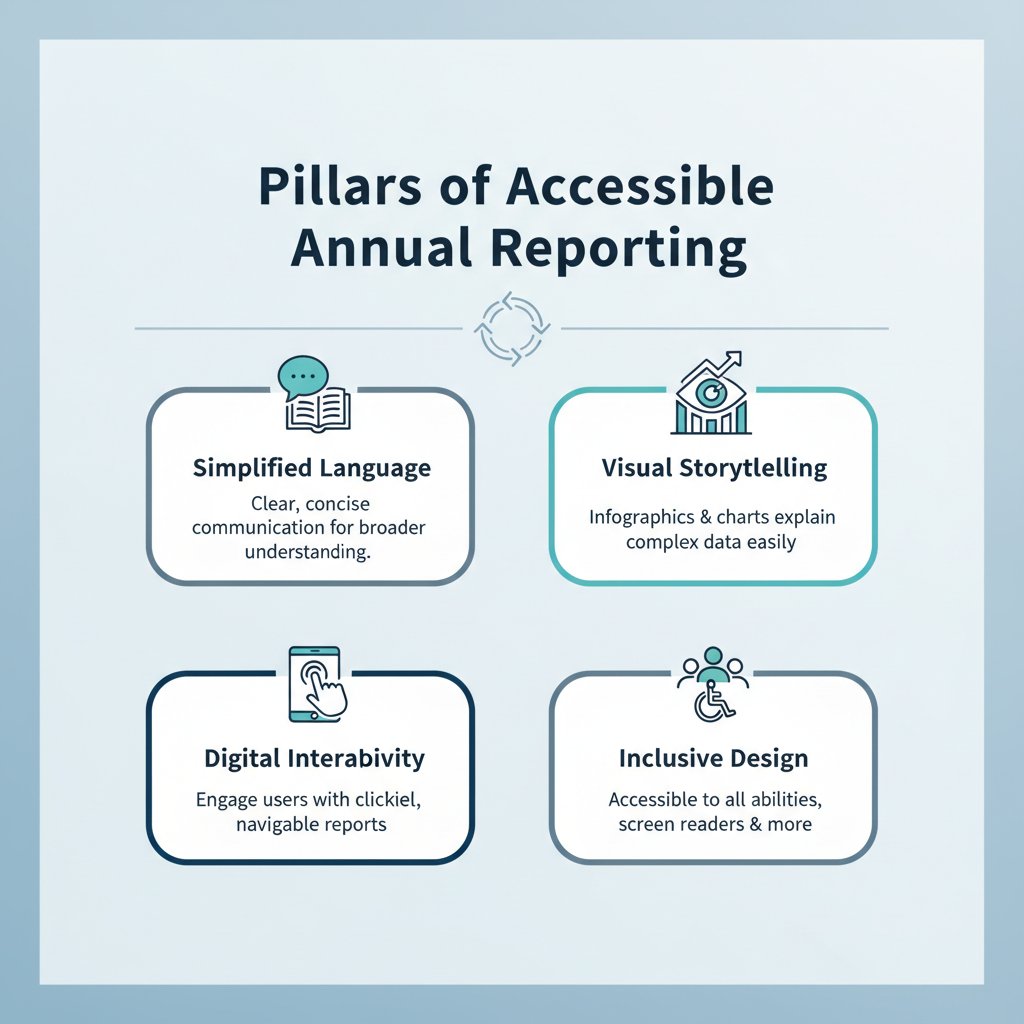
From my vantage point, having covered this sector for over a decade, this isn’t just about making the font bigger or adding a table of contents. It’s a holistic rethinking. We’re talking about simplified language, the strategic use of infographics and data visualization, and ensuring digital versions are screen-reader friendly. It means moving away from jargon-laden prose and towards clear, concise explanations. The goal is to ensure that a retail investor, an employee, or even a local community member can pick up a report and grasp the company’s performance, strategy, and impact without needing a financial dictionary by their side. This is a smart move, because ultimately, better understanding fosters greater trust and engagement.
The Securities Commission Malaysia (SC) has been vocal about enhancing corporate governance and transparency. While specific new mandates are still being formalized, the tone from recent industry dialogues indicates a strong shift towards user-centric reporting. This isn’t just a suggestion; it’s becoming an expectation that will undoubtedly influence future compliance frameworks. Companies that get ahead of this curve now will certainly reap the benefits.
Why Are Malaysian Regulators Emphasizing Inclusivity Now?
Malaysian regulators are emphasizing inclusivity now because there’s a growing understanding that corporate success is tied to broader societal engagement, and effective communication is central to that. It’s part of a global trend towards stakeholder capitalism and enhanced transparency.
Look — the days of companies existing solely for shareholders are long past. We’re in an era where employees, customers, suppliers, and the wider community all have a vested interest in a company’s performance and values. Regulators, quite rightly, are catching up to this reality. They understand that if these diverse groups can’t easily access and understand a company’s annual report, then the company isn’t truly being transparent or accountable. This push is also aligned with broader ESG (Environmental, Social, and Governance) initiatives, where the ‘S’ for Social is gaining significant traction. Making information accessible is inherently a social responsibility.
What strikes me about this timing is its connection to the post-pandemic economic recovery and the increasing digital literacy across the population. More people are engaging with financial information online, and they expect that information to be presented clearly and intuitively. It’s a natural evolution, really, and one that Datanex, as a content publisher focused on clear communication, has been advocating for years.
The Global Context: A Universal Shift
This isn’t an isolated phenomenon in Malaysia. Around the world, we’re seeing similar movements. The International Sustainability Standards Board (ISSB) and other global bodies are pushing for more standardized, yet also more understandable, sustainability reporting. The UK’s Financial Reporting Council (FRC) has long championed ‘clear and concise reporting’. So, Malaysia is not an outlier; it’s part of a larger, global current. This means that companies operating internationally, or those with global investor bases, will find that adapting their annual report design KL practices to these new standards will serve them well on multiple fronts.
How Are Design Principles for Annual Reports Evolving?
Design principles for annual reports are evolving by prioritizing clarity, visual storytelling, and digital interactivity over traditional, text-heavy formats. The focus is now on user experience and information hierarchy.
From what I’ve seen in my discussions with design agencies and corporate communications teams in KL, there are several key areas of change:
- Simplified Language: This is huge. Legal and financial jargon is being replaced with plain English (or Bahasa Malaysia). Companies are investing in content strategists and editors who can translate complex concepts into easily digestible narratives.
- Visual Dominance: Infographics, charts, and data visualizations are no longer just decorative; they are central to conveying information efficiently. Think less dense paragraphs, more compelling visual summaries. According to a 2023 study by the Content Marketing Institute, content with relevant images gets 94% more views than content without. This isn’t just about engagement; it’s about comprehension.
- Digital-First Approach: While print reports still exist, the primary focus is shifting to digital. This means responsive design for various devices, interactive elements like clickable charts, embedded videos, and easy navigation. A 2024 survey by PwC found that 78% of investors prefer accessing annual reports digitally.
- Accessibility Features: This includes ensuring proper color contrast, legible fonts, clear heading structures, and alt-text for images in digital versions. For printed reports, it means considering font sizes and paper quality for readability.
- Storytelling: Companies are moving away from just presenting data points to weaving a coherent narrative about their year – their challenges, successes, and future vision. This humanizes the report and makes it more engaging.
The real story here isn’t just about compliance; it’s about opportunity. An engaging, accessible annual report can be a powerful tool for reputation management, investor relations, and even talent acquisition. It’s a chance to showcase not just financial health, but corporate character.
Comparison: Traditional vs. Accessible Annual Report Design
| Feature | Traditional Annual Report Design | Accessible Annual Report Design |
|---|---|---|
| Primary Focus | Compliance, detailed financial disclosure | Stakeholder engagement, clear communication, compliance |
| Language | Jargon-heavy, technical, formal legalistic tone | Plain language, concise, explanatory, easy to understand |
| Visuals | Limited, often dense tables and basic charts | Rich infographics, data visualization, storytelling through visuals |
| Format Priority | Print-first, static PDF | Digital-first, responsive, interactive, print-friendly |
| Navigation | Sequential reading, extensive table of contents | Intuitive menu, search functions, cross-linking, clear headings |
| Audience | Financial analysts, institutional investors | All stakeholders: investors, employees, customers, community |
| Key Metric | Completeness of disclosure | Comprehension and engagement |
What Challenges Do Companies Face in Adopting These Changes?
Companies face several challenges, including the cost of redesigning processes, cultural resistance to simplifying complex information, and the need for new skill sets in communication and design teams. It’s not a trivial undertaking.
One of the biggest hurdles, from my experience, is internal. Financial teams are often steeped in a culture of precision and technical detail, which can clash with the need for simplification. Convincing them that ‘less is more’ or that a visual can convey more effectively than a paragraph of footnotes can be tough. There’s also the investment aspect. A truly accessible and engaging annual report isn’t cheap. It requires skilled designers, copywriters, and often, digital platform development. A 2025 report by Deloitte highlighted that companies often underestimate the resources required for a comprehensive digital transformation of their reporting.
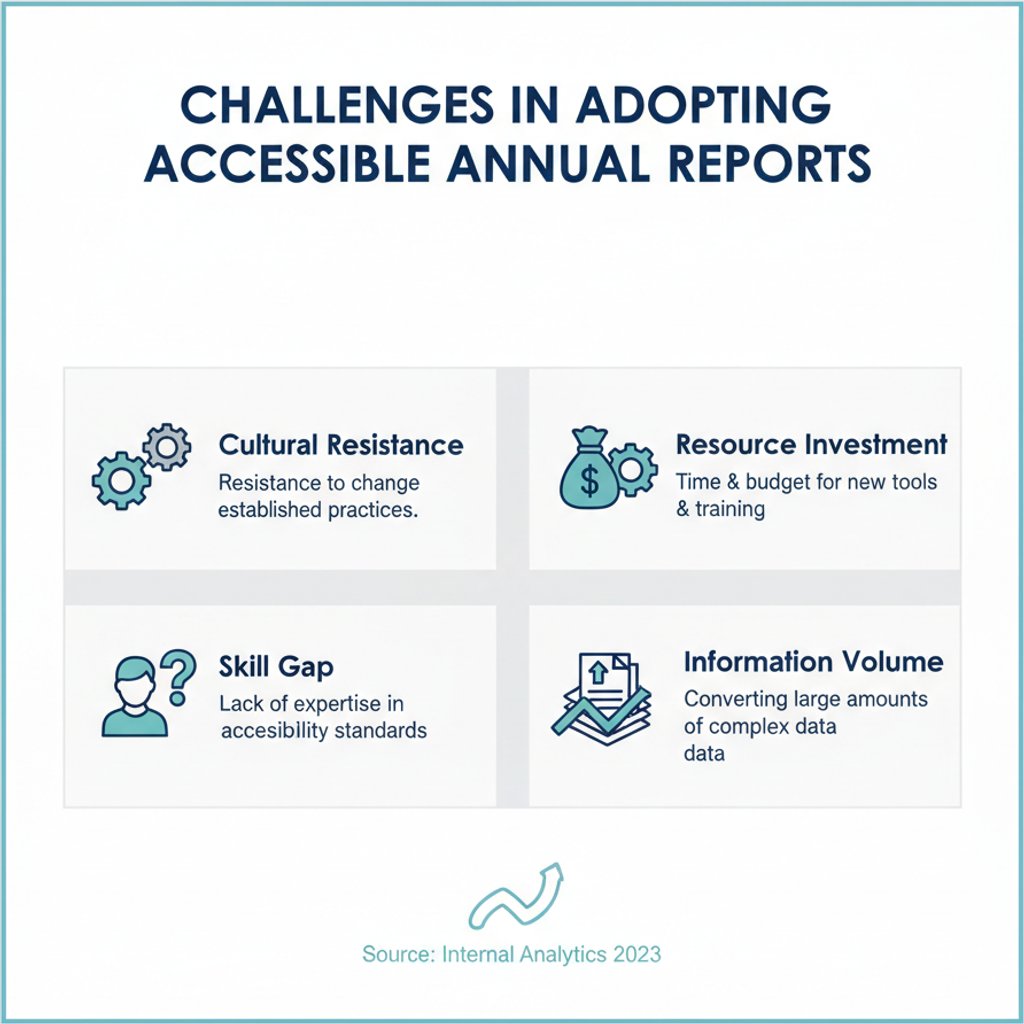
Then there’s the sheer volume of information. Annual reports are packed with data. Distilling that into an engaging, yet compliant, format is an art form. It requires a strategic approach to information hierarchy – deciding what’s absolutely essential for everyone, and what can be relegated to appendices or linked supplementary documents for those who want to dive deeper. This is where expert annual report design in Malaysia, particularly from agencies with a strong understanding of both local regulations and global communication trends, becomes invaluable.
The Future of Annual Report Design in Malaysia
The future of annual report design in Malaysia is undoubtedly digital, interactive, and stakeholder-centric. We’ll see a continued move towards integrated reporting that combines financial, ESG, and governance information into a cohesive, understandable narrative.
My prediction? We’re going to see more companies embracing micro-reports or ‘highlights’ versions that serve as accessible entry points, with the full, detailed report available for deep dives. The focus will be on creating a compelling digital experience that allows users to customize their view of the data, perhaps even generating personalized summaries based on their interests. This is where technology truly empowers accessibility. The companies that embrace this vision for annual report design now, particularly those in competitive markets like KL, will differentiate themselves significantly.
This isn’t just about meeting regulatory demands. It’s about building stronger relationships, fostering greater trust, and ultimately, ensuring the long-term sustainability and success of Malaysian businesses in an increasingly transparent world. It’s a positive step, and one I’m keen to watch unfold.
Frequently Asked Questions
What is the primary goal of accessible annual report design?
The primary goal is to make corporate information, particularly financial and operational data, understandable and navigable for a wide range of stakeholders, not just financial experts. This includes individuals with varying levels of financial literacy or specific accessibility needs.
How do new regulatory expectations impact companies in Kuala Lumpur?
Companies in Kuala Lumpur, as a major financial hub, are expected to lead the way in adopting these new standards. This means investing in updated annual report design practices, potentially retraining communication teams, and rethinking their approach to stakeholder engagement to meet evolving expectations for transparency and inclusivity.
What are some key elements of an inclusive annual report?
Key elements include using plain language, incorporating clear and engaging visuals like infographics, ensuring digital versions are responsive and screen-reader friendly, providing intuitive navigation, and presenting information in a logical, storytelling format.
Is a digital-first approach mandatory for annual reports now?
While print reports still have their place, the trend and regulatory emphasis strongly favor a digital-first approach. This allows for greater interactivity, wider distribution, and easier implementation of accessibility features, aligning with how most stakeholders prefer to consume information today.
How can companies ensure their annual report design is compliant and effective?
Companies can ensure compliance and effectiveness by engaging experienced annual report design agencies in Malaysia, conducting stakeholder surveys to understand information needs, investing in content strategists for plain language, and regularly reviewing their reports against best practices and emerging regulatory guidance.
What is the difference between compliance and genuine accessibility in reporting?
Compliance means meeting minimum legal or regulatory requirements. Genuine accessibility goes further, actively designing the report with the user in mind to ensure clarity, ease of understanding, and usability for everyone, fostering true engagement rather than just avoiding penalties.
Will this increase the cost of annual report production?
Initially, there might be increased costs associated with redesigning processes, training staff, and investing in new design tools or digital platforms. However, in the long term, improved stakeholder engagement, enhanced reputation, and reduced queries due to clearer communication can lead to significant benefits and efficiencies.
Last updated: July 14, 2026