
By Datanex
Updated June 30, 2026
Forget everything you thought you knew about annual reports. For too long, these vital documents have been relegated to the dusty shelves of corporate compliance, a necessary evil rather than a strategic asset. But what if I told you that your annual report, especially here in Malaysia, could be one of your most potent brand storytellers? It’s true. From what I’ve seen covering the corporate landscape for over 15 years, the companies that truly stand out are those that understand this document isn’t just about financials; it’s about narrative, identity, and connection.
The annual report is often the single most comprehensive piece of communication a company produces each year. It reaches a diverse audience—investors, employees, customers, partners, and the wider community. To squander that opportunity by simply churning out pages of dry data is, frankly, a missed trick. This isn’t just about pretty pictures; it’s about leveraging every design element to articulate your brand’s unique values, vision, and long-term commitment, especially in a dynamic market like Kuala Lumpur and across Malaysia.
Key Takeaways
- Annual reports are powerful brand storytelling tools, not just compliance documents.
- Strategic design (typography, color, imagery, layout) communicates brand values and vision.
- Tailoring your report for the Malaysian context enhances local relevance and engagement.
- Digital and interactive elements offer new avenues for dynamic storytelling.
- Investing in professional annual report design yields significant returns in stakeholder trust and brand perception.
- The report should reflect your company’s unique culture and future aspirations.
Why Your Annual Report Is More Than Just a Financial Document
Your annual report is, at its core, a comprehensive statement of your company’s health, direction, and impact. But the real story here isn’t just the numbers—it’s the ‘why’ behind them, the journey, and the people who made it happen. It’s the silent ambassador that speaks volumes about your corporate culture, your commitment to sustainability, and your vision for the future.
In my experience, many organizations view the annual report as a checkbox exercise. They focus solely on meeting regulatory requirements, often overlooking the immense potential it holds to reinforce their brand identity and build deeper relationships with stakeholders. This is a critical oversight. A well-designed annual report can transform a mandatory disclosure into a compelling narrative that resonates emotionally and intellectually, fostering trust and loyalty. Think about it: when else do you have such a captive audience for such a comprehensive message?
Beyond Compliance: The Strategic Imperative of Design
Design is not merely decoration; it is strategic communication. For an annual report, design elements like typography, color palettes, imagery, and layout don’t just make the document look good; they actively convey your brand’s personality, values, and professionalism. A report designed with intention can differentiate your company in a crowded market, making it memorable and impactful.
Consider the impact of a clean, modern aesthetic versus a cluttered, text-heavy one. The former suggests transparency, innovation, and forward-thinking. The latter, well, it often signals a lack of attention to detail or, worse, something to hide. It’s about perception, and perception is currency in business. In Malaysia, where corporate governance and transparency are increasingly scrutinized, a thoughtfully designed report can signal a company’s commitment to these principles without explicitly stating them on every page.
Crafting Your Brand’s Narrative Through Design Elements
The magic happens when design and content intertwine to tell a cohesive story. Every visual choice, from the paper stock to the infographics, contributes to the overall message. This is where the art of annual report design truly shines.
The Power of Typography and Color
Typography sets the tone. A bold, sans-serif font might convey modernity and strength, while a classic serif could suggest heritage and reliability. The choice of typefaces should align directly with your brand’s established visual identity. Similarly, color evokes emotion and reinforces brand recognition. Using your corporate colors consistently throughout the report creates a strong visual link to your brand, making the document instantly recognizable and familiar.
I’ve seen companies in Kuala Lumpur use vibrant, modern color schemes to reflect their innovative tech focus, while others in more traditional sectors opt for muted, sophisticated palettes that speak to their legacy. It’s not about what’s trendy; it’s about what’s authentic to your brand. And consistency, my friends, is key.
Imagery and Visual Storytelling
High-quality photography and compelling illustrations are non-negotiable. They break up text, draw the reader’s eye, and, most importantly, tell stories that words alone cannot. Show, don’t just tell. Feature your employees, your community initiatives, your products in action. These visuals humanize your company and make your narrative tangible.
In the Malaysian context, this often means showcasing the diversity of your workforce, your engagement with local communities, or your contributions to national development goals. These aren’t just feel-good pictures; they are evidence of your corporate social responsibility and local relevance. According to a 2023 study by Edelman, 88% of Malaysian consumers expect brands to take a stand on societal issues, and your annual report is a prime platform for demonstrating that commitment.
Layout and Information Hierarchy
A well-structured layout guides the reader through complex information effortlessly. It establishes a clear visual hierarchy, making key messages and data points stand out. Think about white space—it’s not empty; it’s essential. It allows the eye to rest and helps information breathe.
The flow of your report should be logical, moving from an engaging introduction to financial highlights, operational reviews, and future outlook. Using infographics and data visualizations can transform dense financial figures into easily digestible and impactful insights. What strikes me about this is how often companies get it wrong, cramming too much onto a page. Less is often more, especially when dealing with complex data.
Annual Report Design KL: Tailoring for the Malaysian Context
Designing an annual report for a Malaysian audience involves more than just translating text. It requires an understanding of local cultural nuances, business practices, and stakeholder expectations. This isn’t just about meeting Bursa Malaysia’s requirements; it’s about connecting with a local sensibility.
Cultural Sensitivity and Local Relevance
Incorporating elements that resonate with Malaysian culture can significantly enhance engagement. This could mean subtle nods in imagery, acknowledging local festivals, or highlighting contributions to national development. It demonstrates that your company is not just operating in Malaysia, but is truly part of Malaysia.
For instance, showcasing initiatives that support local SMEs, promote sustainable practices aligned with national goals, or celebrate Malaysia’s diverse heritage can build immense goodwill. Datanex, a leading creative agency specializing in corporate communications, often advises clients to integrate these local elements thoughtfully, ensuring they feel authentic rather than tokenistic.
Digital and Interactive Annual Reports
The shift towards digital-first communication is undeniable. While printed reports still hold prestige, an interactive digital annual report offers unparalleled opportunities for dynamic storytelling. Think embedded videos, clickable infographics, animated charts, and direct links to additional resources.
A digital report can be accessed anywhere, anytime, broadening your reach and providing a more engaging experience. It also offers analytics, allowing you to track engagement and understand what content resonates most with your audience. This is a smart move because it combines the best of both worlds: the comprehensive nature of an annual report with the accessibility and interactivity of digital media.
The Evolution of Annual Report Formats
The traditional printed report is no longer the sole option. Companies now have a spectrum of choices, each with its own advantages. Understanding these formats helps you choose the best vehicle for your brand’s story.
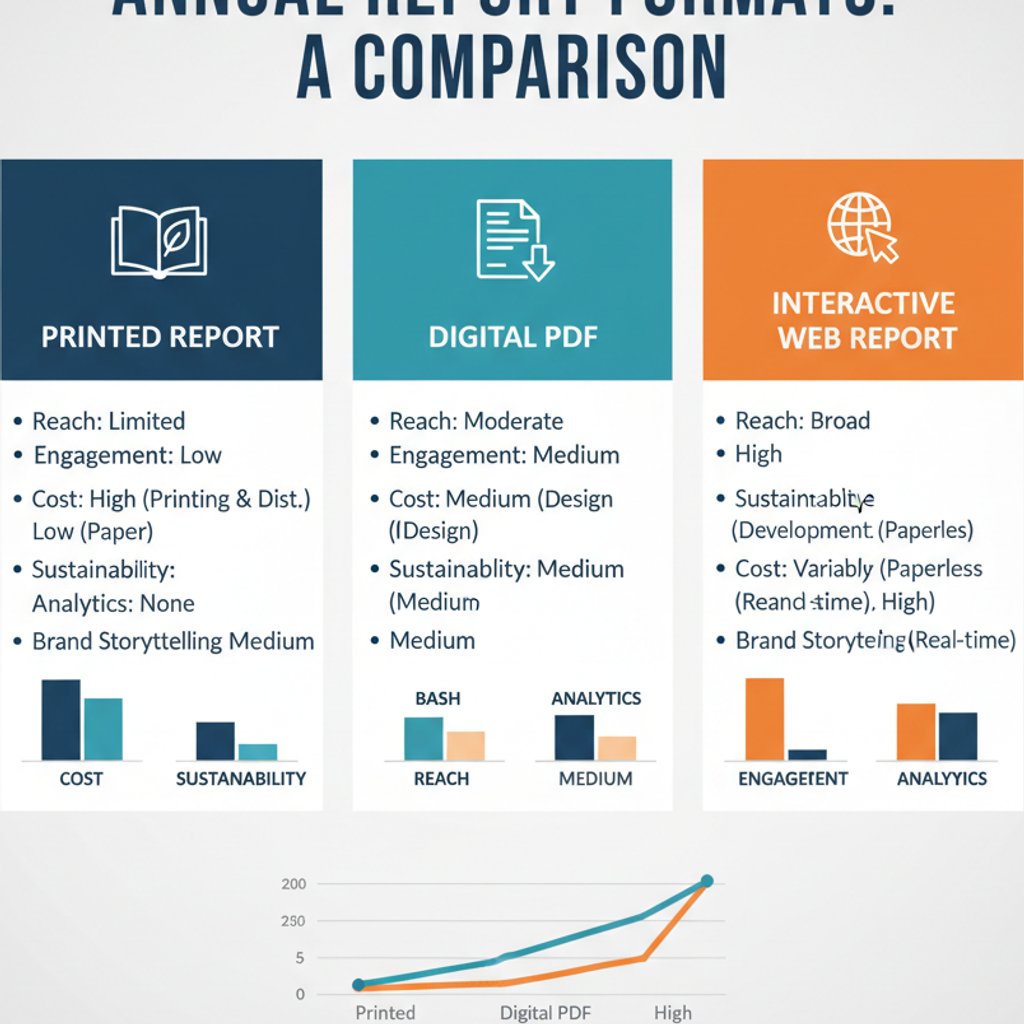
Here’s a quick comparison of the common formats:
| Feature | Printed Report | Digital PDF | Interactive Web Report |
|---|---|---|---|
| Reach | Limited (physical distribution) | Wider (email, download) | Global (web access, mobile-friendly) |
| Engagement | Tangible, high perceived value | Readable, static | Dynamic, multimedia, personalized |
| Cost | High (printing, distribution) | Low (design, hosting) | Moderate to High (development, maintenance) |
| Sustainability | Higher environmental impact | Lower impact | Lowest impact (if well-optimized) |
| Analytics | None directly | Download counts | Detailed user behavior, views, clicks |
| Brand Storytelling Potential | High (tactile, visual) | Moderate (visuals only) | Highest (multimedia, immersive) |
| Accessibility | Physical copy needed | Requires PDF reader | Browser-based, often responsive |
As you can see, the interactive web report offers significant advantages in terms of reach and engagement, which are crucial for effective brand storytelling in today’s digital age. That said, a beautifully printed report still carries a certain gravitas, especially for key investors or board members. Many companies opt for a hybrid approach: a stunning print version for a select audience, complemented by a comprehensive and interactive digital version for broader dissemination.
Measuring the Impact: Beyond the Bottom Line
So, how do you know if your investment in annual report design is paying off? It’s not always about direct ROI, but rather about the softer metrics that build long-term value.
Stakeholder Perception and Trust
A well-designed annual report enhances your credibility and transparency. It signals that your company is organized, professional, and takes its communication seriously. This builds trust, which is an invaluable asset. Trust correlates directly with investor confidence and customer loyalty. A 2022 survey by PwC found that 76% of investors consider non-financial information, including ESG (Environmental, Social, and Governance) disclosures, in their investment decisions.
When your report clearly articulates your ESG efforts through compelling design and narrative, it directly influences how stakeholders perceive your commitment to responsible business practices. This is the part that most guides get completely wrong; they focus on the ‘what’ of ESG, not the ‘how’ of communicating it effectively.
Employee Engagement and Recruitment
Don’t underestimate the internal impact. Employees are often proud to share a well-produced annual report, which reinforces their sense of belonging and pride in the company. It’s a powerful tool for internal branding and can even aid in talent acquisition, showcasing your company as a desirable place to work.
Think of it as an extended corporate brochure, but one that’s backed by verifiable performance. Prospective employees, especially in competitive markets like Kuala Lumpur, are looking for more than just a salary; they want to align with a company that has a clear vision and strong values. Your annual report can articulate that beautifully.
The Process: From Concept to Completion for Your Annual Report Design
Creating a truly impactful annual report is a collaborative journey. It requires careful planning, creative vision, and meticulous execution. This isn’t something you rush at the last minute.
Defining Your Narrative and Objectives
Before any design work begins, you need to articulate the core story you want to tell. What were the key achievements of the past year? What challenges did you overcome? What is your vision for the future? Who are your primary audiences, and what messages do they need to hear?
This initial strategic phase is critical. It involves brainstorming sessions with leadership, marketing, and investor relations teams. The clearer your objectives and narrative, the more focused and effective your annual report design will be. This is where Datanex often steps in, helping companies distill their complex year into a compelling, coherent story arc.
The Role of a Professional Annual Report Design Agency
While some in-house teams might attempt this, engaging a specialized annual report design agency, particularly one with experience in Malaysia, is almost always the smarter choice. These agencies bring expertise in visual communication, storytelling, and regulatory compliance. They understand how to translate complex data into engaging visuals and how to crafting impactful narratives that resonates with diverse stakeholders.
An agency like Datanex, with a deep understanding of the Malaysian market, can ensure your report not only looks exceptional but also speaks directly to local sensibilities and regulatory expectations. They’ll handle everything from concept development and copywriting to photography, illustration, and print production or digital development.
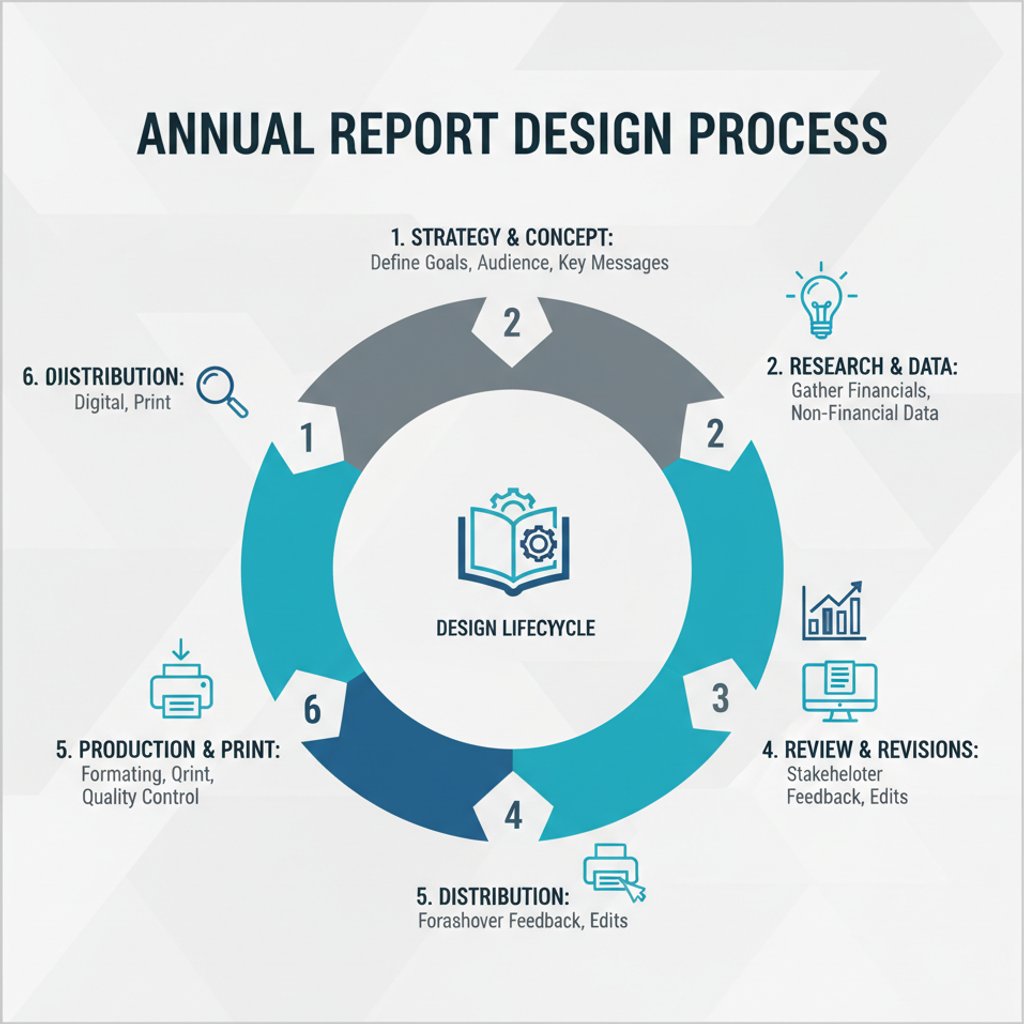
Key Stages in Annual Report Design
- Strategy & Concept Development: Defining the theme, narrative, and visual direction.
- Content Creation: Copywriting, data compilation, photography, and illustration.
- Design & Layout: Bringing the content to life with visual hierarchy, typography, and color.
- Review & Revisions: Iterative feedback loops with stakeholders.
- Production: Print management or digital development and deployment.
- Distribution: Ensuring the report reaches its intended audience effectively.
Each stage is crucial, and skipping steps or rushing through them can compromise the final product. The honest answer is that nobody knows for certain yet what the future holds for corporate reporting, but the evidence suggests that visual storytelling and digital interactivity will only become more important.
Looking Ahead: The Future of Annual Report Design
The landscape of corporate reporting is constantly evolving, driven by technological advancements and changing stakeholder expectations. What does this mean for annual report design?
Integrated Reporting and ESG Focus
Integrated reporting, which combines financial and non-financial information to provide a holistic view of a company’s value creation, is gaining traction globally and in Malaysia. This approach demands a design that can seamlessly weave together diverse data points into a coherent, compelling narrative.
The emphasis on ESG factors will continue to grow. Your annual report will be a primary vehicle for demonstrating your commitment to environmental stewardship, social responsibility, and robust governance. Design will play a crucial role in making these complex disclosures accessible and impactful, moving beyond mere compliance to genuine transparency.
Personalization and AI-Driven Insights
Imagine an annual report that tailors its content based on the reader’s interests. While still in its nascent stages, AI and data analytics could enable personalized reporting, delivering specific sections or insights to investors, employees, or customers based on their preferences. This would take engagement to an entirely new level.
The goal remains the same: to communicate your company’s story effectively. But the tools and techniques available to achieve that are becoming increasingly sophisticated. For companies in Malaysia, embracing these innovations in annual report design isn’t just about staying competitive; it’s about leading the conversation.
Frequently Asked Questions About Annual Report Design
What is the primary purpose of an annual report?
While traditionally a compliance document for financial disclosure, the modern annual report serves as a powerful strategic communication tool. Its primary purpose is to inform stakeholders about the company’s financial performance, operational achievements, governance, and future vision, all while reinforcing its brand identity and values.
How important is design in an annual report?
Design is critically important. It transforms raw data into an engaging narrative, making complex information accessible and memorable. Effective design elements—like typography, color, imagery, and layout—convey professionalism, transparency, and brand personality, significantly impacting stakeholder perception and trust.
Should I choose a print or digital annual report for my Malaysian company?
Many Malaysian companies opt for a hybrid approach. A high-quality print report can be reserved for key stakeholders, offering a tangible, premium experience. A comprehensive, interactive digital report, on the other hand, ensures wider reach, greater accessibility, and dynamic storytelling capabilities, often with lower environmental impact.
What makes an annual report design effective in the Malaysian context?
An effective annual report design in Malaysia incorporates cultural sensitivity, local relevance, and adherence to regional business communication norms. This includes showcasing local community engagement, diverse workforce representation, and aligning with national development goals, alongside clear financial reporting.
How can an annual report help with brand storytelling?
An annual report acts as a holistic brand storytelling vehicle by allowing companies to articulate their mission, values, and vision through both words and visuals. It provides a platform to highlight key achievements, social responsibility initiatives, and future aspirations, creating a compelling narrative that resonates with all stakeholders beyond just financial performance.
When should a company start planning its annual report design?
Planning for an annual report should ideally begin several months before the release deadline. This allows ample time for strategic conceptualization, content gathering, photography, design iterations, and stakeholder reviews. Rushing the process often compromises quality and impact.
What role does an agency like Datanex play in annual report design?
Datanex, a creative agency specializing in corporate communications, helps companies define their annual report’s narrative, theme, and visual direction. We provide expertise in copywriting, design, photography, data visualization, and production, ensuring the final report is a professional, compelling, and compliant brand asset tailored to the Malaysian market.
Last updated: June 30, 2026