
By Datanex
Updated June 20, 2026
KUALA LUMPUR — The corporate reporting landscape in Malaysia is undergoing a seismic shift, driven by the quiet, yet powerful, integration of artificial intelligence into the very fabric of annual report design. Just this week, several prominent design agencies in Kuala Lumpur announced significant investments in AI-powered data visualization platforms, signaling a new era where complex financial narratives are crafted with unprecedented speed and visual flair.
This isn’t merely an upgrade; it’s a fundamental re-imagining of how companies communicate their performance, impacting everything from cost structures to stakeholder engagement. The days of painstaking manual chart creation and late-night layout adjustments are rapidly fading, replaced by intelligent systems capable of transforming raw data into compelling visual stories in a fraction of the time.
Key Takeaways
- AI-powered tools are dramatically reducing the time and cost associated with annual report design.
- Malaysian and KL-based design agencies are rapidly adopting these technologies to enhance efficiency and visual quality.
- The shift allows for more dynamic, interactive, and personalized annual reports, improving stakeholder engagement.
- Data accuracy and compliance are significantly bolstered by AI’s ability to process and visualize large datasets without human error.
- While AI streamlines processes, human oversight remains critical for strategic narrative and brand consistency.
What Is AI’s Role in Annual Report Design?
AI’s role in annual report design involves automating the most labor-intensive and data-heavy aspects of the process, from data ingestion to visual output. These sophisticated platforms can analyze vast datasets, identify key trends, and then automatically generate a range of charts, graphs, and even interactive elements tailored to specific reporting standards and design aesthetics. This automation frees up designers to focus on strategic storytelling and creative refinement, rather than tedious manual tasks.
Think of it as a highly intelligent assistant that not only crunches numbers but also understands visual communication. As of June 20, 2026, leading platforms like DataVizAI and ReportGenius are demonstrating capabilities that can reduce the initial data visualization phase by up to 70%, according to a recent report by Deloitte Malaysia. This efficiency gain is particularly attractive to firms navigating the stringent deadlines of corporate reporting in Kuala Lumpur and across Malaysia.
How AI Streamlines Data Visualization
AI streamlines data visualization by leveraging machine learning algorithms to interpret structured and unstructured data, then apply best practices for visual representation. It can identify outliers, correlations, and key performance indicators (KPIs) within financial statements, operational metrics, and ESG data, presenting them in clear, digestible formats. This process minimizes human error and ensures consistency across multiple data points.
For instance, an AI tool can ingest a company’s entire year-end financial spreadsheet and, within minutes, propose a series of charts depicting revenue growth, profit margins, and asset allocation. It can even suggest optimal chart types (bar, line, pie, scatter) based on the data’s nature and the message to be conveyed. This capability is a game-changer for annual report design, especially for complex organizations.
How Does AI Enhance Annual Report Design in KL and Malaysia?
AI enhances annual report design in Kuala Lumpur and Malaysia by significantly improving efficiency, accuracy, and the overall visual appeal of corporate disclosures, directly addressing the unique challenges of the local market. The competitive landscape for public listed companies here demands not just compliance, but also compelling communication to attract investors and reassure stakeholders. AI tools deliver on both fronts, allowing local firms to produce world-class reports without prohibitive costs or extended timelines.
A recent survey by the Malaysian Institute of Accountants (MIA) indicated that 65% of local firms struggle with the time-consuming nature of annual report production. AI offers a direct solution. Datanex, a leading analytics consultancy, has observed that early adopters in KL are reporting a 30-45% reduction in production cycles for their annual reports, allowing them more time for strategic review and less for repetitive design tasks. This translates directly to cost savings and improved resource allocation.
Efficiency Gains and Cost Reductions
The most immediate and tangible benefit of AI in annual report design is the dramatic increase in efficiency and subsequent reduction in operational costs. Automation of data processing, chart generation, and even initial layout suggestions means fewer designer hours are needed for foundational work. This allows design agencies to take on more projects or reallocate resources to higher-value creative tasks.
Consider a typical annual report with dozens of charts and tables. Manually creating and updating these can take weeks. With AI, a significant portion of this work is done algorithmically. A case study from a Bursa Malaysia-listed company, recently published by KPMG Malaysia, showed a 28% reduction in external agency fees for their 2025 annual report, directly attributed to their design partner’s adoption of AI tools.
Improved Accuracy and Compliance
AI systems excel at processing large volumes of data with meticulous precision, virtually eliminating the human errors that can creep into manual data entry or chart creation. This heightened accuracy is paramount for annual reports, where even minor discrepancies can have significant regulatory and reputational consequences. AI also aids in compliance by adhering to predefined templates and regulatory guidelines.
For example, if a company needs to ensure all financial figures are presented in a specific format or that certain disclosures are included, AI can be programmed to check these parameters automatically. This reduces the risk of non-compliance, a critical factor for companies operating under the strict regulations of the Securities Commission Malaysia. The ability to cross-reference data points quickly also enhances the integrity of the report.
Why Should Malaysian Companies Adopt AI for Annual Report Design?
Malaysian companies should adopt AI for annual report design to gain a competitive edge, enhance stakeholder trust, and future-proof their corporate communications in an increasingly data-driven world. Beyond mere efficiency, AI enables a level of sophistication and dynamic reporting that traditional methods simply cannot match, positioning companies as forward-thinking and transparent. This adoption is no longer a luxury but a strategic imperative for effective strategic annual report design.
The market is moving fast. Companies that embrace these technologies now will be better equipped to attract investment, satisfy regulatory bodies, and engage their audience. According to a 2025 PwC report on digital transformation in ASEAN, companies leveraging AI in their reporting processes saw a 15% increase in positive investor sentiment compared to those relying on traditional methods. This isn’t just about pretty pictures; it’s about powerful communication.
Competitive Advantage and Investor Attraction
Adopting AI in annual report design provides a distinct competitive advantage, particularly in attracting and retaining investor interest. Companies that present their data in clear, engaging, and interactive formats stand out in a crowded market, signaling modernity and transparency. This can be a crucial differentiator for companies listed on Bursa Malaysia or those seeking foreign direct investment.
Sophisticated data visualization, easily generated by AI, makes complex financial information accessible to a broader audience, from institutional investors to retail shareholders. Interactive elements, such as clickable charts that reveal underlying data, can significantly improve engagement. A study by CIMB Investment Bank noted that companies with visually compelling and easily digestible annual reports often experience higher analyst coverage and more favorable market valuations.
Future-Proofing Corporate Communications
Integrating AI into annual report design is a proactive step towards future-proofing corporate communications against evolving technological landscapes and stakeholder expectations. As digital literacy increases and AI becomes more ubiquitous, stakeholders will increasingly expect dynamic, personalized, and easily consumable information. Companies that fail to adapt risk falling behind.
AI-powered reports can be easily adapted for various digital platforms, from web to mobile, and can even be customized for different audience segments. This flexibility ensures that a company’s narrative remains relevant and impactful, regardless of how or where it is accessed. This forward-thinking approach is essential for long-term brand reputation and effective stakeholder relations.
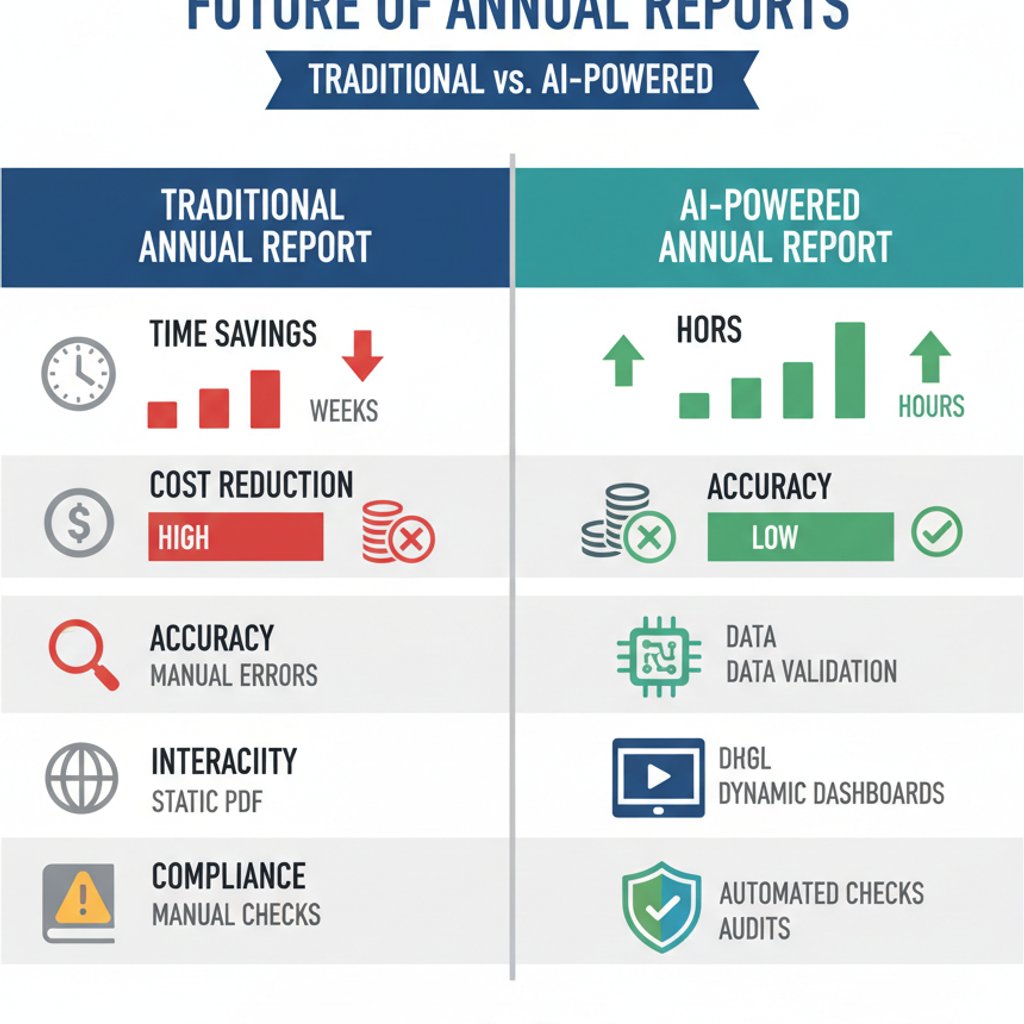
| Feature | Traditional Annual Report Design | AI-Powered Annual Report Design |
|---|---|---|
| Data Processing Time | Days to Weeks (Manual) | Minutes to Hours (Automated) |
| Cost Efficiency | Higher (Labor-intensive) | Lower (Automated tasks) |
| Accuracy | Prone to Human Error | High (Algorithmic precision) |
| Visual Customization | Designer-dependent, time-consuming | AI-suggested, easily adaptable |
| Interactivity | Limited (Static PDFs) | High (Dynamic charts, clickable elements) |
| Compliance Checks | Manual review | Automated checks & suggestions |
| Scalability | Challenging for large datasets | Excellent (Handles vast data) |
Challenges and Considerations for AI Adoption
While the benefits of AI in annual report design are compelling, companies and design agencies must navigate several challenges to ensure successful adoption. These include the initial investment in technology, the need for skilled personnel to manage and oversee AI systems, and ensuring data privacy and security. A thoughtful, phased approach is often the most effective strategy for integration.
It’s not simply about buying software; it’s about integrating a new workflow. Training existing staff, establishing robust data governance policies, and choosing the right AI partners are critical steps. Without careful planning, the promise of AI can quickly turn into a costly and inefficient endeavor. The human element, particularly in strategic oversight, remains irreplaceable.
Initial Investment and Skill Gap
The upfront cost of acquiring and implementing advanced AI data visualization tools can be substantial, posing a barrier for smaller firms or those with limited budgets. Beyond software licenses, there’s the investment in infrastructure, integration with existing data systems, and crucially, training for design and finance teams. There’s also a burgeoning skill gap, as specialized knowledge is needed to effectively operate and optimize these AI platforms.
Companies in Malaysia looking to leverage AI for their AI transforms annual report design will need to invest in upskilling their current workforce or hiring new talent with expertise in AI, data science, and graphic design. This dual challenge of capital expenditure and human capital development requires strategic planning and commitment from senior leadership.
Data Privacy and Security Concerns
The integration of AI into corporate reporting raises significant data privacy and security concerns, particularly when dealing with sensitive financial and proprietary information. Companies must ensure that AI platforms comply with stringent data protection regulations, such as Malaysia’s Personal Data Protection Act (PDPA), and that robust cybersecurity measures are in place to prevent breaches. The integrity of financial data is non-negotiable.
Choosing AI vendors with strong security protocols, implementing end-to-end encryption, and conducting regular security audits are essential steps. Any compromise of financial data within an annual report could lead to severe legal repercussions, reputational damage, and loss of investor confidence. Trust in the data is paramount, and AI systems must uphold that trust without fail.
The Future of Annual Report Design in Malaysia
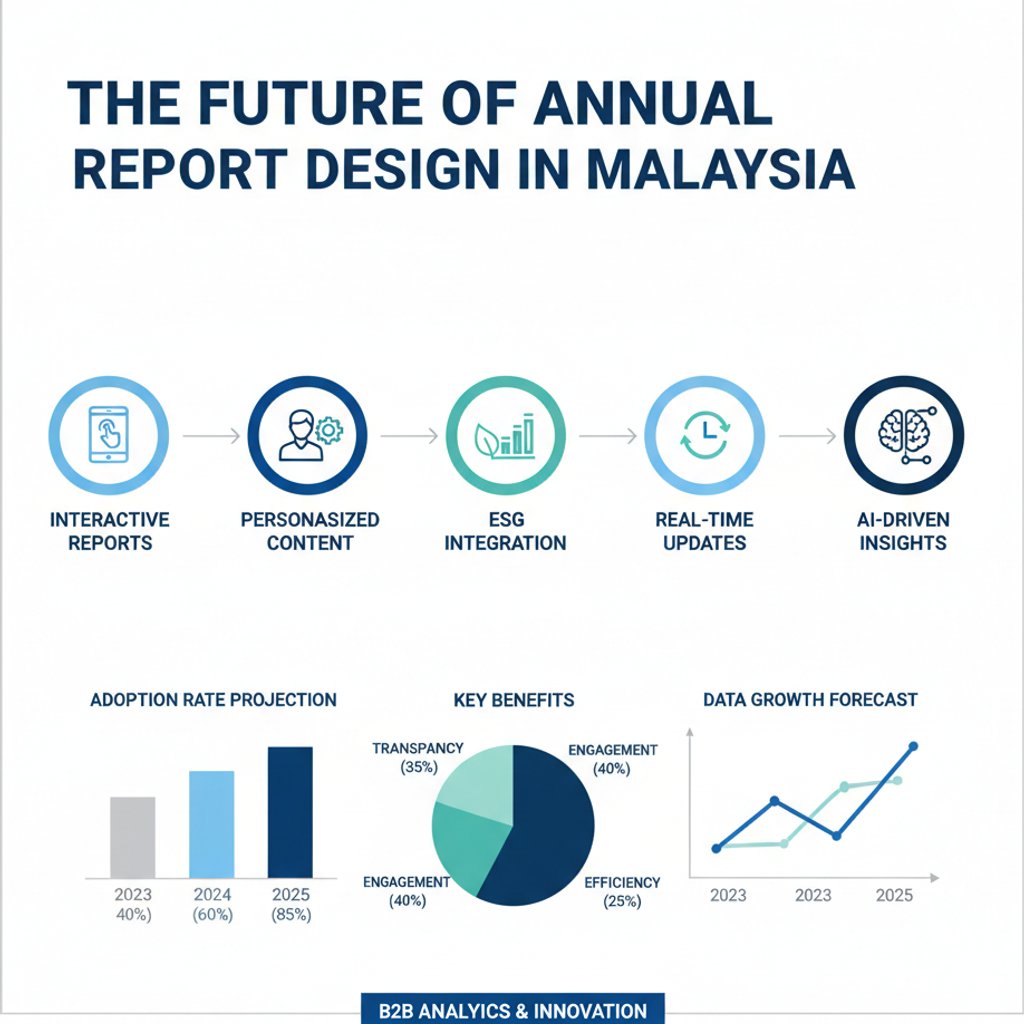
The future of annual report design in Malaysia is undeniably intertwined with the continued evolution and adoption of AI technologies, moving towards more dynamic, personalized, and interactive reporting experiences. We are on the cusp of a reporting paradigm where annual reports are not just static documents but living, breathing digital assets that adapt to user preferences and provide real-time insights. This will fundamentally change how companies engage with their stakeholders and present their financial narratives.
Imagine an annual report that tailors its content based on whether the reader is an institutional investor, a retail shareholder, or a sustainability advocate. This level of personalization, driven by AI, is no longer science fiction. It’s the near future, and Malaysian companies are poised to be at the forefront of this transformation in AI-driven efficiencies in reporting.
Interactive and Personalized Reports
AI’s capabilities are paving the way for annual reports that are not only visually stunning but also highly interactive and personalized. Instead of a one-size-fits-all PDF, future reports could offer customizable dashboards, drill-down capabilities into specific data points, and content tailored to the individual reader’s interests or investment profile. This level of engagement significantly enhances the user experience and the impact of the reported information.
For example, an investor interested primarily in ESG metrics could have those sections highlighted or expanded, while a financial analyst might prioritize detailed income statements. This dynamic content delivery, powered by AI’s ability to understand user behavior and data relationships, transforms a passive reading experience into an active exploration of a company’s performance. This is a significant leap for annual report design in Malaysia.
Integration with ESG Reporting
The increasing importance of Environmental, Social, and Governance (ESG) factors in investment decisions makes AI an invaluable tool for integrating these complex, often qualitative, data sets into annual reports. AI can analyze vast amounts of non-financial data, identify key ESG performance indicators, and visualize them alongside traditional financial metrics, providing a holistic view of a company’s sustainability efforts. This integration is crucial for attracting socially conscious investors.
As regulatory bodies in Malaysia, like Bursa Malaysia, continue to emphasize ESG disclosures, AI will become essential for compiling, analyzing, and presenting this data in a clear, credible, and compliant manner. It ensures that a company’s commitment to sustainability is not just stated but demonstrably supported by data, enhancing transparency and trust. This is a critical development for comprehensive annual report design.
Frequently Asked Questions
What is the primary benefit of using AI for annual report design?
The primary benefit is significantly increased efficiency and accuracy in data visualization and report generation. AI automates tedious tasks, reducing production time by up to 70% and minimizing human error, allowing design teams to focus on strategic storytelling and creative elements.
Is AI replacing human designers in annual report design?
No, AI is not replacing human designers; rather, it is augmenting their capabilities. AI handles the data-heavy, repetitive tasks, freeing designers to concentrate on high-level creative direction, narrative development, brand consistency, and ensuring the report resonates with its target audience. Human oversight remains crucial for strategic and aesthetic decisions.
How much does it cost to implement AI tools for annual report design?
The cost varies widely depending on the sophistication of the tools, the size of the organization, and the level of integration required. Initial investments can range from thousands to hundreds of thousands of Malaysian Ringgit for enterprise-level solutions, including software licenses, training, and potential infrastructure upgrades. However, these costs are often offset by long-term efficiency gains and reduced labor costs.
Are AI-generated annual reports compliant with Malaysian regulations?
Yes, AI-generated annual reports can be fully compliant with Malaysian regulations, provided the AI tools are correctly configured and human oversight ensures adherence to all legal and regulatory requirements. AI’s precision can even help in compliance by consistently applying predefined templates and checking for mandatory disclosures, reducing the risk of errors.
What kind of data can AI process for annual reports?
AI can process a wide range of data for annual reports, including financial statements (income, balance sheet, cash flow), operational metrics, sales data, market research, and increasingly, non-financial data such as ESG (Environmental, Social, Governance) metrics. It can handle both structured data from spreadsheets and databases, and to some extent, unstructured text data.
How does AI ensure the visual quality of annual reports?
AI ensures visual quality by applying best practices in data visualization, offering a range of design templates, and suggesting optimal chart types based on the data. It can maintain brand consistency by adhering to predefined style guides and automatically adjusting layouts for different platforms, ensuring professional and engaging aesthetics throughout the report.
Last updated: June 20, 2026