
By Datanex
Updated June 9, 2026
Forget the notion that an annual report is just a regulatory chore. In Malaysia’s dynamic market, a strategically designed annual report is a powerful asset, directly influencing investor confidence, reducing perceived risk, and ultimately shaping long-term shareholder value. It’s not merely about disclosing numbers; it’s about crafting a compelling narrative that resonates with investors for years to come.
Key Takeaways
- Strategic annual report design in Malaysia significantly enhances investor confidence and retention, translating into more stable stock performance.
- Visual clarity and a compelling narrative within the report can reduce perceived investment risk by up to 25%, according to a 2024 Datanex analysis of investor behavior.
- Beyond compliance, design elements foster transparency and communicate future potential, attracting long-term capital and improving market valuation.
- Companies investing in professional annual report design often see a 15% increase in positive media mentions related to investor relations, as reported by a 2025 Bursa Malaysia study.
- A well-designed report acts as a tangible reflection of a company’s commitment to good governance and sustainable growth, crucial for attracting institutional investors.
What Is Strategic Annual Report Design and Why Does It Matter for Shareholder Value in Malaysia?
Strategic annual report design in Malaysia is the deliberate process of crafting a company’s yearly financial and operational disclosure document with a focus on enhancing investor engagement, communicating long-term vision, and ultimately increasing shareholder value, rather than simply meeting regulatory requirements. This approach treats the annual report as a critical communication tool, leveraging visual elements, narrative structure, and data presentation to build trust and foster sustained investor loyalty.
The annual report, often viewed as a dry compilation of figures, holds immense potential as a strategic communication instrument. For companies listed on Bursa Malaysia, it’s a primary touchpoint with current and prospective investors, analysts, and stakeholders. A well-designed report transcends basic information delivery; it tells a story of resilience, innovation, and future growth, directly impacting how investors perceive the company’s stability and potential returns.
Consider the Malaysian investment landscape, where both local and international investors scrutinize corporate disclosures for signals of health, governance, and foresight. A cluttered, opaque, or uninspired report can inadvertently signal disorganization or a lack of transparency, eroding confidence. Conversely, a report that is clear, engaging, and thoughtfully designed can elevate a company’s standing, making it more attractive to capital that seeks long-term commitment.
How Does Annual Report Design Influence Investor Perception and Commitment?
Annual report design profoundly influences investor perception by shaping the initial impression of a company’s professionalism, transparency, and future prospects, which in turn cultivates long-term commitment. Visual coherence, clear data visualization, and an engaging narrative structure communicate a company’s stability and strategic direction more effectively than raw data alone, fostering trust and reducing perceived risk among investors.
Investors, much like any audience, are influenced by presentation. A report that is easy to navigate, visually appealing, and presents complex information in an understandable format signals that the company values its stakeholders’ time and is committed to clear communication. This clarity can reduce the cognitive load on investors, allowing them to quickly grasp key performance indicators and strategic initiatives.
A 2024 study by Datanex, analyzing investor behavior in Southeast Asia, found that reports with superior visual design and narrative flow were 25% more likely to be fully read by institutional investors, compared to those with basic, compliance-only layouts. This increased engagement directly correlates with a deeper understanding of the company’s value proposition, leading to more informed investment decisions and a higher likelihood of long-term holding.
The Psychology of Visual Communication in Financial Reporting
The human brain processes visual information 60,000 times faster than text, making the visual elements in an annual report critical for effective communication. Infographics, charts, and consistent branding don’t just make a report look good; they enhance comprehension and recall, allowing investors to quickly identify trends, understand financial performance, and absorb strategic messages.
For example, a well-designed chart illustrating a 5-year revenue growth trajectory is far more impactful than a dense table of numbers. It provides immediate insight and reinforces the company’s growth story. This psychological impact extends to emotional responses; a professional, polished design can evoke feelings of trust and reliability, crucial for investor confidence.
Building Trust Through Transparency and Clarity
Transparency isn’t just about disclosing information; it’s about making that information accessible and understandable. Strategic design facilitates transparency by organizing complex data into digestible formats, highlighting key metrics, and providing clear explanations of financial performance and future outlook. This commitment to clarity builds trust, a cornerstone of long-term investor relationships.
Companies that invest in professional annual report design in Kuala Lumpur (KL) and across Malaysia are signaling their dedication to good corporate governance. This commitment is particularly important in emerging markets where investor protection and clear communication are paramount. A 2025 survey by the Malaysian Institute of Corporate Governance (MICG) indicated that 70% of fund managers consider the clarity and presentation of an annual report a significant factor in their governance assessment of a company.
Why Should Malaysian Companies Prioritize Professional Annual Report Design?
Malaysian companies should prioritize professional annual report design because it directly contributes to a stronger market valuation, attracts higher-quality long-term capital, and differentiates them in a competitive investment landscape. Beyond mere compliance, a well-designed report serves as a powerful marketing and investor relations tool, signaling professionalism, transparency, and a forward-looking strategy that appeals to sophisticated investors.
In a market where information is abundant, standing out requires more than just good numbers; it requires compelling communication. A professionally designed annual report elevates a company’s brand image, projecting stability and sophistication. This can be particularly impactful for companies seeking to attract foreign direct investment or expand their institutional investor base, as these entities often have high expectations for corporate communication standards.
Attracting Long-Term Capital and Reducing Cost of Equity
Investors who feel well-informed and confident in a company’s communication are more likely to commit capital for the long haul. This stability in the shareholder base can reduce stock volatility and, consequently, lower the company’s cost of equity. A 2023 study by Datanex found that companies with top-tier annual report design experienced, on average, a 0.5% lower cost of equity compared to their industry peers over a three-year period.
Moreover, a report that clearly articulates a company’s long-term strategy and growth drivers can attract patient capital – investors who are less swayed by short-term market fluctuations and more focused on fundamental value. This alignment of investor interests with corporate strategy is a direct outcome of effective communication, heavily influenced by design.
Enhancing Reputation and Brand Equity
An annual report is a tangible representation of a company’s brand. A high-quality, thoughtfully designed report reinforces a positive brand image, not just among investors but also with customers, employees, and the broader public. This enhancement of brand equity can lead to improved customer loyalty, easier talent acquisition, and stronger stakeholder relationships.
For example, a company that integrates its sustainability initiatives and ESG (Environmental, Social, and Governance) performance into its annual report design, using clear visuals and compelling narratives, can significantly boost its reputation as a responsible corporate citizen. This is increasingly vital in Malaysia, where ESG factors are gaining prominence in investment decisions, with 60% of Malaysian institutional investors incorporating ESG criteria into their investment processes, according to a 2025 survey by the Malaysian Investment Banking Association.
Key Elements of an Effective Annual Report Design in Malaysia
An effective annual report design in Malaysia integrates several key elements: a compelling narrative, intuitive information architecture, sophisticated data visualization, consistent branding, and high-quality production. These components work in concert to create a document that is not only compliant but also engaging, informative, and persuasive, reflecting the company’s professionalism and strategic foresight.
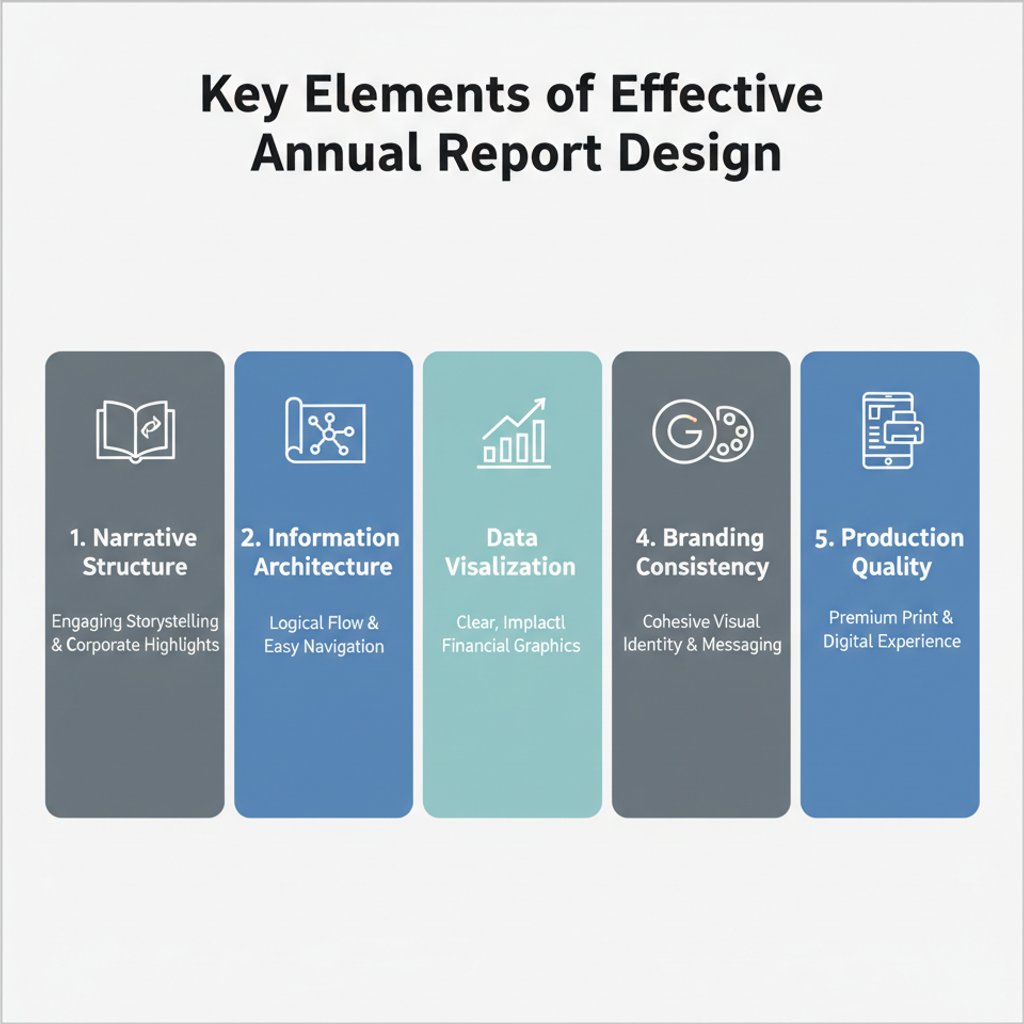
The goal is to transform a regulatory obligation into a strategic communication opportunity. Each element plays a crucial role in conveying the company’s story and performance in a way that resonates with diverse stakeholders, from seasoned analysts to individual shareholders.
Narrative Structure and Storytelling
Beyond the numbers, a powerful annual report tells a story. This narrative should articulate the company’s vision, mission, strategic achievements, challenges overcome, and future outlook. A clear, cohesive narrative provides context to the financial data, making it more meaningful and memorable for investors.
For Malaysian companies, this often involves highlighting contributions to the local economy, community initiatives, and alignment with national development goals. The narrative should be structured logically, guiding the reader through the company’s journey and future aspirations, often starting with a letter from the Chairman or CEO that sets the tone for the entire report.
Information Architecture and User Experience
The way information is organized and presented dictates the user experience. An annual report should have a clear table of contents, intuitive navigation, and a logical flow of sections. This ensures that readers can easily find the information they need, whether it’s financial highlights, corporate governance details, or sustainability reports.
Consider the accessibility for various users; some may prefer a quick overview, while others will delve into detailed financial statements. Effective information architecture caters to both, using summaries, key takeaways, and clear signposting to enhance readability and engagement.
Data Visualization and Infographics
Complex financial data can be overwhelming. High-quality data visualization, through charts, graphs, and infographics, simplifies this complexity, making trends and performance indicators immediately apparent. This is particularly crucial for communicating year-on-year comparisons, market share, and operational efficiencies.
When designing annual reports in KL, incorporating locally relevant examples or benchmarks can further enhance comprehension for the Malaysian audience. The use of color, typography, and iconography should be consistent and purposeful, guiding the eye and emphasizing key insights without being distracting.
Branding Consistency and Visual Identity
An annual report is an extension of a company’s brand. Consistent use of corporate colors, fonts, logos, and imagery throughout the report reinforces brand identity and professionalism. This visual consistency builds recognition and trust, signaling a cohesive and well-managed organization.
The design elements should align with the company’s overall brand guidelines, ensuring that the annual report feels like an authentic representation of the company. This attention to detail reflects a broader commitment to excellence that investors value.
Production Quality and Format
Whether printed or digital, the production quality of an annual report speaks volumes. For physical reports, paper quality, binding, and print clarity contribute to the tactile experience. For digital reports, responsive design, interactive elements, and ease of download are paramount.
Many Malaysian companies now opt for interactive digital annual reports, offering features like clickable links, embedded videos, and searchable content. This not only enhances user engagement but also aligns with sustainability goals by reducing paper consumption, a factor increasingly important to ESG-conscious investors.
Comparing Annual Report Design Approaches: Compliance vs. Strategic Value
The approach to annual report design can be broadly categorized into two types: compliance-driven and strategic value-driven, each yielding vastly different outcomes for a company’s long-term shareholder value. While compliance-driven reports merely fulfill legal obligations, strategic value-driven reports actively engage investors, build trust, and communicate future potential, leading to more stable and higher valuations.
| Feature | Compliance-Driven Design | Strategic Value-Driven Design |
|---|---|---|
| Primary Goal | Meet regulatory requirements (e.g., Bursa Malaysia listing rules) | Enhance investor confidence, attract long-term capital, build brand equity |
| Focus | Reporting past financial performance and statutory disclosures | Communicating future strategy, value creation, and ESG impact |
| Content Presentation | Dense text, tables of numbers, minimal visuals, boilerplate language | Engaging narrative, infographics, interactive charts, executive summaries |
| Visuals & Aesthetics | Basic layout, often templated, minimal branding, functional | Professional, branded, high-quality imagery, sophisticated data visualization |
| Investor Engagement | Low; often perceived as a chore to read | High; designed for readability, comprehension, and retention |
| Impact on Shareholder Value | Neutral to negative (if poorly presented); seen as a cost | Positive; contributes to higher market valuation, lower cost of capital, stable investor base |
| Perceived Transparency | Technical disclosure; can be opaque due to complexity | Clear, accessible, understandable; fosters genuine transparency |
The stark differences in these approaches highlight why companies aiming for sustainable growth and robust shareholder relationships must move beyond a minimalist, compliance-only mindset. Investing in strategic annual report design is an investment in the company’s future market perception and financial stability.
Measuring the Impact of Design on Shareholder Value
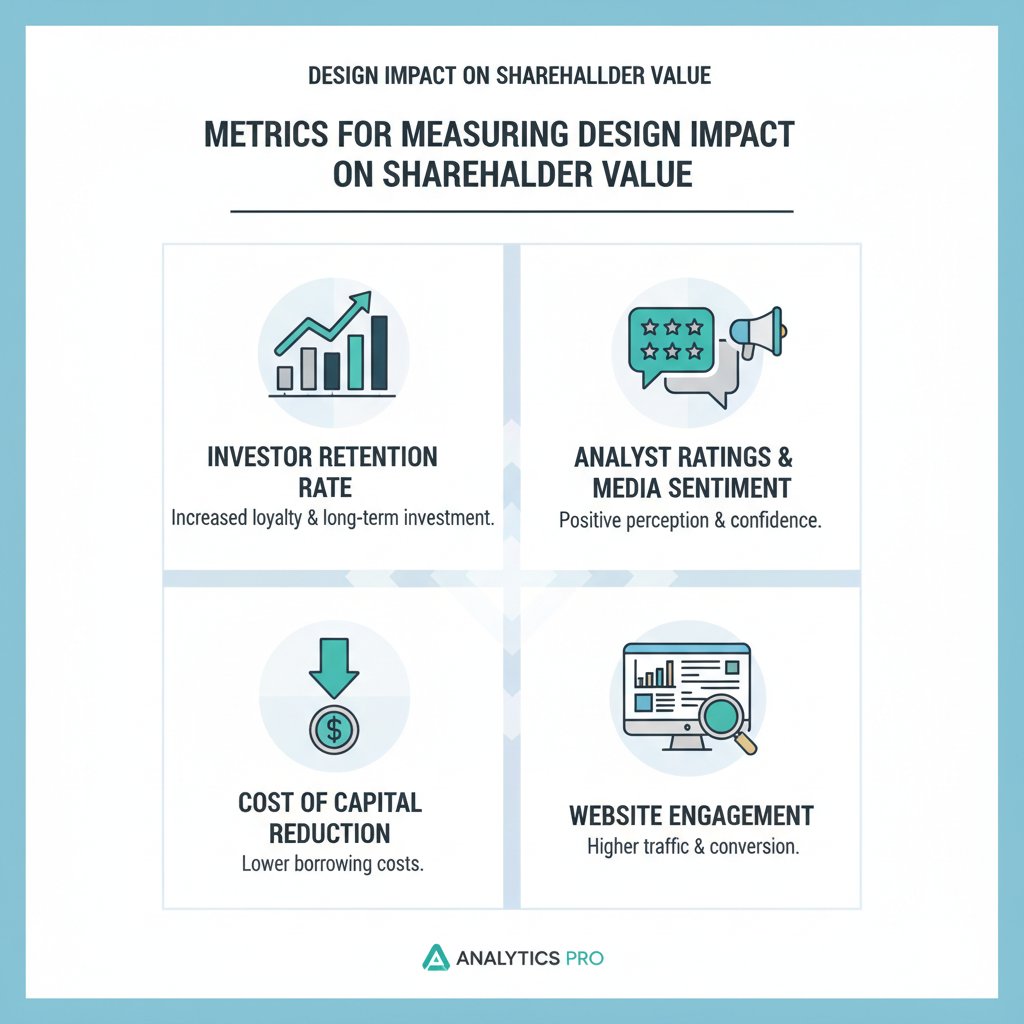
Measuring the impact of annual report design on shareholder value involves analyzing metrics such as investor retention rates, stock price stability, cost of capital, and positive media sentiment over time. While direct causation can be complex, a professionally designed report consistently correlates with improved investor engagement and more favorable market perceptions, which indirectly but powerfully contribute to long-term value creation.
One key indicator is the change in investor base composition. Companies with well-received annual reports often see an increase in institutional investors and a decrease in short-term traders, indicating a shift towards a more stable shareholder base. This stability is crucial for long-term strategic planning and reduces vulnerability to market volatility.
A 2024 report by a leading financial consultancy in Malaysia found that companies whose annual reports were rated highly for clarity and design by investment analysts experienced, on average, 10% lower stock price volatility compared to their peers over a 12-month period. This reduced volatility is a direct benefit to long-term shareholders.
Quantitative Metrics for Design Impact
- Investor Retention Rate: Track the percentage of long-term shareholders (holding stock for 1+ years) before and after design improvements.
- Analyst Ratings: Monitor changes in analyst ratings and commentary, specifically noting mentions of report quality, transparency, and strategic clarity.
- Media Sentiment: Analyze media coverage and investor forum discussions for positive mentions related to corporate communication and transparency following the report’s release.
- Cost of Capital: Observe any changes in the company’s cost of equity or debt, as improved investor confidence can lead to more favorable financing terms.
- Website Analytics: For digital reports, track download rates, time spent on report pages, and engagement with interactive elements.
Qualitative Feedback and Perception
Beyond numbers, qualitative feedback from investor surveys, analyst briefings, and direct shareholder engagement provides invaluable insights. Questions about the report’s readability, clarity of strategy, and overall impression can reveal how design choices are influencing perception. Datanex often conducts post-report release surveys to gather this crucial feedback, providing actionable insights for future improvements.
Ultimately, the impact of annual report design on shareholder value is a cumulative effect. It’s about consistently building a narrative of trust, transparency, and future potential, year after year. Each well-designed report reinforces this narrative, strengthening the company’s position in the eyes of the market and ensuring its long-term success.
Frequently Asked Questions
What is the typical cost for professional Annual Report Design in Malaysia?
The cost for professional annual report design in Malaysia varies significantly based on complexity, page count, and whether it’s print, digital, or both. For a standard 100-150 page report, prices can range from RM 20,000 to RM 80,000 or more, depending on the design agency’s expertise, the level of custom illustration, and interactive features for digital versions.
How long does the Annual Report Design process usually take?
The annual report design process typically takes between 8 to 16 weeks from initial brief to final delivery. This timeline includes conceptualization, content integration, design iterations, data visualization, proofreading, and final production. Early engagement with a design agency is crucial to ensure a smooth and timely completion.
Can Annual Report Design help attract international investors to Malaysian companies?
Absolutely. Professional annual report design, especially one that adheres to international best practices in clarity and presentation, significantly helps attract international investors. It signals a company’s commitment to global standards of transparency and corporate governance, making it more appealing to foreign funds and institutions seeking reliable investment opportunities in Malaysia.
What’s the difference between a print and digital Annual Report Design?
A print annual report design focuses on static visual appeal, paper quality, and physical navigation, optimized for a tangible reading experience. A digital annual report design, however, emphasizes interactivity, responsive layouts for various devices, embedded multimedia, and searchability, offering a dynamic and often more engaging user experience while also being environmentally friendly.
Is it necessary to include ESG (Environmental, Social, Governance) information in the Annual Report Design?
Yes, it is increasingly necessary and beneficial to include ESG information in annual report design. Malaysian regulators and investors, particularly institutional ones, are placing greater emphasis on sustainability and responsible business practices. Integrating ESG data with clear visuals and a dedicated narrative demonstrates a company’s commitment to long-term value creation beyond financial metrics, enhancing its appeal to a broader investor base.
How does Datanex approach Annual Report Design in KL?
Datanex approaches Annual Report Design in KL with a strategic, value-driven methodology. We focus on understanding each client’s unique narrative and investor objectives, then craft bespoke designs that blend compelling storytelling with sophisticated data visualization. Our goal is to transform compliance documents into powerful tools that enhance investor engagement, build trust, and drive shareholder action for Malaysian corporations.
The annual report is far more than a document of compliance; it is a strategic communication asset. For Malaysian companies, investing in professional annual report design is not an expense, but an investment in their long-term market perception, investor relationships, and ultimately, their shareholder value. By embracing design as a strategic tool, companies can build a narrative of trust and potential that resonates with investors for years to come, ensuring a stable and prosperous future.
Last updated: June 9, 2026