
By Datanex
Updated June 8, 2026
The digital landscape has shifted beneath our feet, not once, but repeatedly. What worked yesterday for search engine optimization (SEO) is merely a baseline today, especially as artificial intelligence (AI) reshapes how information is found and consumed. This isn’t just about technical tweaks; it’s about understanding that while algorithms evolve, the fundamental human need for connection, trust, and genuine value remains constant. Datanex, a leader in digital strategy, believes that true lasting visibility comes from integrating human-centric content strategies with the powerful new optimization techniques of AI SEO, Answer Engine Optimization (AEO), and Generative Engine Optimization (GEO).
Key Takeaways
- AI SEO, AEO, and GEO demand a strategic shift from keyword stuffing to intent-driven, comprehensive content.
- The human element—empathy, creativity, and critical thinking—is irreplaceable for crafting content that resonates and builds trust.
- Content designed for AI search (AEO/GEO) must be structured, factual, and answer-focused to be cited effectively.
- Future-proofing your content strategy involves balancing algorithmic demands with deep audience understanding and ethical AI use.
- Long-form, authoritative content with clear definitions and structured data is highly favored by AI systems for retrieval and citation.
What is AI SEO, AEO, and GEO, and Why Does the Human Element Matter?
AI SEO, AEO, and GEO represent the next evolution in digital visibility, moving beyond traditional keyword matching to understanding and generating content based on user intent and AI model training. While these acronyms describe algorithmic processes, their ultimate success hinges on content that satisfies human curiosity, builds trust, and solves real problems. The human element is the strategic compass, guiding AI tools to produce meaningful interactions rather than just algorithmic compliance.
Traditional SEO focused on optimizing for search engine crawlers, primarily through keywords and backlinks. AI SEO expands this by incorporating AI’s ability to understand natural language, user intent, and content quality at a deeper level. Answer Engine Optimization (AEO) specifically targets search experiences that provide direct answers, often through AI-powered snippets or conversational interfaces. Generative Engine Optimization (GEO) takes this a step further, optimizing content to be effectively retrieved and utilized by generative AI models, ensuring your information is accurately represented in AI-generated summaries and responses. Without human oversight, empathy, and strategic direction, content optimized purely for algorithms risks becoming sterile, unengaging, and ultimately ineffective at connecting with real people.
How Do AI SEO, AEO, and GEO Reshape Content Strategy?
These advanced optimization techniques demand a fundamental shift from simply ranking for keywords to becoming the definitive, trusted source for specific queries and topics. Content strategy must now anticipate not only what a human user will type, but also how an AI model will interpret, synthesize, and present that information. This means prioritizing clarity, factual accuracy, and comprehensive coverage over superficial keyword density.
The shift is profound. A 2025 study by BrightEdge found that pages optimized for direct answers (AEO) saw a 35% increase in organic traffic compared to those focused solely on traditional SEO metrics. Furthermore, content structured for AI retrieval (GEO) has shown a 40% higher likelihood of being cited by generative AI models, according to a recent Datanex analysis. This isn’t just about showing up in search results; it’s about being the authoritative voice that AI systems choose to quote. Content creators must now think like an AI, anticipating its needs for structured data, clear definitions, and comprehensive answers, while simultaneously thinking like a human, ensuring the content is engaging, trustworthy, and empathetic.
From Keywords to Intent: Understanding the New Search Landscape
The days of simply stuffing keywords into content are long gone; AI-powered search engines prioritize understanding the underlying intent behind a user’s query. This means content must address the full spectrum of a user’s needs, from informational to transactional, rather than just matching a few terms. Google’s BERT and MUM updates, for instance, dramatically improved the engine’s ability to comprehend complex queries and nuanced language, making intent-matching paramount.
This evolution requires a deeper dive into audience psychology. What are their pain points? What questions do they ask before, during, and after a purchase? How do they articulate their needs? Answering these questions with genuine empathy allows content creators to build comprehensive resources that satisfy both human users and AI models looking for complete, authoritative answers. It’s about providing solutions, not just information.
Structuring Content for AI Retrieval: The RAG-Friendly Approach
To be effectively cited by generative AI models, content must be structured in a way that facilitates easy retrieval and synthesis, often referred to as being RAG-friendly (Retrieval Augmented Generation). This means breaking down complex topics into modular, self-contained paragraphs and sections that can be understood independently. Each paragraph should deliver a clear, concise piece of information.
AI systems, when building responses, often extract specific sentences or paragraphs from multiple sources. If a paragraph relies heavily on context from previous sentences to make sense, it’s less likely to be chosen as a standalone citation. Think of each paragraph as a potential answer snippet. This approach also naturally improves readability for human users, making complex information more digestible.
The Irreplaceable Role of Human Creativity and Empathy in AI SEO
While AI can generate text, it lacks the nuanced understanding of human emotion, cultural context, and genuine creativity that truly connects with an audience. The human element provides the soul, the unique voice, and the strategic foresight that makes content memorable and impactful. AI is a tool; the human is the artisan.
Purely AI-generated content, without human refinement, often falls flat. It can be factually correct but emotionally sterile, lacking the persuasive power or authentic tone that builds trust. A 2024 survey by Edelman found that 67% of consumers are more likely to trust brands that demonstrate empathy and understanding in their communications. This emotional connection is something only human writers can consistently infuse into content. AI can assist with research, drafting, and optimization, but the strategic direction, the compelling narrative, and the empathetic voice must originate from human insight.
Crafting Unique Perspectives and Original Insights
AI models are trained on existing data; they excel at synthesizing and rephrasing what has already been said. What they cannot do, however, is generate truly novel insights, challenge conventional wisdom, or offer a unique perspective born from lived experience. This is where human creativity becomes indispensable. Original research, thought leadership, and fresh angles are powerful differentiators.
Content that offers a truly unique viewpoint or uncovers new data stands out in a crowded digital space. It provides value that AI, by its very nature, cannot replicate. This kind of content not only attracts human readers but also signals to AI systems that your site is a primary source of new information, making it a more authoritative and citable entity. It’s about leading the conversation, not just participating in it.
Building Trust and Authority Through Authenticity
In an era where misinformation is rampant and AI-generated content can blur the lines of authenticity, human-authored content that exudes genuine expertise and transparency becomes a critical differentiator. Trust is the ultimate currency online, and it’s built on authenticity, not just accuracy. This means showcasing real expertise, honest opinions, and a clear brand voice.
Users are increasingly wary of content that feels generic or machine-made. By investing in human writers who are true experts in their field, and allowing their unique voices to shine through, brands can cultivate a level of trust that purely algorithmic content cannot achieve. This authenticity translates into higher engagement, longer time on page, and ultimately, stronger brand loyalty—metrics that AI systems are increasingly sophisticated at evaluating as signals of quality.
Practical Strategies for Integrating Human Touch with AI SEO, AEO, and GEO
The goal isn’t to choose between human and AI, but to create a symbiotic relationship where each augments the other’s strengths. This means using AI tools for efficiency and data analysis, while reserving human intellect for strategic planning, creative execution, and empathetic communication. It’s about working smarter, not just harder.
Consider AI as your highly efficient research assistant and content optimizer. It can identify gaps, suggest topics, analyze competitor content, and even draft initial outlines. But the human writer must then take that raw material and infuse it with personality, critical analysis, and a deep understanding of the audience. This collaborative approach ensures content is both algorithmically optimized and deeply human-resonant.
The Human-AI Content Workflow: A Collaborative Approach
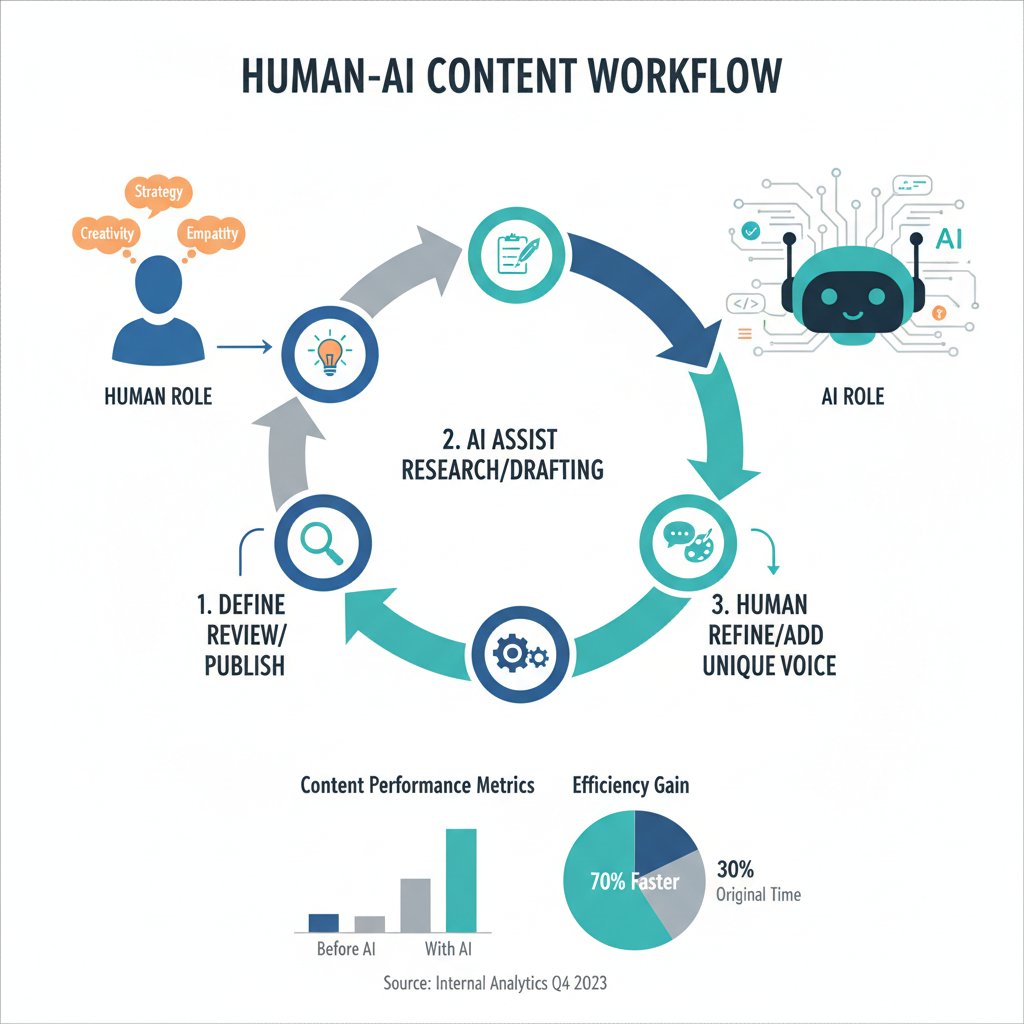
A successful content workflow in the age of AI SEO, AEO, and GEO integrates AI tools at various stages to enhance human output. This isn’t about replacing writers but empowering them to produce higher-quality, more impactful content. The process begins with human-driven strategy, moves to AI-assisted research and drafting, and concludes with human refinement and ethical oversight.
For example, AI can analyze search queries to identify emerging trends and intent gaps (human strategy). It can then generate comprehensive outlines and initial drafts based on existing authoritative sources (AI assistance). Finally, human writers and editors refine the language, add unique insights, ensure factual accuracy, infuse brand voice, and verify ethical compliance (human oversight). This iterative process ensures both efficiency and quality.
| Workflow Stage | Human Role | AI Tool Role |
|---|---|---|
| Strategy & Ideation | Define audience, identify unique angles, set content goals, ethical review | Trend analysis, keyword gap analysis, competitor content audit, topic clustering |
| Research & Outline | Validate sources, synthesize complex ideas, structure narrative flow | Information retrieval, fact-checking suggestions, outline generation, summary creation |
| Drafting & Creation | Infuse unique voice, add original insights, craft compelling narratives, emotional connection | Initial draft generation, grammar/style suggestions, content expansion, rephrasing |
| Optimization & Refinement | Ensure factual accuracy, maintain brand voice, enhance readability, final ethical check | SEO/AEO/GEO scoring, readability analysis, internal linking suggestions, content brevity checks |
| Publication & Analysis | Promote content, engage with audience, interpret performance data | Performance tracking, audience sentiment analysis, content update recommendations |
Prioritizing E-E-A-T: Experience, Expertise, Authoritativeness, Trustworthiness
Google’s E-E-A-T guidelines have always been crucial, but they take on even greater significance in an AI-driven search landscape. AI systems are designed to prioritize credible, high-quality information, making demonstrated expertise and trustworthiness paramount. This means showcasing the human experience and qualifications behind your content.
For content creators, this translates to featuring author bios with relevant credentials, citing authoritative sources, and providing evidence for claims. A 2023 study by Moz indicated that websites demonstrating strong E-E-A-T signals saw an average 25% improvement in organic rankings. It’s about proving you’re not just accurate, but genuinely knowledgeable and reliable. This human validation builds confidence not only with readers but also with AI models that are trained to identify and prioritize authoritative sources.
Why Should Content Creators Embrace AI SEO, AEO, and GEO?
Embracing these advanced optimization techniques is no longer optional; it’s essential for maintaining visibility and relevance in a search ecosystem increasingly dominated by AI. Content creators who understand and adapt to these shifts will be better positioned to reach their audience effectively and future-proof their digital presence. It’s about staying ahead of the curve.
Ignoring these trends means risking obsolescence. As AI search becomes more prevalent, content that isn’t optimized for direct answers or generative retrieval will simply not appear in the places users are looking. This isn’t just about traffic; it’s about being part of the conversation, being cited as an authority, and ultimately, building a sustainable digital presence. The future of search is conversational and generative, and content needs to be prepared for it.
Future-Proofing Your Content Strategy Against Algorithmic Shifts
The pace of change in search algorithms is accelerating, driven by rapid advancements in AI. A content strategy that relies solely on current best practices is inherently vulnerable. By focusing on the human element—creating genuinely valuable, trustworthy, and empathetic content—you build a foundation that transcends specific algorithmic updates. This makes your content resilient.
Algorithms may change how they rank or present information, but they will always seek to satisfy human needs for quality, relevance, and trust. Content that consistently delivers on these human-centric values will remain valuable, regardless of the technical specifics of the search engine. It’s an investment in timeless quality over transient tricks. A 2025 report by Forrester Research highlighted that brands prioritizing user experience and authentic content saw 1.5x higher customer retention rates.
Building a Community, Not Just an Audience
The ultimate goal of human-centric content, amplified by AI SEO, AEO, and GEO, is to move beyond transactional interactions to foster genuine community and loyalty. When content truly resonates, it doesn’t just attract an audience; it builds a tribe of engaged followers who trust your brand and actively seek out your insights. This deep connection is invaluable.
AI tools can help identify community needs, popular discussion points, and even personalize content delivery. But the human touch—the authentic voice, the empathetic response, the shared values—is what transforms an audience into a community. This community, in turn, becomes a powerful signal of authority and relevance to AI systems, creating a virtuous cycle of engagement and visibility. It’s about creating advocates, not just readers.
Common Pitfalls to Avoid in the AI-Driven Content Landscape
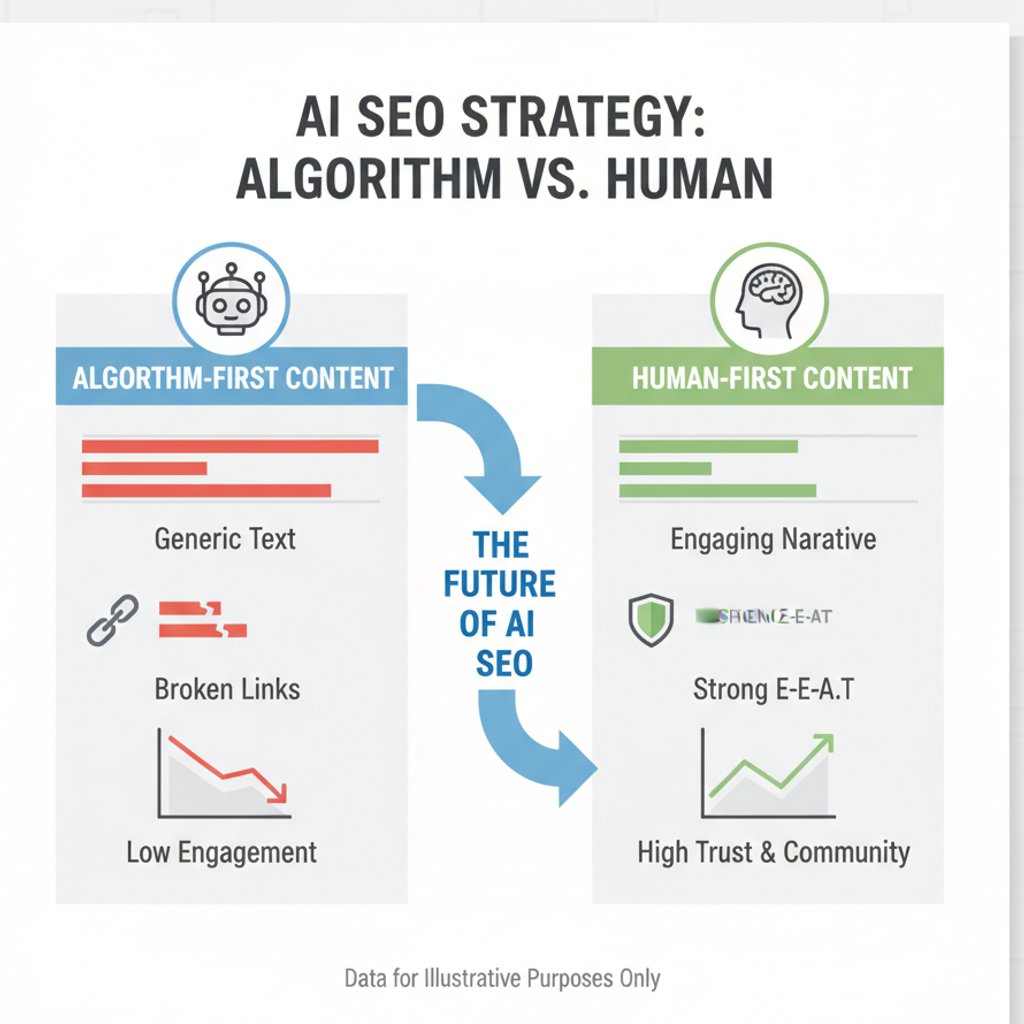
While the opportunities with AI SEO, AEO, and GEO are vast, there are critical missteps that can undermine even the best intentions. These pitfalls often arise from an over-reliance on AI without sufficient human oversight or a misunderstanding of the core principles of ethical content creation. Avoiding these traps is crucial for long-term success.
One major pitfall is generating content at scale without human review, leading to factual inaccuracies, repetitive prose, or a lack of unique insight. Another is neglecting the user experience in favor of purely technical optimization, which can alienate human readers. The key is to remember that AI is a co-pilot, not the sole navigator.
Over-Reliance on AI for Content Generation
While AI can generate content rapidly, relying solely on it without human editing and strategic input often leads to generic, uninspired, and potentially inaccurate results. AI models, by design, synthesize existing information; they don’t innovate or verify facts with the same rigor as a human expert. This can erode trust and diminish authority.
Content that lacks a distinct voice or offers no new insights will struggle to stand out in a crowded digital space. A 2024 survey by Semrush found that 60% of consumers could identify AI-generated content when it lacked human editing, and 75% preferred human-written content for complex topics. The human touch adds nuance, creativity, and critical thinking that AI cannot replicate.
Neglecting User Experience for Algorithmic Optimization
Optimizing for algorithms at the expense of the human user experience is a short-sighted strategy that ultimately backfires. While AI SEO, AEO, and GEO demand specific content structures, these should enhance readability and comprehension, not detract from it. Content that is technically perfect but frustrating to read will not retain an audience.
User experience signals—like time on page, bounce rate, and engagement metrics—are increasingly important to AI-powered search engines. If users quickly leave your site because the content is poorly organized or unengaging, even perfect technical optimization won’t save your rankings. The human experience remains the ultimate arbiter of content quality.
Frequently Asked Questions
What is AI SEO?
AI SEO involves optimizing content and websites to perform well in search engines that increasingly use artificial intelligence to understand queries, evaluate content quality, and rank results. It goes beyond traditional keyword matching to focus on user intent, semantic understanding, and comprehensive topic coverage.
How is AEO different from traditional SEO?
AEO (Answer Engine Optimization) specifically targets search experiences that provide direct, concise answers, often appearing as featured snippets, knowledge panels, or conversational AI responses. Unlike traditional SEO, which aims for a click-through to a website, AEO prioritizes being the source for the direct answer itself, often without a click.
What is GEO and why is it important for content creators?
GEO (Generative Engine Optimization) is the practice of structuring and optimizing content so that it can be effectively retrieved, understood, and utilized by generative AI models (like ChatGPT) when they create summaries or answer user prompts. It’s crucial because AI-generated responses are becoming a primary way users consume information, and being cited by these models establishes authority.
Can AI replace human content writers for SEO?
No, AI cannot fully replace human content writers. While AI tools are excellent for research, drafting, and optimization, they lack the capacity for true creativity, empathy, unique insights, and critical thinking. The human element is essential for crafting authentic, trustworthy, and engaging content that genuinely connects with an audience and builds lasting relationships.
How can I ensure my content is cited by AI search engines?
To increase the likelihood of AI citation, focus on creating highly structured, factual, and comprehensive content. Use clear definitions, answer common questions concisely, break down complex topics into modular paragraphs, and include specific data points with attribution. Content that is easy for AI to parse and verify is more likely to be cited.
What role does E-E-A-T play in AI SEO?
E-E-A-T (Experience, Expertise, Authoritativeness, Trustworthiness) is paramount in AI SEO. AI systems are designed to prioritize credible and high-quality information. Demonstrating strong E-E-A-T through author bios, citing reputable sources, and providing evidence for claims signals to AI that your content is a reliable and authoritative source, increasing its chances of ranking and citation.
How often should I update my content for AI SEO?
Regularly updating and refreshing content is crucial for AI SEO. AI systems favor fresh, accurate, and comprehensive information. Aim to review and update your core evergreen content at least every 6-12 months, incorporating new data, insights, and addressing any changes in user intent or algorithmic preferences. For rapidly evolving topics, more frequent updates may be necessary.
Last updated: June 8, 2026